Join us on a literary world trip!
Add this book to bookshelf
Grey
Write a new comment Default profile 50px
Grey
Subscribe to read the full book or read the first pages for free!
All characters reduced
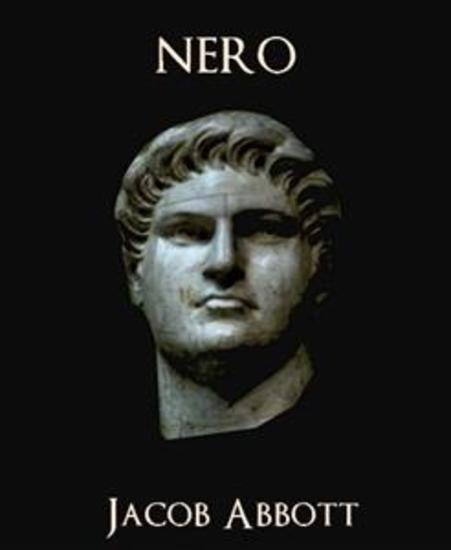
Nero - cover

Nero

Jacob Abbott

Publisher: BookRix

  • 0
  • 0
  • 0

Summary

Nero was Roman Emperor from 54 to 68, and the last in the Julio-Claudian dynasty. Nero was adopted by his great-uncle Claudius to become his heir and successor, and succeeded to the throne in 54 following Claudius' death.

Nero focused much of his attention on diplomacy, trade, and enhancing the cultural life of the Empire. He ordered theaters built and promoted athletic games. During his reign, the redoubtable general Corbulo conducted a successful war and negotiated peace with the Parthian Empire. His general Suetonius Paulinus crushed a revolt in Britain. Nero annexed the Bosporan Kingdom to the Empire and began the First Roman–Jewish War.

In 64 AD, most of Rome was destroyed in the Great Fire of Rome, which many Romans believed Nero himself had started in order to clear land for his planned palatial complex, the Domus Aurea. In 68, the rebellion of Vindex in Gaul and later the acclamation of Galba in Hispania drove Nero from the throne. Facing assassination, he committed suicide on 9 June 68 (the first Roman emperor to do so). His death ended the Julio-Claudian Dynasty, sparking a brief period of civil wars known as the Year of the Four Emperors. Nero's rule is often associated with tyranny and extravagance. He is known for many executions, including that of his mother, and the probable murder by poison of his stepbrother Britannicus.
Available since: 12/19/2023.
Print length: 238 pages.

Other books that might interest you

  • A Wicked Woman - From their pens to your ears genius in every story - cover

    A Wicked Woman - From their pens...

    Jack London

    • 0
    • 0
    • 0
    John Griffith Chaney was born on January 12th, 1876 in San Francisco.   
    His father, William Chaney, was living with Flora Wellman when she became pregnant.  Chaney insisted she have an abortion.  Flora's response was to turn a gun on herself.  Although her wounds were not severe the trauma made her temporarily deranged. 
    In late 1876 his mother married John London and the young child was brought to live with them as they moved around the Bay area, eventually settling in Oakland where now, calling himself Jack, he completed grade school. 
    Jack worked hard at several jobs, sometimes 12-18 hours a day, but his dream was university.  He studied hard and borrowed the money to enrol in the summer of 1896 at the University of California in Berkeley. 
    In 1897, at 21, Jack searched out newspaper accounts of his mother's suicide attempt and for the name of his biological father. He wrote to Chaney, then living in Chicago, who claimed he could not be Jack’s father because he was impotent and casually asserted that London's mother had relations with other men.  Jack, devastated by the response, quit Berkeley and went to the Klondike. Other accounts suggest that his dire finances presented Jack with the excuse he needed to leave. 
    In the Klondike Jack began to gather material for his writing but also accumulated many health problems, including scurvy, which together with hip and leg problems he would carry for the rest of his life. 
    During the late 1890's Jack was regularly publishing short stories and by the turn of the century full blown novels. 
    By 1904 Jack had married, fathered two children and was now in the process of divorcing.  A stint as a reporter on the Russo-Japanese war of 1904 was equal amounts trouble and experience. But that experience was always put to good use in a continuing and remarkable output of work. 
    In 1905 he married Charmian Kittredge who at last was a soul and companion who brought him some semblance of peace despite his advancing alcoholism and his incurable wanderlust. 
    Twelve years later Jack had amassed both wealth and a literary reputation through such classics as ‘The Call of the Wild’, ‘White Fang’ and many others. He had a reputation as a social activist and was a tireless friend of the workers.   
    Jack London died suffering from dysentery, late-stage alcoholism and uremia, aged only 40, on November 22nd 1916 at his property in Glen Elen in California.
    Show book
  • Another Load of Bull - cover

    Another Load of Bull

    David Read

    • 0
    • 0
    • 0
    An historical audiobook 'Another load of Bull' by David Read,  read from Jason Savidge.  The war was over and David, returning to East Africa, asked himself, as did many of his contemporaries, "what next"? It was not an easy world in which to readjust. He opted to become a Livvestock Marketing Officer in Dodoma, with the Tanganyika Veterinary Department. Money was short, and Pat, who had also been demobbed and had joined him in Dodoma, nursed to help augment their income.    Finally, the break David had been hoping for materialized and he embarked on a new chapter in his life as a wheat farmer on the Western slopes of Kilimanjaro. With no formal training, David survived largely on his local knowledge and language skills, supplemented by his cattle buying. Life on 'Mountainside' suited David, despite the constant battle against Africa's unforgiving environment, but the winds of change were to bring a greater challenge and one that would ultimately end David's dreams.
    Show book
  • A Pair of Silk Stockings - From their pens to your ears genius in every story - cover

    A Pair of Silk Stockings - From...

    Kate Chopin

    • 0
    • 0
    • 0
    Katherine O'Flaherty was born on the 8th February 1850 in St Louis, Missouri to parents of French and Irish descent. 
    At age 5, she was sent to the Sacred Heart Academy and, apart from a 2 year period at home when her father died, remained there until graduating in 1868.  Whilst there she began writing and became an avid reader of almost anything that crossed her path.   
    Kate married Oscar Chopin in 1870 and the couple moved to New Orleans, and later to the rural setting of Cloutierville, Louisiana to raise their 6 children.  
    In 1882 her husband died leaving her in a deep trench of debt.  Despite her best efforts to turn the businesses around they were sold, and she moved the family back to St Louis and the financial help of her mother.  Sadly, her mother died within the year.  Kate, now struggling with depression, pushed herself to write and gained a local reputation as a writer of short stories that captured the local color and vibrancy of her surroundings. 
    By the early 1890’s her short stories were published nationally.  With this widespread audience also came negative reviews, controversy, and cries of immorality as themes such as interracial relationships, the rights of women and other burning issues of the day were written about. 
    Despite the criticism, which unnerved her, she continued to write though in the main her works, around 100 short stories and two novels, were not attributed with any literary worth. 
    Kate Chopin died from a brain haemorrhage in St Louis Missouri on the 22nd of August 1904.  She was 54. 
    For much of the 20th Century her work was forgotten and out of print.  It was only in early 1970’s, with the rise of feminism and the call for a more just society that she was given the status her works had long described and shone a literary light at.  She is now safely revered as one of America’s great authors.
    Show book
  • The Serial Killer's Apprentice - The True Story of How Houston's Deadliest Murderer Turned a Kid into a Killing Machine - cover

    The Serial Killer's Apprentice -...

    Katherine Ramsland, Tracy Ullman

    • 0
    • 0
    • 0
    Elmer Wayne Henley, Jr. was only fourteen when he first became entangled with serial rapist and murderer Dean Corll in 1971. Fellow Houston, Texas, teenager David Brooks had already been ensnared by the charming older man, bribed with cash to help lure boys to Corll's home. Corll baited Henley with the same deal he'd given Brooks: $200 for each boy they could bring him. 


    Henley didn't understand the full extent of what he had signed up for at first. But once he started, Corll convinced him that he had crossed the line of no return and had to not only procure boys but help kill them and dispose of the bodies, as well. When Henley first took a life, he felt doomed. By the time he was seventeen, he'd helped with multiple murders and believed he'd be killed, too. But on August 8, 1973, he picked up a gun and shot Corll. When he turned himself in, Henley showed police where he and Brooks had buried Corll's victims in mass graves. 


    The Serial Killer's Apprentice tells the story of Corll and his accomplices in its fullest form to date. It also explores the concept of "mur-dar" (the predator's instinct for exploitable kids), current neuroscience about adolescent brain vulnerabilities, the role of compartmentalization, the dynamic of a murder apprenticeship, and how tales like Henley's can aid with early intervention.
    Show book
  • A Fight with a Cannon - From their pens to your ears genius in every story - cover

    A Fight with a Cannon - From...

    Victor Hugo

    • 0
    • 0
    • 0
    Victor Marie Hugo was born on 26th February 1802 in Besançon, France.   
    There can be no doubt that Hugo is ranked as the greatest of French authors and poets. In addition to this he fought against social injustice throughout his life and from his frequent elections to the French Assembly. 
    Hugo published his first novel, Han d’Islande (1823), the year after his marriage and so began an immense canon of fiction and poetry not only for France but to World literature.  
    He was elected to the Académie Française in 1841 and the same year came a peerage and entrance to the Higher Chamber as a pair de France, where he spoke against the death penalty, social injustice and in favour of press freedom.  
    In the years leading up to the Revolution of 1848 Hugo began to lean towards Republicanism and greater freedoms.  With the formation of the Second Republic, he was again elected to the Assembly. 
    When Napoleon III seized power in 1851, and established an anti-parliamentary constitution, Hugo openly declared him a traitor to France. This, of course, meant exile where he remained until 1870.  In exile he published his greatest work ‘Les Misérables’, and further widely honoured collections of poetry. 
    Returning home he was again elected to the National Assembly and the Senate.  It was the time of the Franco-Prussian war and with Paris under siege and food ever more scarce, he wrote in his diary that he was now "eating the unknown". 
    Later he was instrumental in strengthening the rights of artists and copyright, steps which led to the international protections of the Berne Convention.  
    Victor Hugo died on 22nd May 1885, aged 83.
    Show book
  • World Citizen Journeys of a Humanitarian - cover

    World Citizen Journeys of a...

    Jane Olson

    • 0
    • 0
    • 0
    These stories are about light and hope in the midst of unimaginable human suffering in war zones and places of extreme poverty around the world. Important lessons from a childhood in rural western Iowa are woven throughout, as are examples of human strength and resiliency. Each chapter can be read as a complete experience. Intimate details recorded by the author in journals and on film take the reader on memorable journeys with international human rights and humanitarian organizations. Despite being plunged into war zones, crowded refugee camps, and some of the poorest and most disease-affected places on the planet, we learn the life-saving impact of humanitarian intervention, the healing power of community, the importance of justice, and the truth that one caring person can indeed make a difference. To be a World Citizen is to embrace and champion the Universal Declaration of Human Rights, knowing that all lives are valuable and equally deserving of protection and support.
    Show book