Junte-se a nós em uma viagem ao mundo dos livros!
Adicionar este livro à prateleira
Grey
Deixe um novo comentário Default profile 50px
Grey
Assine para ler o livro completo ou leia as primeiras páginas de graça!
All characters reduced
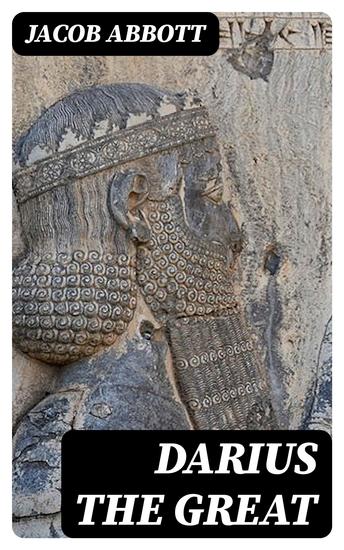
Darius the Great - Makers of History - cover
LER

Darius the Great - Makers of History

Jacob Abbott

Editora: DigiCat

  • 0
  • 0
  • 0

Sinopse

In "Darius the Great," Jacob Abbott meticulously chronicles the life and reign of one of ancient Persia's most notable kings. Through a blend of historical narrative and engaging storytelling, Abbott employs a straightforward prose style, making complex political and cultural contexts accessible to his readers. The book is situated within the broader tradition of biographical literature, drawing upon extensive historical research while reflecting the 19th-century fascination with the grandeur of ancient civilizations, thus bridging the gap between scholarly work and popular narrative. Jacob Abbott, a prominent American author and educator, is well-known for his ability to simplify intricate historical subjects for younger audiences. His works often reflect his deep appreciation for ethics and governance, factors that likely influenced his portrayal of Darius. Abbott's experience in teaching and a keen interest in history may have spurred him to portray Darius not merely as a king, but as a symbol of enlightened rulership and moral complexity, encapsulating both his achievements and shortcomings. This book is highly recommended for anyone interested in ancient history, particularly those wishing to understand the intricate dynamics of leadership during a pivotal era. Abbott's engaging narrative style and keen insights render "Darius the Great" a compelling read, suitable for students and enthusiasts alike, inviting readers to reflect on the enduring questions of power and morality.
Disponível desde: 21/11/2022.
Comprimento de impressão: 146 páginas.
Outros livros que poderiam interessá-lo

  • 3 Stories About - Social Experiments - A trio of classic tales perfect for a commute walk or quiet night in - cover

    3 Stories About - Social...

    Mark Twain, Anton Chekhov, Mary...

    • 0
    • 0
    • 0
    There is something about the number 3.    
     
    The Ancient Greeks believed 3 was the perfect number, and in China 3 has always been a lucky number, and they know a thing or two.   
     
    Most religions also have 3 this and 3 that and, of course, in these more modern times, three’s a crowd may be too many, except when it’s a ménage à trois.  It seems good things usually come in threes. 
     
    Whatever history and culture says WE think 3, a hat-trick of stories, is a great number to explore themes and literary avenues that classic authors were so adept at creating. 
     
    From their pens to your your ears. 
     
    01 - 3 Stories - Social Experiment 
    02 - The Million Pound Bank Note by Mark Twain 
    03 - The Bet by Anton Chekhov 
    04 - An Unexpected Fare by Mary Tuttiett writing as Maxwell Gray
    Ver livro
  • The Artist and the Beautiful - American short story master Hawthorne gives us a gothic tale of love and jealousy with a scientific twist - cover

    The Artist and the Beautiful -...

    Nathaniel Hawthorne

    • 0
    • 0
    • 0
    Nathaniel Hawthorne was born on 4th July 1804 in Salem, Massachusetts, a town synonymous with the earlier Salem Witch Trials. It was instrumental in Hawthorne’s later use of American Gothic and dark romanticism in his writing. 
     
    He was a mere four years old when his father died and his mother took him and his two sisters to live with her family and then on to their own home in Raymond, Maine. The young Hawthorne had a passion for fiction and poetry and voraciously read the works of Ann Radcliffe, Henry Fielding and Lord Byron.  
     
    He was sent to college at his maternal uncle’s insistence. During these years he met and befriended Henry Wadsworth Longfellow and future U S president Franklin Pierce. These friendships were lifelong and to have a crucial impact on his writings and career.  
     
    At college Hawthorne had made attempts at writing short stories and essays but without opportunities to publish. It was only in 1828 that he finally published his novel ‘Franshawe’ to little success and so he began work as editor for the American Magazine of Useful and Entertaining Knowledge.  
     
    Hawthorne’s short stories were first published in magazines but in 1837 were collected and published as ‘Twice-Told Tales’. A steady literary career still did not come his way and so he worked in a good position at Salem’s port and married the love of his life Sophia Peabody. They moved to live in ‘The Old Manse’ at Concord, Massachusetts.   
     
    Finally. in 1850 came spectacular literary and commercial success with ‘The Scarlet Letter’ followed by ‘The House of the Seven Gables’ the following year.  
     
    In 1852, Hawthorne published a biography of presidential candidate Franklin Pierce. After Pierce’s victory he was appointed consul in Liverpool, a position that offered prestige, money and fame. At the end of this appointment he returned several times to Europe before settling in Massachusetts and resuming writing and publication. 
     
    During the early 1860’s his health declined and on 19th May 1864 during a trip to Plymouth, New Hampshire. He was 59 and was buried in Sleepy Hollow Cemetery in Concord, Massachusetts.  
     
    In his short story ‘The Artist of the Beautiful’ Hawthorne creates a work, now considered early science fiction, that weaves an unrequited life-long love with the creation of a beautiful miniature object that is both breath-taking and heart-breaking.
    Ver livro
  • The California Kid - From USC Golden Boy to International Drug Kingpin - cover

    The California Kid - From USC...

    Alex Cody Foster, Owen Hanson

    • 0
    • 0
    • 0
    You've read the shocking one-sided tale of international drug kingpin Owen Hanson in Rolling Stone, VICE, and the LA Times—but now he's ready to tell his side of the story. 


    A surfer kid from Redondo Beach, California, Owen Hanson was still in his twenties when he found himself the leader of a multi-million-dollar criminal empire. What began as an attempt to fit in with the rich kids at the University of Southern California soon grew into gambling and loan sharking, which then opened the door to drug trafficking and money laundering. Hanson wasn't just involved in this stuff—he excelled at it. Living the fast-paced lifestyle of the rich and famous, Hanson felt he was finally making his father proud, never mind the questionable ethics and obvious danger of it all. But with the cartel, a serious drug-abuse problem, and the pursuit of the FBI all threatening to overtake him, it wouldn't be long before his lifestyle caught up with him. 


    The California Kid follows Owen from his roots as a USC star athlete from a broken home, where his idolization of the rich and famous began, to his descent down a dangerous path where he would stop at nothing to earn the love and acceptance of his absent mother and the respect of his father. The story that follows is almost too wild to believe—but Owen bears the twenty-one-year sentence to prove it.
    Ver livro
  • Ida Lupino Forgotten Auteur - From Film Noir to the Director's Chair - cover

    Ida Lupino Forgotten Auteur -...

    Alexandra Seros

    • 0
    • 0
    • 0
    Though her acting career is well known, Ida Lupino was, until very recently, either unknown or overlooked as an influential director. One of the few female directors in Classical Hollywood, Lupino was the only woman with membership in the Directors Guild of America between 1948 and 1971. Her films were about women without power in society and engaged with highly controversial topics despite Hollywood's strict production code. Working in a male-dominated field, Lupino was forced to manage her public persona carefully, resisting attempts by the press to paint her solely as a dutiful wife and mother—a continual feminization—just so that she could continue directing. 


    Filmmaker Alexandra Seros retells the story of Ida Lupino's career, from actor to director, first in film, then in television, using archival materials from collections housed around the world. The result provides rich insights into three of Lupino's independently directed films and a number of episodes from her vast television oeuvre. Seros contextualizes this analysis with discussions of gendered labor in the film industry, the rise of consumerism in the United States after World War II, and the expectations put on women in their family lives during the postwar era. Seros's portrait of Lupino ultimately paints her life and career as an exemplar of collaborative auteurship.
    Ver livro
  • The Emperors of Rome - A Biographical Dictionary - cover

    The Emperors of Rome - A...

    Rogan Fish

    • 0
    • 0
    • 0
    The Founding Emperors of Rome laid the groundwork for the Roman Empire, marking a shift from the Roman Republic to imperial rule. Augustus, Tiberius, and Caligula stand as the pivotal figures in this transformation, each shaping the empire in distinct ways. 
    Augustus, born Gaius Octavius, was the first emperor and one of the most successful leaders in Roman history. His reign, from 27 BCE to 14 CE, ushered in the Pax Romana, a period of relative peace and prosperity. Augustus was not only a military genius but also a skilled politician who effectively consolidated power. By presenting himself as the restorer of the Roman Republic, he maintained a delicate balance between autocratic rule and the preservation of traditional republican institutions. Augustus implemented numerous reforms, including the establishment of a professional standing army and a system of taxation that stabilized the empire’s finances. His legacy is marked by the expansion of Roman territory and the establishment of Rome as the center of the ancient world. 
    Following Augustus, his stepson Tiberius became emperor in 14 CE. Tiberius' reign is often seen as a contrast to Augustus. While Augustus sought to maintain the image of republican values, Tiberius became increasingly reclusive and suspicious, particularly in the later years of his reign. His reign was marked by significant military achievements, including the consolidation of Rome’s frontiers in Germania and the Balkans, but his reign was also tainted by political purges and a growing atmosphere of distrust. Tiberius left the throne to his adopted son Caligula, but the political instability and paranoia of his reign would have lasting consequences on the empire.
    Ver livro
  • Paul Brand - Helping Hands - cover

    Paul Brand - Helping Hands

    Janet Benge, Geoff Benge

    • 0
    • 0
    • 0
    Watching his father perform medical procedures back in India had convinced Paul that medicine was about blood and guts and ulcers. To his amazement, he found that it was really about causes and cures, alleviating pain, and treating ill people with dignity. The son of missionary parents, Paul Brand did not plan on becoming a doctor. After training as a builder, he was called by God into medicine and spent a lifetime treating leprosy and restoring hope to thousands of sufferers. Dr. Paul Brand became the first surgeon in the world to use reconstructive surgery to correct the deformities of leprosy in the hands and feet. He strove to eliminate the stigma of the disease and rebuild the lives of those destroyed by it. A humble, brilliant servant, he influenced faith and medical communities around the world, reminding us that all men are created in the image of God.
    Ver livro