¡Acompáñanos a viajar por el mundo de los libros!
Añadir este libro a la estantería
Grey
Escribe un nuevo comentario Default profile 50px
Grey
Suscríbete para leer el libro completo o lee las primeras páginas gratis.
All characters reduced
It's A Strange Place England - cover

It's A Strange Place England

Jack Strange

Editorial: Next Chapter

  • 0
  • 0
  • 0

Sinopsis

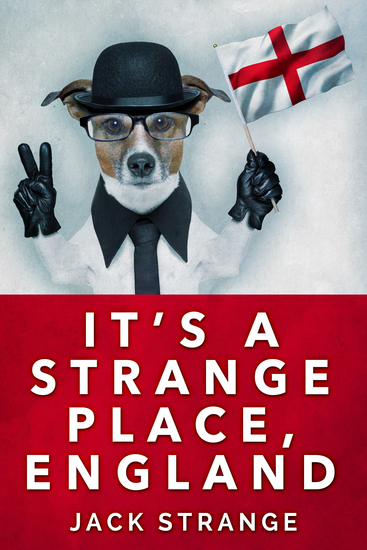
This small book looks at some of the strange things that make England unique, starting with the English language itself and looking at concepts such as sports, ghosts and the English love for eccentricity - like the sportsman who rode his horse naked.
 
As well as strange people, the book looks at strange places. For example, there is the canal across Southern England that was dug to keep back Bonaparte's hordes in the invasion that never took place. There is also the impressively masculine Cerne Abbas Giant, to which women once flocked when they wished to become pregnant. The mysterious Stonehenge also deserves its part in this book.
 
Some traditions have not lasted into modern times, such as wife selling, which was once fairly common and strangely, often with the consent of the wife herself.
 
The book takes a more serious turn when it examines the witch-hunting epidemic of the 17th century. Lightening the mood are the chapters on the so-called Hellfire Club and a look at English dragons. Did they exist?
 
From Robin Hood to highwaymen and smugglers, English folk tales take some very ruthless people and turn them into heroes that they most certainly were not. We also look at the Morris Dancers and the famous tale of Spring Heeled Jack - who or whatever he may have been.
 
Finally, there's a cheerful chapter that looks at pubs, which figure prominently in many English tales and are a part of modern culture all over the world today.
Disponible desde: 22/01/2022.

Otros libros que te pueden interesar

  • Mayflower - Its History Passengers and Voyage to the New Land - cover

    Mayflower - Its History...

    Kelly Mass

    • 0
    • 0
    • 0
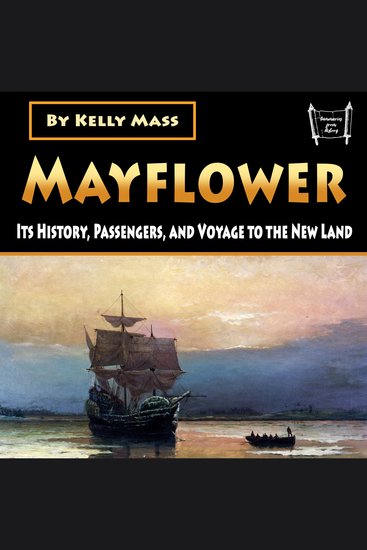
    In 1620, a group of English families, known now as the Pilgrims, were carried from England to the New World on the Mayflower. When the Mayflower finally showed up in America on November twenty-first, 1620, it had 102 guests and a team of around 30 on board and was anchored off Cape Cod. 
    The Pilgrims, as opposed to their Puritan coworkers, chose to break away from the Church of England because of its Roman Catholic heritage and the church's hesitation to reform, requiring them to pray in personal instead of in the church. In 1608, a group of English families left England for the Netherlands, where they could practice their faith without fear of persecution. As early as 1620, the Plymouth Group population had determined to cross the Atlantic to the New World, which they viewed as a "new Promised Land." 
    Due to hold-ups and challenges, the Pilgrims were only able to take one ship, the Mayflower, to reach America in early October. It was a pretty hard winter season when they showed up in November, and they were unprepared. Consequently, hardly half of the original Pilgrims made it through the first winter season at Plymouth, Massachusetts. All of the settlers may have died if near Native tribes had not taught them how to collect food and other survival methods. On that first fall harvest, they gathered with Native Americans to celebrate what would end up being referred to as the first Thanksgiving in America.
    Ver libro
  • Intellectual Anarchy - The Art of Disruptive Innovation - cover

    Intellectual Anarchy - The Art...

    Patrick K Sullivan

    • 0
    • 0
    • 0
    So how do we move the future from the distant horizon to the present day? We need Intellectual Anarchy. 
    The accelerating challenges facing our planet—such as climate change, food scarcity, sustainable energy, overpopulation, nuclear proliferation, income inequality, and rising healthcare costs—are solvable. The question is not if, but when. 
    All these challenges directly impact our lives and our unwritten future. They have enormous economic consequences for humans and society. They also provide incredible opportunities for investors and innovators. This is a book about how we can find disruptive solutions to hard problems, problems so difficult that they can seem impossible. Problems of that magnitude demand radical new ideas—an incremental approach won’t work. Their solutions seemingly come out of left field, defying conventional wisdom, and overturning existing industries, practices, and business models. 
    This book details the Intellectual Anarchy methodology followed at Oceanit for generating disruptive solutions to these problems and taking them from the idea stage all the way to market—Mind-to-Market, including financing innovations to overcome the scarcity of venture capital anywhere away from the conventional tech hubs. 
    Oceanit operates from Hawai‘i, the most remote location in the world. Yet today Oceanit works across the world with just about everybody—the US government, Fortune 100 companies, and more than sixty universities—partnering and collaborating as we research, invent, and produce technology in energy, aerospace, life sciences, information technology, sustainability, and resiliency. 
    If Oceanit’s Intellectual Anarchy model works in Hawai‘i, it can work anywhere. 
    BOOK PDF FILE: drive.google.com/file/d/1_P9l1y5khTaO6bxavPnEzri-3ZByADNP/view
    Ver libro
  • Wake up life is brief death is forever - cover

    Wake up life is brief death is...

    George Rex Omegan

    • 0
    • 0
    • 0
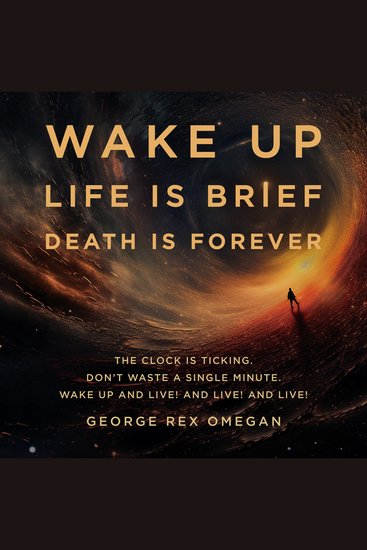
    The message of the book is plain. You have only one chance to experience life, so don’t waste it. Stop dreaming, wishing, hoping, praying, and start living. Make this life about YOU. Be Yourself, Love Yourself, Live for Yourself, and Live Fully. Embrace each aspect of life with unbridled passion and energy. To do anything else is the height of stupidity. 
    In You Only Have One Life and This Is It, the author reveals that by understanding the true nature of reality, the process of becoming aware of it, and how to engage with it, one can live a life of joy and bliss regardless of circumstances. In this companion book, you will learn the essence of the principles covered and how to apply them to free yourself from the enslavement of your genetic, religious, and social conditioning. In doing so, you will miraculously transform every aspect of your life and propel it to heights beyond your imagination.
    Ver libro
  • Summary of Thinking Fast and Slow - 80 mins with the top ideas in the book - cover

    Summary of Thinking Fast and...

    Anton Gavrailov

    • 0
    • 0
    • 0
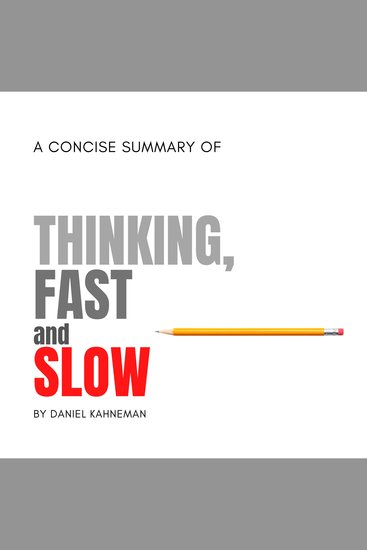
    Get the key insights of the bestseller 'Thinking, Fast and Slow' by Daniel Kahneman in this easy-to-comprehend audio book. 
    We've distilled the complex topics into a concise and accessible version, perfect for those who want to learn how we think and make decisions. 
    Perfect for anyone interested in psychology, economics, or just understanding themselves better, without getting bogged down in jargon and details.Learn about the two systems of thinking that drive our decision making processesDiscover how our biases and heuristics can affect our judgments and choicesUnderstand the impact of framing and context on our perceptions and decisionsExplore the psychology of risk and uncertainty and how we assess probabilitiesGain insights into the role of intuition and emotions in our thinkingFind out how to improve your decision making by recognizing common cognitive errorsGet a practical framework for understanding and analyzing complex problems 
    The summarization was generated using AI and reviewed by a human editor to ensure accuracy and clarity. 
    Humans also facilitate the AI by tuning it to create most valuable and understandable content for the general public without difficult to understand language and details.
    Ver libro
  • Tomorrow with Bayonets - Dublin: July 1921 – July 1922 - cover

    Tomorrow with Bayonets - Dublin:...

    Derek Molyneux, Darren Kelly

    • 0
    • 0
    • 0
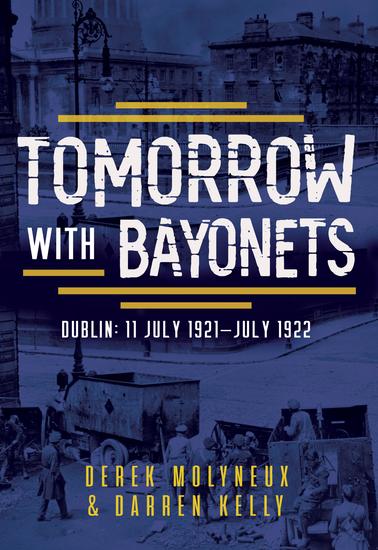
    The raw intensity of the Irish Civil War is brought to life in this gripping, fast-paced journey from July 1921 to July 1922 – a year of change and conflict. Dublin's descent into violent unrest surpasses the turbulence of the Easter Rising. Treaty debates spark dissension, and as tensions mount, Dublin becomes a tinderbox of espionage, betrayal, and guerrilla warfare. Former allies who fought shoulder to shoulder in the IRA now find themselves divided and entrenched in an ideological struggle that threatens to tear Dublin and Ireland apart. More than a historical recount, 'Tomorrow With Bayonets' offers a visceral portrayal of a nation grappling with its identity and sovereignty, seen through the eyes of combatants, leaders, and civilians caught in the crossfire.
    
    
    The Provisional Government's National Army and the IRA engage in sporadic but fierce clashes as unrelenting violence and chaos engulf the country. In Northern Ireland, there is growing disillusionment among IRA units due to the diminishing credibility of assurances from Michael Collins. Ongoing assaults on their communities, the nationalist population experiences a rising number of casualties due to rampant brutality from unionist militias. A suppression of inquiries into killings leads to a widespread feeling of abandonment by the Provisional Government.
    
    
    On June 4 1922, the Provisional Government implemented 'a policy of peaceful obstruction' towards the Belfast Government, explicitly forbidding any troops from the twenty-six counties from entering the six-county area. In an apocalyptic climax, Dublin is engulfed in explosions, assassinations and relentless urban warfare. This powerful account, not for the faint-hearted, leaves a lasting impact, resonating with the reader long after the final page.
    Ver libro
  • Ethical Theory - 50 Puzzles Paradoxes and Thought Experiments (Puzzles Paradoxes and Thought Experiments in Philosophy) - cover

    Ethical Theory - 50 Puzzles...

    Sarah Stroud, Daniel Muñoz

    • 0
    • 0
    • 0
    In this new kind of introduction to ethical theory, Daniel Muñoz and Sarah Stroud present fifty of the field's most exciting puzzles, paradoxes, and thought experiments. Over the course of eleven chapters, the authors cover a huge variety of topics, starting with the classic debate between utilitarians and deontologists and ending on existential questions about the future of humanity. 


    Every chapter begins with a helpful introduction, and each of the fifty entries includes references for further reading and questions for reflection. Among the entries are such classics as the Ring of Gyges, Jim and the Villagers, the Repugnant Conclusion, JoJo, "One Thought Too Many," the Miners Puzzle, the Gentle Murder Paradox, Nowheresville, the Experience Machine, and the Trolley Problem. The book also explores several more recent topics of interest, such as doxastic wronging and the ethics of AI, so that even advanced students are likely to discover something new. Each entry can be read on its own, and the writing is accessible and conversational throughout, making this an ideal resource for undergraduate teaching. Listeners at any level can pick up this book and see for themselves how fascinating—and puzzling—ethical theory can be.
    Ver libro