¡Acompáñanos a viajar por el mundo de los libros!
Añadir este libro a la estantería
Grey
Escribe un nuevo comentario Default profile 50px
Grey
Suscríbete para leer el libro completo o lee las primeras páginas gratis.
All characters reduced
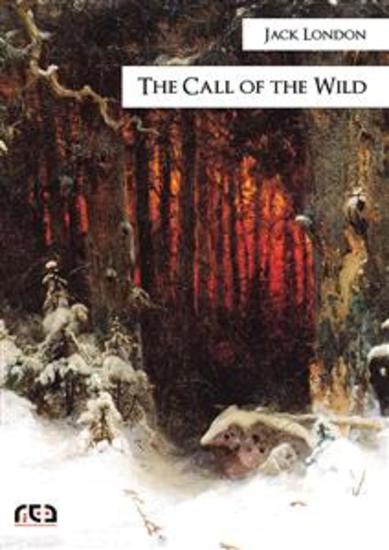
The Call of the Wild - cover

The Call of the Wild

Jack London

Editorial: REA Multimedia

  • 0
  • 0
  • 0

Sinopsis

The Call of the Wild is a short adventure novel by Jack London, published in 1903 and set in Yukon, Canada, during the 1890s Klondike Gold Rush, when strong sled dogs were in high demand. The central character of the novel is a dog named Buck. The story opens at a ranch in Santa Clara Valley, California, when Buck is stolen from his home and sold into service as a sled dog in Alaska. He becomes progressively more primitive and wild in the harsh environment, where he is forced to fight to survive and dominate other dogs. By the end, he sheds the veneer of civilization, and relies on primordial instinct and learned experience to emerge as a leader in the wild.
London spent almost a year in the Yukon, and his observations form much of the material for the book. The story was serialized in The Saturday Evening Post in the summer of 1903 and was published later that year in book form. The book's great popularity and success made a reputation for London. As early as 1923, the story was adapted to film, and it has since seen several more cinematic adaptations.
Disponible desde: 22/07/2023.

Otros libros que te pueden interesar

  • Betty Brown the St Giles Orange Girl - From their pens to your ears genius in every story - cover

    Betty Brown the St Giles Orange...

    Hannah More

    • 0
    • 0
    • 0
    Hannah More was born on February 2nd, 1745 at Fishponds in the parish of Stapleton, near Bristol. She was the fourth of five daughters. 
    The City of Bristol, at that time, was a centre for slave-trading and Hannah would, over time, become one of its staunchest critics.  
    She was keen to learn, possessed a sharp intellect and was assiduous in studying.  Hannah first wrote in 1762 with The Search after Happiness (by the mid-1780s some 10,000 copies had been sold). 
    In 1767 Hannah became engaged to William Turner.  After six years, with no wedding in sight, the engagement was broken off.  Turner then bestowed upon her an annual annuity of £200.  This was enough to meet her needs and set her free to pursue a literary career.   
    Her first play, The Inflexible Captive, was staged at Bath in 1775. The famous David Garrick himself produced her next play, Percy, in 1777 as well as writing both the Prologue and Epilogue for it.  It was a great success when performed at Covent Garden in December of that year.  
    Hannah turned to religious writing with Sacred Dramas in 1782; it rapidly ran through nineteen editions. These and the poems Bas-Bleu and Florio (1786) mark her gradual transition to a more serious and considered view of life. 
    Hannah contributed much to the newly-founded Abolition Society including, in February 1788, her publication of Slavery, a Poem recognised as one of the most important of the abolition period.   
    Her work now became more evangelical.  In the 1790s she wrote several Cheap Repository Tracts which covered moral, religious and political topics and were both for sale or distributed to literate poor people.  The most famous is, perhaps, The Shepherd of Salisbury Plain, describing a family of incredible frugality and contentment. Two million copies of these were circulated, in one year. 
    In 1789, she purchased a small house at Cowslip Green in Somerset. She was instrumental in setting up twelve schools in the area by 1800. 
    She continued to oppose slavery throughout her life, but at the time of the Abolition Bill of 1807, her health did not permit her to take as active a role in the movement as she had done in the late 1780s, although she maintained a correspondence with Wilberforce and others.  
    In July 1833, the Bill to abolish slavery throughout the British Empire passed in the House of Commons, followed by the House of Lords on August 1st. 
    Hannah More died on September 7th, 1833.
    Ver libro

  • Obliterated Man The (Unabridged) - cover

    Obliterated Man The (Unabridged)

    H. G. Wells

    • 0
    • 0
    • 0
    The Obliterated Man is a short story by H. G. Wells. Herbert George "H. G." Wells (21 September 1866 - 13 August 1946) was an English writer, now best known for his work in the science fiction genre. He was also a prolific writer in many other genres, including contemporary novels, history, politics and social commentary, even writing textbooks and rules for war games. Wells is sometimes called "The Father of Science Fiction", as are Jules Verne and Hugo Gernsback. His most notable science fiction works include The War of the Worlds, The Time Machine, The Invisible Man and The Island of Doctor Moreau. Wells's earliest specialised training was in biology, and his thinking on ethical matters took place in a specifically and fundamentally Darwinian context. He was also from an early date an outspoken socialist, often (but not always, as at the beginning of the First World War) sympathising with pacifist views.
    Ver libro
  • Self Reliance and Other Essays - cover

    Self Reliance and Other Essays

    Ralph Waldo Emerson

    • 0
    • 0
    • 0
    Self Reliance by Ralph Waldo Emerson is a powerful call to individuality, self-trust, and nonconformity. In this timeless essay, Emerson urges readers to embrace their own instincts and inner wisdom rather than bowing to societal expectations. He argues that true fulfillment comes from self-expression and authenticity, not from seeking approval or following tradition. With vivid imagery and bold declarations, Emerson champions the idea that greatness lies in independence, courage, and the willingness to chart one’s own path—no matter how unconventional. Inspiring and thought-provoking, Self-Reliance remains a foundational text in American transcendentalism, encouraging readers to break free from external influences and trust in the power of their own minds. 
    Essays included in this collection are:GiftsUses of Great MenSelf Reliance
    Ver libro
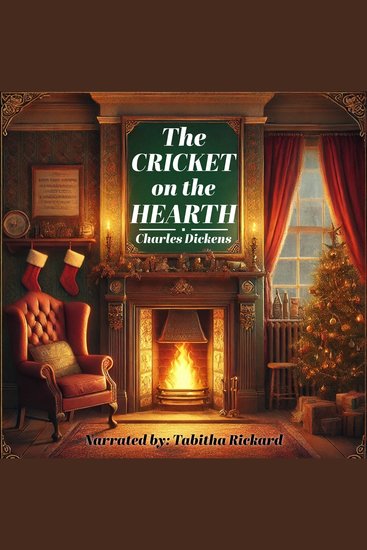
  • The Cricket on the Hearth - cover

    The Cricket on the Hearth

    Charles Dickens

    • 0
    • 0
    • 0
    A timeless holiday classic, The Cricket on the Hearth by Charles Dickens is a heartwarming tale of love, family, and redemption. Set in a cozy Victorian home, the story follows John Peerybingle and his wife Dot, whose simple yet contented lives are disrupted by a series of misunderstandings, mysterious arrivals, and surprising revelations. A seemingly ordinary cricket, chirping beside their hearth, becomes a symbol of warmth, hope, and the unseen forces that guide us through hardship. 
    As secrets unravel and mistaken identities come to light, Dickens masterfully weaves a touching narrative filled with festive spirit, romance, and moral lessons. Blending humor, sentimentality, and social commentary, this novella captures the magic of Christmas and the enduring power of love and kindness. 
    A delightful tale filled with memorable characters and heartfelt moments, The Cricket on the Hearth remains a cherished holiday tradition and a testament to Dickens’ ability to craft stories that resonate across generations.
    Ver libro
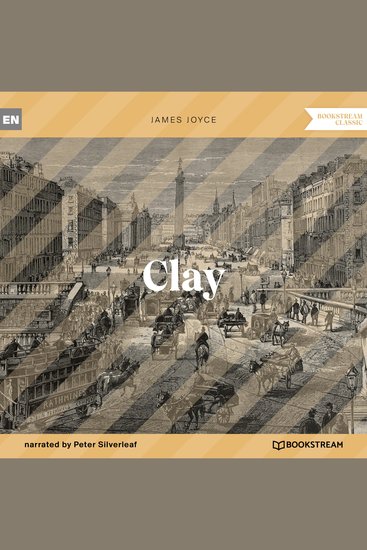
  • Clay (Unabridged) - cover

    Clay (Unabridged)

    James Joyce

    • 0
    • 0
    • 0
    James Augustine Aloysius Joyce (2 February 1882 - 13 January 1941) was an Irish novelist, short story writer, poet and literary critic. He contributed to the modernist avant-garde movement and is regarded as one of the most influential and important writers of the 20th century.
    CLAY: The matron had given her leave to go out as soon as the women's tea was over and Maria looked forward to her evening out. The kitchen was spick and span: the cook said you could see yourself in the big copper boilers.
    Ver libro
  • Beyond the Wall of Sleep (Unabridged) - cover

    Beyond the Wall of Sleep...

    H. P. Lovecraft

    • 0
    • 0
    • 0
    In "Beyond the Wall of Sleep", an intern in a mental hospital relates his experiences with Joe Slater, a backward Catskills mountain man and now inmate at a hospital for the criminally insane. The inmate was having very strange and vivid dreams which he described in a way seemingly impossible for a man of his limited intellect. The intern decides to use a device he built but never tested, a device that could be used for two-way telepathic communication to monitor the man's dreams. What he discovers is both astonishing and frightening.
    Ver libro