Junte-se a nós em uma viagem ao mundo dos livros!
Adicionar este livro à prateleira
Grey
Deixe um novo comentário Default profile 50px
Grey
Assine para ler o livro completo ou leia as primeiras páginas de graça!
All characters reduced
Before Adam - cover
LER

Before Adam

Jack London

Editora: Avia Artis

  • 0
  • 0
  • 0

Sinopse

“Before Adam” is a book by Jack London, an American novelist. A pioneer of commercial fiction and an innovator in the genre that would later become known as science fiction.

Before Adam is a novel by Jack London. It is the story of a man who dreams he lives the life of an early hominid. The story offers an early view of human evolution. The majority of the story is told through the eyes of the man's hominid alter ego, one of the Cave People. In addition to the Cave People, there are the more advanced Fire People, and the more animal-like Tree People.
Disponível desde: 17/11/2021.

Outros livros que poderiam interessá-lo

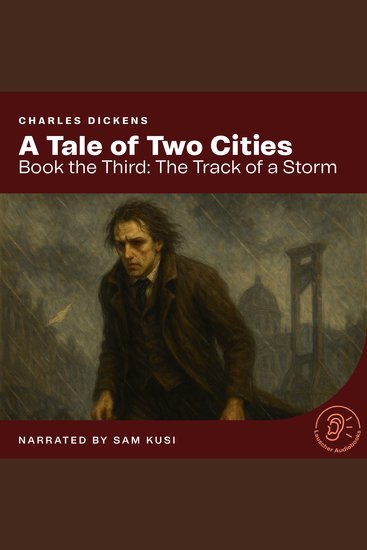
  • Tale of Two Cities A (Book the Third: The Track of a Storm) - cover

    Tale of Two Cities A (Book the...

    Charles Dickens

    • 0
    • 0
    • 0
    Book 3: The Track of a Storm: A Tale of Two Cities is an 1859 historical novel by Charles Dickens, set in London and Paris before and during the French Revolution. The novel tells the story of the French Doctor Manette, his 18-year-long imprisonment in the Bastille in Paris and his release to live in London with his daughter Lucie, whom he had never met. The story is set against the conditions that led up to the French Revolution and the Reign of Terror.
    Dickens' best-known work of historical fiction, A Tale of Two Cities is regularly cited as the best-selling novel of all time. In 2003, the novel was ranked 63rd on the BBC's The Big Read poll. The novel has been adapted for film, television, radio, and the stage, and has continued to have an influence on popular culture.
    Ver livro
  • Hypnos (Unabridged) - cover

    Hypnos (Unabridged)

    H. P. Lovecraft

    • 0
    • 0
    • 0
    "Hypnos" is a first-person narrative, written from the perspective of an unnamed character living in Kent and later London, England. The narrator writes that he fears sleep, and is resolved to write his story down lest it drive him further mad, regardless of what people think after reading it. The narrator, a sculptor, recounts meeting a mysterious man in a railway station. The moment the man opened his "immense, sunken, and widely luminous eyes", the narrator knew that the stranger would become his friend--"the only friend of one who had never possessed a friend before." In the eyes of the stranger, he witnessed important knowledge of the mysteries he always sought to learn. From this point on, he would touch his friend and sculpt him daily. At night they would commence their adventures, exploring worlds beyond human comprehension. Over time, the narrator's companion begins to speak of using their ability to transcend into the unknown as a way to rule the universe (via a set of drugs). The narrator is frightened by the prospect and disavows such hubris to the reader. Soon the narrator is off on a foray with his friend, travelling through a void that he explains is beyond human sensation. Passing through several barriers, eventually the narrator comes to one he cannot cross, though his friend does. Opening his "physical eyes", the narrator wakes up and awaits the return of his friend, who awakes severely shaken and reticent, warning only that they must avoid sleep at all cost. From then on, with the aid of drugs, the two avoid sleep, as each time they succumb, they both seem to rapidly age and are plagued by nightmares that the narrator refuses to explain. The story ends with the narrator explaining that one night, his friend fell into a "deep-breathing sleep" and was impossible to arouse. The narrator shrieks, faints, and awakes surrounded by police and neighbors, who inform him that his friend was not real. There is only a bust of his friend in his room, engraved with the Greek word: _____ (Hypnos).
    Ver livro
  • Hide And Seek - From their pens to your ears genius in every story - cover

    Hide And Seek - From their pens...

    Fyodor Sologub

    • 0
    • 0
    • 0
    Fyodor Kuzmich Teternikov was born on 1st March 1863 in St. Petersburg into the family of a poor tailor.  When his father died of tuberculosis in 1867, his illiterate mother was forced to become a servant in the home of an aristocrat, where Sologub and his younger sister grew up.  
    Seeing how difficult his mother's life was, Sologub was determined to rescue her from it, and after graduating from the St. Petersburg Teachers' Institute in 1882 he took his mother and sister with him to his first teaching post in Kresttsy.  It was here he began his literary career in 1884 with his poem ‘The Fox and the Hedgehog’ under the name Te-rnikov. 
    It would be another decade before he could escape his various jobs to move to Moscow and begin his literary career on what would be his most famous novel, ‘The Petty Demon’.  It was now suggested that he use a pseudonym and so Sologub became his new identity. 
    In 1896 he published a book of poems, a collection of short stories, and his first novel, ‘Bad Dreams’, which is considered one of the first decadent Russian novels. 
    In 1905 ‘The Petty Demon’, was published, initially in serial form. But life was still difficult unrewarding jobs, little time to write and a small, cramped apartment lightened only by gatherings of friends, poets and writers. 
    By the October Revolution his work was becoming popular and with the novel of ‘The Petty Demon’, finally published as a book, he now had a growing income. 
    His sister's tuberculosis could now be more easily treated with treatments in proper sanitoria, even as far away as Finland, but in June 1907 she passed. 
    He returned to St. Petersburg and retired.  The following year he married the translator Anastasia Chebotarevskaya who reordered his life.  A big new apartment was rented, small gilt chairs were bought, and the walls of the large cold office were decorated with paintings. 
    Sologub continued to write and publish poems, plays, and translations and in 1914 he started a magazine, Writers' Journals, but the outbreak of World War I put an end to it.  
    The October Revolution, with publishing under Bolshevik control, ensured he now had no outlets for his writing and could only lecture. 
    His wife’s suicide in September 1921, mainly due to deprivation and uncertainty, as they prepared for a new life abroad, grieved him for the rest of his life. 
    In May 1927 Sologub became seriously ill, and by summer he could leave his bed only rarely.  
    After a long struggle, Fyodor Sologub died on 5th December 1927 in Leningrad.  He was 64.
    Ver livro

  • White Fang - Audiobook - cover

    White Fang - Audiobook

    Jack London, Classic Audiobooks,...

    • 0
    • 0
    • 0
    White Fang is a powerful tale of survival, transformation, and the relationship between man and nature. The story follows the journey of a wild wolf-dog hybrid born in the harsh wilderness of the Yukon during the Klondike Gold Rush. Through brutal experiences and cruel masters, White Fang learns to survive by fear and violence, until he encounters a kind man who offers him love, patience, and trust.This novel explores the contrast between savagery and civilization, and the possibility of redemption through kindness. Jack London masterfully portrays the inner life of the animal, making White Fang a moving, thought-provoking reflection on instinct, loyalty, and what it means to belong.
    Ver livro
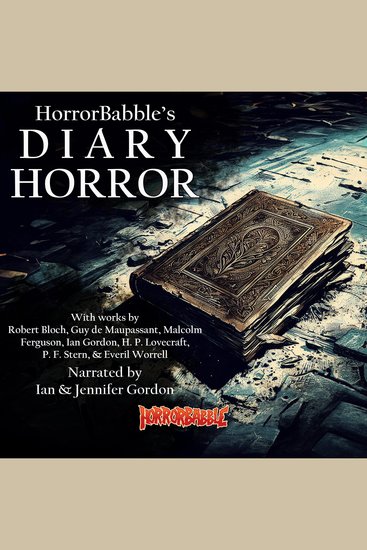
  • Diary Horror - The 'Found Footage' of the Written Word - cover

    Diary Horror - The 'Found...

    Robert Bloch, Guy de Maupassant,...

    • 0
    • 0
    • 0
    Fifteen stories told through the recovered pages of diaries/journals. 
    Contents: 
    What Killed Granded? by Ian Gordon (HorrorBabble, 2020) 
    An investigation told through a series of audio logs. 
    The Diary of Alonzo Typer by H. P. Lovecraft (Weird Tales, 1938) 
    An occult researcher disappears without a trace. 
    The Horror in the Lighthouse by E. A. Poe and R. Bloch (Fantastic, 1953) 
    Bloch completes Poe's famous fragment. 
    The Diary of Philip Westerly by Paul Compton (WT, 1936) 
    Unsettling incidents involving a mirror. 
    Notebook Found in a Deserted House by Robert Bloch (WT, 1951) 
    A boy hides from 'them ones'. 
    The Hall Bedroom by M. E. W. Freeman (Short Story Classics, 1905) 
    A peculiar room in a boarding house. 
    The Diary of a Madman by Guy de Maupassant (Le Gaulois, 1885) 
    The thoughts of an undiscovered murderer. 
    The Polar Vortex by Malcolm Ferguson (WT, 1946) 
    A terrible experiment. 
    The Impossible Adventure by H. T. W. Bousfield (WT, 1940) 
    A curious set of notes. 
    The Bed of Shadows by Fred R. Farrow, Jr. (WT, 1929) 
    What lurked above the man in the bed? 
    The Way Home by P. F. Stern (WT, 1935) 
    A man suffering from amnesia. 
    The Floor Above by M. Humphreys (WT, 1923) 
    A man's troubling stay with an old friend. 
    The Horla by Guy de Maupassant (1887) 
    A man is haunted by an invisible presence. 
    The Hollow Moon by Everil Worrell (WT, 1939) 
    A vampire and strange icebergs. 
    The Green Meadow by H. P. Lovecraft (The Vagrant, 1927) 
    A notebook found in a meteorite.
    Ver livro
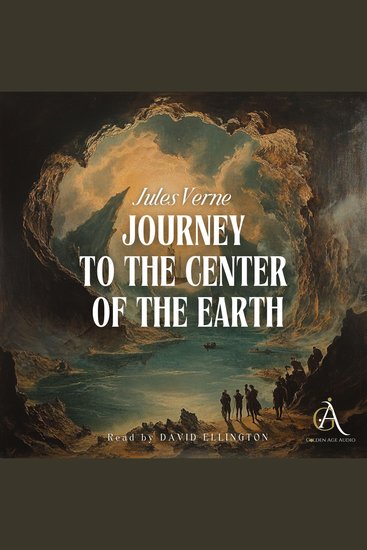
  • Journey to the Center of the Earth - Audiobook - cover

    Journey to the Center of the...

    Jules Verne, Classic Audiobooks,...

    • 0
    • 0
    • 0
    Journey to the Center of the Earth is one of Jules Verne's most imaginative and scientifically curious novels. It tells the story of Professor Otto Lidenbrock, an eccentric geologist who deciphers a mysterious manuscript revealing a secret path to the Earth's core. Along with his timid nephew Axel and their stoic Icelandic guide Hans, the trio embarks on a subterranean expedition filled with prehistoric creatures, underground oceans, and breathtaking discoveries.Combining scientific speculation with fantasy, Verne invites the reader into a hidden world beneath our feet, rich with danger and wonder. This pioneering work of science fiction continues to inspire generations with its sense of exploration, curiosity, and the endless possibilities of the unknown.
    Ver livro