Junte-se a nós em uma viagem ao mundo dos livros!
Adicionar este livro à prateleira
Grey
Deixe um novo comentário Default profile 50px
Grey
Assine para ler o livro completo ou leia as primeiras páginas de graça!
All characters reduced
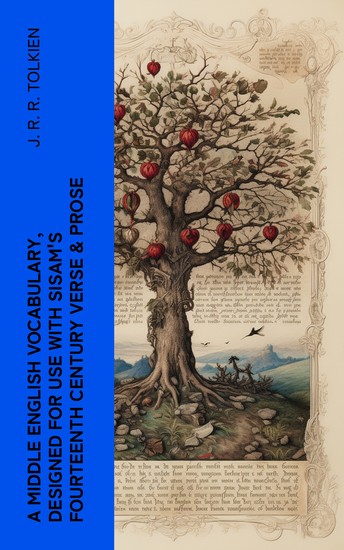
A Middle English Vocabulary Designed for use with Sisam's Fourteenth Century Verse & Prose - cover
LER

A Middle English Vocabulary Designed for use with Sisam's Fourteenth Century Verse & Prose

J. R. R. Tolkien

Editora: e-artnow

  • 0
  • 0
  • 0

Sinopse

"A Middle English Vocabulary, Designed for use with Sisam's Fourteenth Century Verse & Prose" by J. R. R. Tolkien. Published by e-artnow. e-artnow publishes a wide range of titles that encompasses every genre. From well-known classics & literary fiction and non-fiction to forgotten−or yet undiscovered gems−of world literature, we issue the books that need to be read. Each e-artnow edition has been meticulously edited and formatted to boost readability for all e-readers and devices. Our goal is to produce eBooks that are user-friendly and accessible to everyone in a high-quality digital format.
Disponível desde: 22/11/2023.
Comprimento de impressão: 424 páginas.

Outros livros que poderiam interessá-lo

  • Ownership - The Evangelical Legacy of Slavery in Edwards Wesley and Whitefield - cover

    Ownership - The Evangelical...

    Sean McGever, Vincent E. Bacote

    • 0
    • 0
    • 0
    The latest book from the author of Evangelism: For the Care of Souls.
    Ver livro
  • Tao of Mysticism - The Way of Agnostic Universalism - cover

    Tao of Mysticism - The Way of...

    Daniel Lichtenberg Lisy

    • 0
    • 0
    • 0
    ★★★★★ "A fascinating book that delves into the paths of various mystical traditions" 
     ___ 
    Discover the Tao of Mysticism that recognizes the mystery and complexity of our universe! 
    This book outlines the paths through various mystical traditions like Taoism, various forms Buddhism, Hinduism, Christianity and Islam, by embracing the humility, and metaphysics of human condition. 
    Learn how you can acknowledge the transcendent experience that goes beyond ordinary realm of perception, which is not exclusive to any tradition, but rather inclusively universal, while being intimately individual. 
    Order your audio book today!
    Ver livro
  • EQ+MH=PH Emotions! How to live an Emotionally Effective Life? - EQ+MH=PH - cover

    EQ+MH=PH Emotions! How to live...

    Dr. Uma Arora

    • 0
    • 0
    • 0
    “How emotional you are!”  
    So often we hear this comment from a friend or a family member.   
    Mostly we fumble as we think of a response because we do not know what to say as we cannot relate to what it means to be ‘emotional.’  
    Emotions make us human.  
    They give us information about what is going on inside us.  
    Emotional Quotient (EQ) is the level of awareness of what is taking place or going to take place. It is the ability to comprehend and use that knowledge effectively. Emotions help us reflect on how we are mentally equipped to give our life direction. Our emotional responses make us win friends, build healthy relationships or lose them. It is our EQ that allows us to stay ahead at work, and be focused and cheerful.   
    In recent times there is a lot of focus on one dimension of human well-being, physical health.  
    But then, physical health is just one part of our overall health. A partial one.  
    The equation to have a healthy life begins with a healthy and high EQ plus a healthy mind.  
    Once these two, our emotional quotient (EQ) and mental health (MH) are in place then our physical health (PH) will be in good shape. If we have a high EQ then even if we have any physical illness it will not make us stressed or discouraged to live a good and effective life. This seems understandable and logical but is very difficult to follow. This is where this book helps. Not only to open the perspective of well-being and health to have a multidimensional outlook but also to sustain it. too,  
                    
                            
    Ver livro
  • The Plainsman: A Story of Wild Bill Hickok - cover

    The Plainsman: A Story of Wild...

    Frank Jenners Wilstach

    • 0
    • 0
    • 0
    "In the following pages I have endeavoured to give the reader a plain, honest, homespun account of my state in life, and some few of the difficulties which have attended me along its journey, down to this time. I am perfectly aware, that I have related many small and, as I fear, uninteresting circumstances; but if so, my apology is, that it was rendered necessary by a desire to link the different periods of my life together, as they have passed, from my childhood onward, and thereby to enable the reader to select such parts of it as he may relish most, if, indeed, there is any thing in it which may suit his palate."
    Ver livro
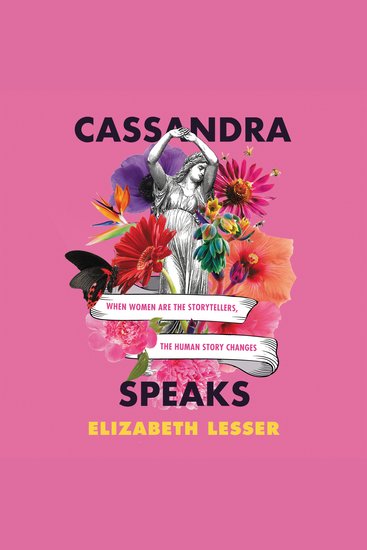
  • Cassandra Speaks - When Women Are the Storytellers the Human Story Changes - cover

    Cassandra Speaks - When Women...

    Anônimo

    • 0
    • 0
    • 0
    What story would Eve have told about picking the apple? Why is Pandora blamed for opening the box? And what about the fate of Cassandra who was blessed with knowing the future but cursed so that no one believed her? What if women had been the storytellers? 
    Elizabeth Lesser believes that if women’s voices had been equally heard and respected throughout history, humankind would have followed different hero myths and guiding stories—stories that value caretaking, champion compassion, and elevate communication over vengeance and violence. 
    Cassandra Speaks is about the stories we tell and how those stories become the culture. It’s about the stories we still blindly cling to, and the ones that cling to us: the origin tales, the guiding myths, the religious parables, the literature and films and fairy tales passed down through the centuries about women and men, power and war, sex and love, and the values we live by.  Stories written mostly by men with lessons and laws for all of humanity. We have outgrown so many of them, and still they endure. This book is about what happens when women are the storytellers too—when we speak from our authentic voices, when we flex our values, when we become protagonists in the tales we tell about what it means to be human. 
    Lesser has walked two main paths in her life—the spiritual path and the feminist one—paths that sometimes cross but sometimes feel at cross-purposes. Cassandra Speaks is her extraordinary merging of the two. The bestselling author of Broken Open and Marrow, Lesser is a beloved spiritual writer, as well as a leading feminist thinker. In this book she gives equal voice to the cool water of her meditative self and the fire of her feminist self. With her trademark gifts of both humor and insight, she offers a vision that transcends the either/or ideologies on both sides of the gender debate. 
    Brilliantly structured into three distinct parts, Part One explores how history is carried forward through the stories a culture tells and values, and what we can do to balance the scales. Part Two looks at women and power and expands what it means to be courageous, daring, and strong. And Part Three offers “A Toolbox for Inner Strength.” Lesser argues that change in the culture starts with inner change, and that no one—woman or man—is immune to the corrupting influence of power. She provides inner tools to help us be both strong-willed and kind-hearted. 
    Cassandra Speaks is a beautifully balanced synthesis of storytelling, memoir, and cultural observation. Women, men and all people will find themselves in the pages of this book, and will come away strengthened, opened, and ready to work together to create a better world for all people.
    Ver livro

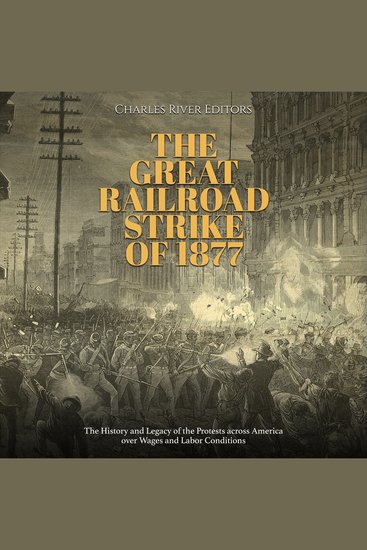
  • Great Railroad Strike of 1877 The: The History and Legacy of the Protests across America over Wages and Labor Conditions - cover

    Great Railroad Strike of 1877...

    Editors Charles River

    • 0
    • 0
    • 0
    When trains were introduced as a popular means of transportation, some of the first tracks laid terminated in New York, and the expansion of railroads led to the birth of train stations across the country. In general, these were small buildings where passenger could buy tickets and wait for their trains to arrive, and according an article written by Samuel Dunn around the turn of the 20th century, “The first Manhattan terminal was opened in 1832 at Centre Street, near the present City Hall, by the New York and Harlem road, now leased to the New York Central. Trains were run by steam as far south as Fourteenth Street and pulled from there by horses.” If it is hard to conceive of large box cars or even heavier locomotives being pulled by horse, it’s important to remember that the first train cars were little more than traditional carriages designed to move on iron tracks.  
    	Initially, the nation’s railway system was a fragmented, often chaotic system, but Cornelius Vanderbilt went about creating an interregional system, integrating a network of smaller railroads that ran according to their own policies, procedures, and even timetables. It was not only more customer-friendly, but it helped lower shipping costs and created a more efficient system of transporting goods and people. This led to the creation of one of the nation’s first corporations, the New York Central and Hudson Railroad.  
    	While companies competed with each other, the employees themselves were often squeezed, not only working long hours in hazardous conditions, but making pitiful pay. Put simply, in an age before widespread labor regulations were enacted and unions organized, the employers exercised nearly absolute power over employees. 
    Ver livro