¡Acompáñanos a viajar por el mundo de los libros!
Añadir este libro a la estantería
Grey
Escribe un nuevo comentario Default profile 50px
Grey
Suscríbete para leer el libro completo o lee las primeras páginas gratis.
All characters reduced
The Dangerfield Talisman - cover

The Dangerfield Talisman

J. J. Connington

Editorial: Good Press

  • 0
  • 0
  • 0

Sinopsis

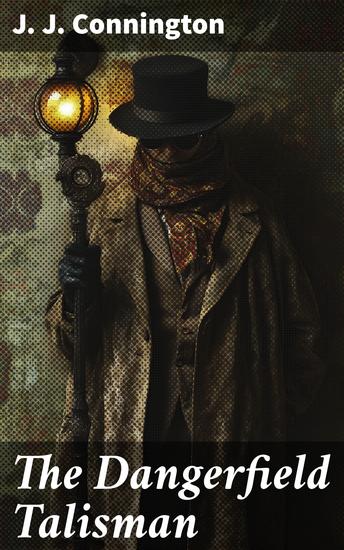
In 'The Dangerfield Talisman,' J. J. Connington crafts a masterful blend of mystery and adventure set against the backdrop of early 20th-century England. The novel intricately weaves elements of detective fiction, echoing the style of contemporaries like Agatha Christie but marked by Connington's unique narrative flair. With a plot that centers around a cursed talisman and its intertwining with the lives of its possessors, the text explores themes of greed, fate, and the supernatural, all while maintaining a sharp wit and complex character development that engages readers at every turn. J. J. Connington, born Alfred Walter Stewart, was a noted figure in early detective literature, often drawing from his background in mathematics and expertise in problem-solving to construct intricate plots. His personal fascination with archaeology and the occult undoubtedly influenced 'The Dangerfield Talisman,' infusing the narrative with a sense of authenticity and intrigue. Connington's rich understanding of human psychology and his meticulous attention to detail make this novel both a compelling read and a psychological study. This novel is highly recommended for fans of classic detective fiction and those who appreciate an intelligent blend of suspense and the supernatural. Connington's deft storytelling ensures that readers will be captivated from the first page to the last, making 'The Dangerfield Talisman' a significant contribution to the genre.
Disponible desde: 02/03/2025.
Longitud de impresión: 110 páginas.

Otros libros que te pueden interesar

  • Uncle's Dream - cover

    Uncle's Dream

    Fyodor Dostoevsky

    • 0
    • 0
    • 0
    Uncle's Dream (Russian: Дядюшкин сон, Dyadyushkin son) is an 1859 novella by Russian writer Fyodor Dostoevsky. The first work of Dostoevsky after a long pause, the novella was written during the author's stay in Semipalatinsk. It was first published in the Russian magazine Russkoye Slovo (1859, No. 3).
    Ver libro
  • A Farewell to Arms - cover

    A Farewell to Arms

    Ernest Hemingway

    • 0
    • 0
    • 0
    A Farewell to Arms is a novel by American writer Ernest Hemingway, set during the Italian campaign of World War I. First published in 1929, it is a first-person account of an American, Frederic Henry, serving as a lieutenant (Italian: tenente) in the ambulance corps of the Italian Army. The novel describes a love between the American expatriate and an English nurse, Catherine Barkley.
    Ver libro
  • Oblomov - cover

    Oblomov

    Ivan Goncharov

    • 0
    • 0
    • 0
    Ivan Goncharov’s Oblomov is a profound exploration of indolence and the human condition, centered on Ilya Oblomov, a Russian nobleman whose defining trait is his overwhelming lethargy. Unable to muster the energy for work or ambition, Oblomov spends his days in bed or lost in nostalgic reveries of his idyllic childhood estate. His apathy contrasts sharply with his pragmatic friend Stoltz, who strives for progress and success. When Oblomov falls in love with Olga, her attempts to inspire him initially spark change, but his inertia ultimately prevails. Goncharov’s novel critiques societal stagnation and the feudal system while painting Oblomov’s passivity as both tragic and universal. A poignant blend of humor and pathos, Oblomov examines the tension between dreams and reality, leaving readers to ponder the fine line between contentment and complacency.
    Ver libro
  • Desperate Remedies - cover

    Desperate Remedies

    Thomas Hardy

    • 0
    • 0
    • 0
    A young woman named Cytherea Graye becomes entangled in a web of mystery and intrigue while working as a lady’s maid for the enigmatic Miss Aldclyffe. As secrets unravel, themes of love, deception, and obsession drive the plot forward. Cytherea faces moral dilemmas and societal pressures, torn between her loyalty to Miss Aldclyffe and her growing affection for architect Edward Springrove. Hardy crafts a tale blending suspense with romance, exploring human frailty and the consequences of impulsive choices. Set against Victorian England’s rigid class structures, the novel delves into themes of identity, ambition, and sacrifice, showcasing Hardy’s early experimentation with psychological depth and dramatic tension.
    Ver libro
  • Beowulf - cover

    Beowulf

    Unknown Unknown

    • 0
    • 0
    • 0
    Beowulf is an Old English epic poem in the tradition of Germanic heroic legend consisting of 3,182 alliterative lines. It is one of the most important and most often translated works of Old English literature. The date of composition is a matter of contention among scholars; the only certain dating is for the manuscript, which was produced between 975 and 1025. Scholars call the anonymous author the "Beowulf poet". The story is set in pagan Scandinavia in the 6th century. Beowulf, a hero of the Geats, comes to the aid of Hrothgar, the king of the Danes, whose mead hall in Heorot has been under attack by the monster Grendel. After Beowulf slays him, Grendel's mother attacks the hall and is then defeated. Victorious, Beowulf goes home to Geatland and becomes king of the Geats. Fifty years later, Beowulf defeats a dragon but is mortally wounded in the battle. After his death, his attendants cremate his body and erect a tower on a headland in his memory. Scholars have debated whether Beowulf was transmitted orally, affecting its interpretation: if it was composed early, in pagan times, then the paganism is central and the Christian elements were added later, whereas if it was composed later, in writing, by a Christian. Beowulf is written mostly in the West Saxon dialect of Old English, but many other dialectal forms are present, suggesting that the poem may have had a long and complex transmission throughout the dialect areas of England.No definite sources or analogs of the poem can be proven, but many suggestions have been made, including the Icelandic Grettis saga, the Norse story of Hrolf Kraki and his bear-shapeshifting servant Bodvar Bjarki, the international folktale the Bear's Son Tale, and the Irish folktale of the Hand and the Child. Persistent attempts have been made to link Beowulf to tales from Homer's Odyssey or Virgil's Aeneid. More definite are Biblical parallels, with clear allusions to the books of Genesis, Exodus, and Daniel.
    Ver libro
  • Life and Adventures of Jack Engle An Autobiography - cover

    Life and Adventures of Jack...

    Walt Whitman

    • 0
    • 0
    • 0
    Walter Whitman was an American poet, essayist and journalist. A humanist, he was a part of the transition between transcendentalism and realism, incorporating both views in his works. Whitman is among the most influential poets in the American canon, often called the father of free verse. His work was controversial in its time, particularly his 1855 poetry collection Leaves of Grass, which was described as obscene for its overt sensuality. Whitman's own life came under scrutiny for his presumed homosexuality.Born in Huntington on Long Island, as a child and through much of his career, he resided in Brooklyn. At age 11, he left formal schooling to go to work. Later, Whitman worked as a journalist, a teacher, and a government clerk. Whitman's major poetry collection, Leaves of Grass, was first published in 1855 with his own money and became well known. The work was an attempt at reaching out to the common person with an American epic. He continued expanding and revising it until his death in 1892. During the American Civil War, he went to Washington, D.C. and worked in hospitals caring for the wounded. His poetry often focused on both loss and healing. On the death of Abraham Lincoln, whom Whitman greatly admired, he wrote his well-known poems, "O Captain! My Captain!" and "When Lilacs Last in the Dooryard Bloom'd", and gave a series of lectures. After a stroke towards the end of his life, Whitman moved to Camden, New Jersey, where his health further declined. When he died at age 72, his funeral was a public event.Whitman's influence on poetry remains strong. Mary Whitall Smith Costelloe argued: "You cannot really understand America without Walt Whitman, without Leaves of Grass ... He has expressed that civilization, 'up to date,' as he would say, and no student of the philosophy of history can do without him." Modernist poet Ezra Pound called Whitman "America's poet ... He is America.
    Ver libro