¡Acompáñanos a viajar por el mundo de los libros!
Añadir este libro a la estantería
Grey
Escribe un nuevo comentario Default profile 50px
Grey
Suscríbete para leer el libro completo o lee las primeras páginas gratis.
All characters reduced
The Epidemics in Medieval Time - cover

The Epidemics in Medieval Time

J. F. C. Hecker

Traductor B. G. Babington

Editorial: DigiCat

  • 0
  • 0
  • 0

Sinopsis

In "The Epidemics in Medieval Time," J. F. C. Hecker offers a meticulous exploration of the various plagues and diseases that devastated Europe during the Middle Ages. Hecker's erudite prose weaves together historical details, personal accounts, and medical knowledge, creating a narrative that captures the horror and societal impact of these pandemics. By placing the epidemics within the broader context of medieval culture and thought, Hecker demonstrates how these infectious crises influenced religion, politics, and societal structures, all while employing a scholarly yet accessible literary style that invites a wide audience. J. F. C. Hecker, a distinguished medical historian and a pivotal figure in the study of medieval medicine, draws on his extensive research and expertise to illuminate the intersections of health, disease, and human experience in this era. His background and scholarly pursuits shed light on the historical significance of epidemics, reflecting a deeper understanding of how such crises shaped human progress and resilience. His dedication to uncovering the complexities of the human experience during times of strife informs every page of this captivating work. This meticulously researched book is highly recommended for both historians and general readers seeking a comprehensive understanding of medieval epidemics. Hecker's insights not only enhance our understanding of past societal responses to disease but also resonate in today's context, making it a timely read for those interested in the historical interplay between health crises and societal evolution.
Disponible desde: 16/08/2022.
Longitud de impresión: 441 páginas.

Otros libros que te pueden interesar

  • Crusading against the Ottomans: The History and Legacy of the Christian Battles against the Ottoman Empire in Central Europe - cover

    Crusading against the Ottomans:...

    Editors Charles River

    • 0
    • 0
    • 0
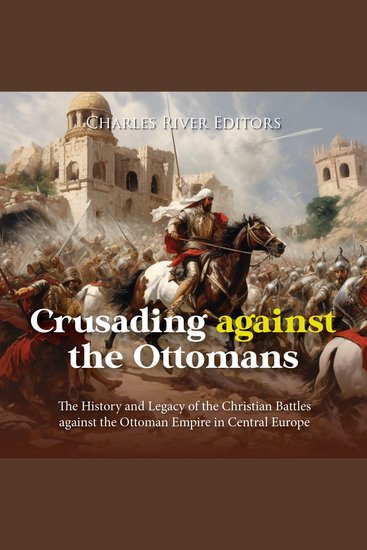
    In terms of geopolitics, perhaps the most seminal event of the Middle Ages was the successful Ottoman siege of Constantinople in 1453. The city had been an imperial capital as far back as the 4th century, when Constantine the Great shifted the power center of the Roman Empire there, effectively establishing two almost equally powerful halves of antiquity’s greatest empire. Constantinople would continue to serve as the capital of the Byzantine Empire even after the Western half of the Roman Empire collapsed in the late 5th century. Naturally, the Ottoman Empire would also use Constantinople as the capital of its empire after their conquest effectively ended the Byzantine Empire, and thanks to its strategic location, it has been a trading center for years and remains one today under the Turkish name of Istanbul. 
    Naturally, the Byzantines and Europeans didn’t take the Ottoman incursions laying down, and in the generations before the Ottoman victory at Constantinople, European alliances frequently tried to check Ottoman advances, couching their campaigns in the terms of crusading. One of them came near the end of the 14th century, and it presaged what was to come in the 15th century. 
    The Ottoman campaigns of the 14th century would provide the context for the events that led to the Battle of Nicopolis. One of the last major crusades was launched in 1396 by Pope Boniface IX, and the timing was perfect for the European kingdoms to unite and form a strong threat to the Ottomans. The 100-year war between France and England was in a state of truce, and King Richard II had just married Princess Isabella of France. Thus, both the English and the Franks would be able to send forces to join in a crusade, and so would Hungary, Bulgaria, Venice, Genoa, Croatia, Wallachia, the Holy Roman Empire, and the Knights Hospitaller.
    Ver libro
  • WELL-Connected: Transform Your Listening Experience Today - "Elevate your listening journey! Dive into our immersive audio lessons for an unforgettable experience today" - cover

    WELL-Connected: Transform Your...

    Crispin Blackwell

    • 0
    • 0
    • 0
    WELL-Connected: Transform Your Listening Experience Today 
    Are you eager to advance in your career and enhance your expertise by mastering the skills necessary for effective communication? 
    Searching for a thorough guide that encompasses all the essential elements to elevate your writing and communication skills? 
    Look no further! 
    This guide is your ultimate companion for deepening your understanding, applying your skills, and engaging in practical exercises. With this resource, you're set for success. 
    Key Features of This Enhanced Guide: 
    - In-depth insights into writing and communication skills 
    - Comprehensive explanations of effective writing techniques 
    - Proven strategies for preparation and skill enhancement 
    Our guide stands out due to its extensive coverage, which is vital for your success. Concepts are explored in detail rather than glossed over. 
    Please note that this guide is an independent resource and is not associated with any official writing or communication entities. 
    Crafted with a clear structure and accessible language, our guide ensures smooth transitions between topics. Bid farewell to complex jargon and embrace straightforward, accurate, and technically sound content. 
    So, why wait? Click the BUY NOW button, secure your guide, and embark on your journey to success in transforming your writing and communication skills!  
    Start your journey to elevate your writing and communication skills today!
    Ver libro
  • Beyond States - Powers Peoples and Global Order - cover

    Beyond States - Powers Peoples...

    Anthony Pagden

    • 0
    • 0
    • 0
    Today, the majority of the peoples of the planet live in nation-states, based upon the idea, if never the reality, of a single people, a single culture, a single rule of law, and a single source of sovereign authority. But will they continue to do so in the future? 


    None of the major challenges that confront humanity today—from climate change to disease, from terrorism to mass migration—can be handled effectively by single nation-states, no matter how powerful. The world is no longer made up only of states but also of an ever-increasing multitude of interstate networks and organizations which recognize no borders. We are beginning to be able to imagine the very real possibility of a new global civil society. But what political form should this take? 


    By examining the history of the evolution of human society from the world's first empires to today's world of interstate networks, this book argues that there now exists the possibility of the emergence of a new political form, a global 'federation of federations', that will bring the species closer to the possibility of a more harmonious, equitable, and secure future.
    Ver libro
  • Acts of the Apostles Beyond the Canon - Untold Miracles & Adventures of Peter Paul John Andrew Thomas and Barnabas – A Modern Translation – Adapted for the Contemporary Reader - cover

    Acts of the Apostles Beyond the...

    Various Early Christian Writers,...

    • 0
    • 0
    • 0
    What if you could hear the apostles’ untold miracles, journeys, and battles with darkness—stories too bold for the Bible? 
    Acts of the Apostles Beyond the Canon brings to life the lesser-known sacred texts that capture the apostles’ miraculous adventures after Pentecost.  
    Full of divine encounters, courageous women, and cosmic battles between good and evil, these stories breathe new life into the early Church’s forgotten legacy. 
    What you’ll discover inside: 
    •	Acts of Peter – Healings, confrontations with sorcerers, and his martyrdom in Rome 
    •	Acts of Paul and Thecla – A revolutionary female disciple and her trials for the faith 
    •	Acts of John – Mystical visions and his unique final moments 
    •	Acts of Andrew & Thomas – Unshakable missions in the face of persecution, including Thomas’s fateful journey to India 
    •	Acts of Barnabas & Philip – Evangelizing new lands with signs and wonders 
    •	Acts Chapter 29 – A mysterious text depicting Paul’s speculative journey to Britain 
    Let these rediscovered voices reignite your imagination and strengthen your spirit. 
    Press play and walk again with the apostles—beyond the canon and into legend.
    Ver libro
  • 12 Masterpieces You Have to Read Before You Die Philosophy - cover

    12 Masterpieces You Have to Read...

    Niccolò Machiavelli, Tommaso...

    • 0
    • 0
    • 0
    Contents:The Prince by Niccolo MachiavelliThe City of the Sun by Tommaso CampanellaThe New Atlantis by Francis BaconUtopia by Thomas More Utilitarianism byJohn Stuart MillOn Liberty by John Stuart MillAn Answer to the Question What is Enlightenment by Immanuel KantThe Prophet by Kahlil GibranA Confession by Leo TolstoyOrthodoxy by G.K. ChestertonThe Madman, His Parables and Poems by Kahlil GibranOn the Duty of Civil Disobedience by Henry David Thoreau
    Ver libro
  • Jnana Yoga - The Path of Knowledge - cover

    Jnana Yoga - The Path of Knowledge

    Clarice Bendleton

    • 0
    • 0
    • 0
    Jnana Yoga, often referred to as the "Path of Knowledge," is one of the four primary paths of yoga in the ancient tradition of Vedanta. The word “Jnana” comes from the Sanskrit root “jñā,” meaning knowledge, and Jnana Yoga is specifically concerned with the cultivation of wisdom and the realization of the ultimate truth of existence. Unlike the more physical paths like Hatha Yoga, Jnana Yoga focuses on intellectual discernment and meditation as tools to break through the illusion of the material world and achieve spiritual enlightenment. 
    At the heart of Jnana Yoga lies the pursuit of self-inquiry and the question, "Who am I?" This path asserts that ultimate knowledge, or liberation (moksha), can only be attained by understanding the true nature of oneself, and by discerning the difference between the transient, material world (Maya) and the eternal reality (Brahman). Jnana Yoga emphasizes the principle of non-duality, or Advaita, which teaches that the individual self (Atman) is ultimately one with the divine (Brahman). This realization dispels the illusion of separation between the self and the universe. 
    The path of Jnana Yoga is often described as a mental discipline that requires intense study, reflection, and meditation. It is traditionally taught by a guru, or spiritual teacher, who guides the seeker in their quest for self-knowledge. The guru's role is to help the student distinguish between the real and the unreal, encouraging them to look beyond their attachments, desires, and egos. Scriptures like the Upanishads, Bhagavad Gita, and other Vedantic texts are central to Jnana Yoga, providing the philosophical foundation for its practices.
    Ver libro