Junte-se a nós em uma viagem ao mundo dos livros!
Adicionar este livro à prateleira
Grey
Deixe um novo comentário Default profile 50px
Grey
Assine para ler o livro completo ou leia as primeiras páginas de graça!
All characters reduced
Modern dancing and dancers - A Scholarly Exploration of Contemporary Dance Evolution - cover
LER

Modern dancing and dancers - A Scholarly Exploration of Contemporary Dance Evolution

J. E. Crawford Flitch

Editora: Good Press

  • 0
  • 0
  • 0

Sinopse

In "Modern Dancing and Dancers," J. E. Crawford Flitch delivers an insightful exploration into the evolution of dance as both an art form and a cultural phenomenon in the early 20th century. Flitch employs a combination of vivid imagery and analytical prose, drawing on contemporary dance movements, notable figures, and sociocultural influences that have shaped modern dance. This work transcends mere documentation, offering a critical examination of the interplay between dance and the changing societal norms of the period, positioning dance as an essential expression of modernity. J. E. Crawford Flitch, a prominent dance historian and critic, was profoundly influenced by the vibrant dance scene of his time. His extensive background in performance and teaching, coupled with his engagement in the avant-garde movements of the early 1900s, provides a rich foundation for his exploration. Flitch's keen understanding of the intricate relationship between dance and broader cultural forces allows him to illuminate the significance of dancers and their contributions to the art. Readers seeking to understand the transformative power of dance will find "Modern Dancing and Dancers" an indispensable resource. Flitch'Äôs thorough research and passionate narration foster an appreciation for the intricate art of dance, making this book a must-read for both enthusiasts and scholars alike.
Disponível desde: 17/01/2022.
Comprimento de impressão: 193 páginas.
Outros livros que poderiam interessá-lo

  • Memorable Music: Classical Rock And More - What Makes The Best So Great - cover

    Memorable Music: Classical Rock...

    One Day University

    • 0
    • 0
    • 0
    Learn from five remarkable professors in this set of One Day University presentations on the history and evolution of popular music. The most basic definition of music is simply the art of arranging sounds in time through the elements of melody, harmony, rhythm, and timbre. And in fact it is one of the universal cultural aspects of all human societies. It's performed with a vast range of instruments and vocal techniques and the common saying ""it's music to my ears"" underlines the notion that music is quite simply something people enjoy listening to! In every culture, music is an important part of people's way of life, as it plays a key role in religious rituals, rites of passage ceremonies, social activities and cultural activities of every type.
    Ver livro
  • Christopher Columbus and the Afrikan Holocaust - Slavery and the Rise of European Capitalism - cover

    Christopher Columbus and the...

    John Henrik Clarke

    • 0
    • 0
    • 0
    "Christopher Columbus and the Afrikan Holocaust," by John Henrik Clarke, shatters the hero's-journey narrative surrounding Columbus, exposing him as an architect of exploitation. The book recasts the "discovery" of America as a brutal invasion, paving the way for centuries of Indigenous suffering and laying the groundwork for the African Holocaust – the transatlantic slave trade. 
     
    Clarke argues that neither Indigenous nor African subjugation was incidental. Instead, they were calculated moves fueled by insatiable European greed. The book deconstructs the myth of benevolent colonization, revealing its core as a resource-hungry machine reliant on forced labor and extraction. This system, christened "European capitalism," thrived on the dehumanization and exploitation of entire populations. 
     
    Clarke doesn't merely paint a grim picture; he also illuminates resistance. He highlights the agency of colonized peoples, their unwavering fight for freedom despite unimaginable suffering. This Pan-Africanist perspective weaves together the struggles of both Indigenous and African peoples, demonstrating the interconnectedness of global oppression. 
     
    Beyond historical analysis, the book serves as a potent call to action. Clarke urges readers to confront the legacies of colonialism and slavery, dismantling the very systems that perpetuate inequality. He doesn't shy away from uncomfortable truths, demanding critical examination of narratives that continue to shape our understanding of the world. 
     
    This book is not for the faint of heart. It confronts sensitive historical events with unflinching honesty, potentially exposing readers to disturbing descriptions of violence and oppression. Yet, through its unflinching analysis and unwavering call for justice, "Christopher Columbus and the Afrikan Holocaust" offers a crucial roadmap for navigating the complex legacies of the past and building a more equitable future.
    Ver livro
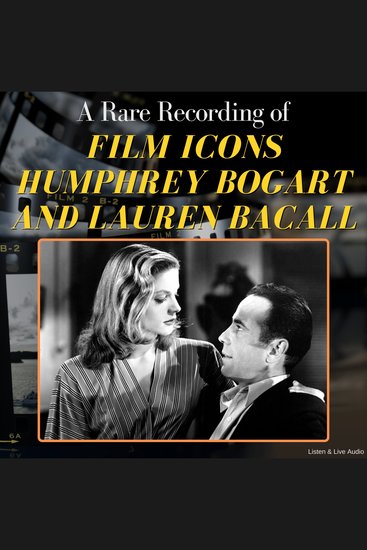
  • A Rare Recording of Film Icons Humphrey Bogart and Lauren Bacall - cover

    A Rare Recording of Film Icons...

    Humphrey Bogart, Lauren Bacall

    • 0
    • 0
    • 0
    Humphrey DeForest Bogart (December 25, 1899 - January 14, 1957), nicknamed Bogie, was an American actor. His performances in classic Hollywood cinema films like The Maltese Falcon, Casablanca, and The Caine Mutiny, made him an American cultural icon. In 1999, the American Film Institute selected Bogart as the greatest male star of classic American cinema. Lauren Bacall, born Betty Joan Perske (September 16, 1924 - August 12, 2014), was one of the greatest female stars of classic Hollywood cinema and an award-winning Broadway stage actress. She was known for her alluring, sultry presence and her distinctive, husky voice. In the following September 1954 recording, Bogart and then-wife Bacall are interviewed at their Los Angeles, CA by Edward R. Murrow.
    Ver livro
  • A City Within One Building - Exploring the Unique Architecture of Urban Life - cover

    A City Within One Building -...

    John Harpoon

    • 0
    • 0
    • 0
    In the heart of urban landscapes, the idea of a "city within one building" has evolved from a futuristic concept to a tangible reality. These monumental structures encapsulate the essence of urban life, redefining the way we live, work, and interact within confined yet dynamic environments. At their core, they embody the idea of vertical urbanism—a vision that seeks to concentrate the diversity and vibrancy of a city into a single architectural entity. 
    The origins of this vision can be traced to the pressures of urbanization and the relentless march of technological innovation. As cities expanded horizontally, they encountered spatial limitations, environmental challenges, and infrastructural strain. The solution lay not outward, but upward. Vertical urbanism emerged as a response to these challenges, combining architectural ingenuity with a commitment to sustainability. The result is a new typology of buildings that integrate residential, commercial, recreational, and even cultural spaces into a cohesive, self-contained ecosystem. 
    One of the most compelling aspects of these megastructures is their ability to transform our perception of space and connectivity. Traditional cities rely on sprawling layouts that separate different functions—housing, offices, schools, and leisure activities are often miles apart. By contrast, a city within a building integrates these elements into a seamless whole. Residents can live, work, and play without stepping outside, reducing reliance on transportation and fostering a sense of community within the structure’s walls.
    Ver livro
  • St Gall Cathedral and Abbey Library - cover

    St Gall Cathedral and Abbey Library

    Josef Grünenfelder, Cornel Dora

    • 0
    • 0
    • 0
    St Gall cathedral was built in 1755–1770 as the church of the Benedictine monastery, which was dissolved in 1805. In the Middle Ages this church, erected on the site of the hermitage of St Gallus, was one of the most important monasteries in the western world. Today the Abbey Archive and Abbey Library still possess invaluable documentary evidence from that era. The Baroque monastery complex testifies to the flourishing of the prince-abbey in the 17th and 18th centuries. The church, like the adjacent abbey library, built after the plans of Peter Thumb and decorated by the best South German artists of the day, forms the monumental conclusion of a long series of Baroque abbey churches realised by Vorarlberg master builders. St Gall’s abbey district is a UNESCO World Heritage Site, the collections of the Abbey Library and Archive are included in the UNESCO World Documentary Heritage List.
    Ver livro
  • The American Film Institute's 5 Greatest Actors - cover

    The American Film Institute's 5...

    Editors Charles River

    • 0
    • 0
    • 0
    In 1999, the American Film Institute released its list of the 50 greatest Hollywood stars of the 20th century, and selecting the best actors out of the bunch was certainly a tall task. The competition was so stacked that men like Gary Cooper and John Wayne were not even among the Top 10. So who were the Top 5 men selected by the AFI? 
    One man has long been considered the greatest male star. From the time he first became a leading man, Humphrey Bogart’s screen image has resonated with viewers more than perhaps any other actor. His persona as a tough guy who manages to maintain his sense of virtue no matter how compromising the situation features in some of the most famous films ever made, including Casablanca (1942), The Maltese Falcon (1941), and Key Largo (1949). 
    Movie stars are revered for their ability to captivate audiences, and perhaps no actor has done it as well as Cary Grant, the epitome of the suave, debonair actor who may have been rivaled only by dancer extraordinaire Fred Astaire. The films in which Astaire acted may not be especially famous in their own right, but Astaire’s dancing prowess left a lasting impact. 
    If the list was reconstructed today, it is entirely possible that Jimmy Stewart would rank first. Not only have movies such as It’s a Wonderful Life (1946) and Vertigo (1958) continued to gain in popularity even into the 21st century, but Stewart has come to embody an accessible image of American values that is easy for everyone to embrace. 
    Over the course of his long, prolific career, Marlon Brando was considered perhaps the greatest actor of the 20th century as well as one of the most complicated and misunderstood. Uniquely able to be both emotionally charged and technically constrained in the same performance, he single-handedly changed the direction of not only the American style of acting, influencing successors such as Robert De Niro, Al Pacino and even Johnny Depp, but the acting profession on a global scale.
    Ver livro