Junte-se a nós em uma viagem ao mundo dos livros!
Adicionar este livro à prateleira
Grey
Deixe um novo comentário Default profile 50px
Grey
Assine para ler o livro completo ou leia as primeiras páginas de graça!
All characters reduced
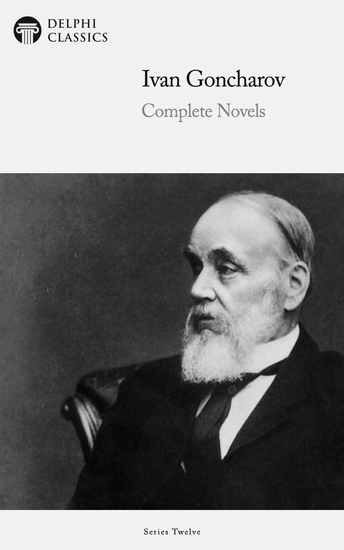
Delphi Complete Novels of Ivan Goncharov (Illustrated) - cover
LER

Delphi Complete Novels of Ivan Goncharov (Illustrated)

Ivan Goncharov

Editora: Delphi Publishing Ltd

  • 0
  • 0
  • 0

Sinopse

The Russian master Ivan Goncharov wrote highly esteemed novels that dramatise social change in Russia and feature vivid and memorable characters. His masterpiece ‘Oblomov’ (1859) is widely regarded as one of the most important Russian novels, drawing a powerful contrast between the aristocratic and capitalistic classes and attacking the way of life based on serfdom. The hero, Oblomov, a generous but indecisive young nobleman, is one of the most celebrated nineteenth century characters of world literature. This eBook presents Goncharov’s complete novels, with numerous illustrations and informative introductions. (Version 1)
 
* Beautifully illustrated with images relating to Goncharov’s life and works* Concise introductions to the novels and other texts* All the novels, with individual contents tables* Images of how the books were first published, giving your eReader a taste of the original texts* Excellent formatting of the texts* Features a brief biography
 
Please note: sadly, there are no available translations of Goncharov’s short stories or non-fiction.
 
CONTENTS:
 
The NovelsA Common Story (1847) (Translated by Constance Garnett, 1894)Oblomov (1859) (Translated by C. J. Hogarth, 1915)The Precipice (1869) (Translated by M. Bryant, 1914)
 
The BiographyBrief Biography of Ivan Goncharov (1911)
 
Please visit www.delphiclassics.com to browse through our range of exciting titles or to purchase this eBook as a Parts Edition of individual eBooks
Disponível desde: 19/03/2022.

Outros livros que poderiam interessá-lo

  • Bobok - From their pens to your ears genius in every story - cover

    Bobok - From their pens to your...

    Fyodor Dostoyevsky

    • 0
    • 0
    • 0
    Fyodor Mikhailovich Dostoyevsky was born in Moscow on 11th November, 1821 to distinguished multi-ethnic parents from a Lithuanian background.  
    His childhood years were at the family home in hospital grounds which also contained an orphanage, an insane asylum and a cemetery for criminals.  The young Fyodor often disobeyed his father by talking to the ill in the hospital gardens.   
    His health was compromised at age 9 when he experienced his first epileptic fit. By the time he was a teenager both parents had died and he was now enrolled in a military academy where he graduated and eventually became a Lieutenant in 1842.  He left military service the next year. 
    In 1846 he published his first novel ‘Poor Cow’ to great literary acclaim.  His next was unable to emulate that success but his short stories helped provide an income.  Life as an author was definitely difficult. As he began his next work he was arrested and incarcerated for treason and participation in the political and literary Petrashevsky Circle. Although the case was weak and unjustified he was sentenced to 4 years of hard labour followed by 5 years of military service in a Siberian regiment.  
    Despite the undoubted hardships and setbacks in his life, and whether they helped or hindered his writing, his talents produced many exceptional works of literature including ‘Crime and Punishment’, ‘The Idiot’ and ‘The Brothers Karamazov’.   
    Dostoevsky’s ability to get under the skin of his characters and show the inner workings of their mind was hugely influential and ahead of its time.  Interwoven with this was the influence of the broader social, spiritual and political forces at work in a person's psyche.   
    Fyodor Dostoevsky struggled financially and remained in poor health for much of his adult life.  He died from a lung haemorrhage on 9th February, 1881.
    Ver livro
  • The Diary of a God - From their pens to your ears genius in every story - cover

    The Diary of a God - From their...

    Barry Pain

    • 0
    • 0
    • 0
    Barry Eric Odell Pain was born at 3 Sydney Street in Cambridge on 28th September 1864. He was one of 4 children. 
    He was educated at Sedbergh School and then Corpus Christi College, Cambridge where he read classics and contributed to and edited Granta. 
    Four years of service as an Army coach followed before he moved to London. In 1889, Cornhill Magazine published his short story ‘The Hundred Gates’.  This opened the way for Pain to advance his literary career on several fronts. He became a contributor to Punch and The Speaker, as well as joining the staff of both the Daily Chronicle and Black and White.  
    In 1897 he succeeded Jerome K Jerome as editor of To-Day but still contributed regularly, until 1928, to the Windsor Magazine. 
    It is often said that Pain was discovered by Robert Louis Stevenson, who compared his work to that of Guy de Maupassant.  It’s an apt comparison. Pain was also a master of disturbing prose but able to inject parody and light comedy into many of his works.  A simple premise could in his hands suddenly expand into a world very real but somehow emotionally fraught and on the very edge of darkness as many of these short stories demonstrate.   
    Despite applying his talents to several genres and forms today Pain is more readily thought of, especially during the first decade of the 20th Century, as perhaps the leading British humorist of his day.  These stories reveal a darker side and beg to differ. 
    Barry Pain died on 5th May 1928 in Bushey, Hertfordshire.
    Ver livro
  • The Metropolis - cover

    The Metropolis

    Upton Sinclair

    • 0
    • 0
    • 0
    This gripping novel follows Allan Montague, a young lawyer who enters the dazzling high society of New York City, only to uncover a web of corruption, greed, and moral decay. As Montague navigates the glittering ballrooms and shadowy boardrooms of the elite, he is forced to confront the stark realities behind the facade of wealth and power. Sinclair's incisive critique of the American Gilded Age unveils the stark contrasts between opulence and poverty, integrity and vice.
    Ver livro
  • Four Beasts in One - The Homo-Cameleopard - cover

    Four Beasts in One - The...

    SAMPI Books, Edgar Allan Poe

    • 0
    • 0
    • 0
    Edgar Allan Poe's short story "Four Beasts in One - The Homo-Cameloopard" tells the story of Antiochus Epiphanes, an extravagant monarch who parades a bizarre being through the streets of Antioch, reflecting on the nature of humanity and monstrosity.
    Ver livro
  • At Christmas Time and Other Stories - cover

    At Christmas Time and Other Stories

    Anton Chekhov

    • 0
    • 0
    • 0
    This collection of short stories by Anton Chekhov are all set at Christmastime. Rather than depicting a sentimental image of Christmas, Chekhov paints a picture of the harsh reality faced by many of the poorer members of society during a bitter Russian winter, while still injecting elements of pathos and humour. This collection includes "At Christmas Time (Parts 1 & 2)", "Vanka" and "The Shoemaker and the Devil".
    Ver livro
  • Christmas Eve - cover

    Christmas Eve

    Nikolai Gogol

    • 0
    • 0
    • 0
    "Christmas Eve"  is the first story in the second volume of the collection Evenings on a Farm Near Dikanka by Nikolai Gogol.
    The story opens with a description of the winter scenery of Dikanka, Ukraine, a witch flying across the night sky and the devil stealing the moon and hiding it in his pocket, first playing with it in the sky, which no one in the village notices. Since it is the night before Christmas, the devil is free to roam around and torment people as he pleases, so he decides to find a way to get back at the village blacksmith, Vakula, because he paints religious art in the church...
    The story is set in on Christmas Eve in the small Ukranian town of Dikanka. Since it's the night before Christmas, the devil is allowed to roam free in town. He steals the moon, which at first no one notices. Then he sets out to ruin the love interest of Vakula, the town blacksmith, who is hopelessly in love with the beautiful Oksana. The devil has a vendetta against Vakula because he also moonlights as an icon painter who had created mocking pictures of the devil. The devil finds an ally in Vakula's mother (a witch) who wants to marry Oksana's father. She fears that if her son marries Oksana, her love chances will be ruined.
    Ver livro