¡Acompáñanos a viajar por el mundo de los libros!
Añadir este libro a la estantería
Grey
Escribe un nuevo comentario Default profile 50px
Grey
Suscríbete para leer el libro completo o lee las primeras páginas gratis.
All characters reduced
Мол - cover

Мол

Юлия Яковлева

Editorial: Publishdrive

  • 0
  • 0
  • 0

Sinopsis

Following-up on the shortread Replicate This, which was published in February 2025 as a popularization of literary studies, her second eZine «Мол» is an exegetical transliteration that continues my prior discussion of literary and art history to now situate the news.
Disponible desde: 31/03/2025.
Longitud de impresión: 14 páginas.

Otros libros que te pueden interesar

  • Ancient Israelites’ Conquest of Canaan The: The History of the Jewish Exodus and Return to the Land of Israel - cover

    Ancient Israelites’ Conquest of...

    Charles River Editors

    • 0
    • 0
    • 0
    Before the Hebrews established a kingdom and before the Phoenicians colonized much of the Mediterranean, the Canaanites were the most important group in the Levant for much of the Bronze Age and into the early Iron Age. Although the Canaanites never created a unified nation-state or kingdom, their importance in the ancient Near East cannot be understated. It was at least partially because of that fact that the Canaanites were unable to resist their larger and more powerful neighbors that the average person today knows so little about their history, but modern studies have revealed that they developed a unique religion that influenced non-Canaanite peoples and continued to be practiced in some form centuries after the Canaanites ceased to be an identifiable people. Furthermore, during the height of the Bronze Age the Canaanites provided important resources to the Egyptian and Hittite Empires and played a key role in the geopolitical game of chess between those two kingdoms. It also goes without saying that the Canaanites were also a factor in the establishment of the Kingdom of Israel, as the battles they lost to the Hebrews later became the foundation of the Jewish kingdom.  
    Today, the term “Philistine” is often used as a euphemism for a person who is particularly uncouth, uncultured, ignorant, and possibly violent. Most people probably do not know the etymology of the word when they use it, and those that do probably only know the Philistines as villains from the Old Testament who were the eternal enemies of the Hebrews prior to and immediately after the latter formed the kingdom of Israel. Others may know the Philistines from the Biblical story of David and Goliath, as the “giant” was not only much larger than David but also a Philistine leader who commanded a large host of men. 
    Ver libro
  • Recognize and Ward off Dark Psychology: How to Recognize Emotional Manipulation Expose a Personality Disorder and Lies and Skillfully Fend Off Manipulation Techniques - cover

    Recognize and Ward off Dark...

    Martin Richter

    • 0
    • 0
    • 0
    Do you feel manipulated and deceived? Do you trust people too easily and allow yourself to be blinded by them? Do you have the feeling that you always end up with the wrong people and end up being surprised by their cold-heartedness? Or have you caught a manipulator and want to understand their behavior? Then you have made the right decision by buying this guide.
    A dark side lurks in many people. They use psychological tricks to manipulate the people around them and play them off against each other. They use people cold-heartedly to achieve their own goals and rarely feel remorse or regret. Have you also had experiences with cold-hearted people and want to understand their behavior? This guide will give you answers to all your questions about dark psychology. You will learn all about the dark side of psychology. What constitutes it and how to recognize people with a dark side.
    Ver libro
  • Dacian Wars The: The History and Legacy of the Roman Empire’s Greatest Victory in Germania - cover

    Dacian Wars The: The History and...

    Charles River Editors

    • 0
    • 0
    • 0
    Despite all the accomplishments and widespread victories and conquests throughout the long history of Republican and Imperial Rome, general perception still deems the Romans to have failed in one crucial conquest: the subjugation of Germany. Indeed, historians have singled out this one failure as central to the ultimate downfall of the entire empire, as the constant wars against the Germanic tribes, and the need to defend the frontier on the Rhine at great expense against those tribes, helped bring the empire to its knees.  
    	Friction between Rome and the German tribes can be traced back as far as 113 B.C., and the next 500 years brought full-scale campaigns by the Romans against the various individual tribes, resulting in numerous battles and constant uprisings wherever any part of the land east of the Rhine was occupied for any length of time. The impact of this constant warfare on both sides cannot be underestimated, and all the while, the fighting and other interactions had massive cultural and political influences going in both directions.  
    	If there was an exception to the general pattern of Rome’s conflicts in Germania, it came at the start of the 2nd century A.D. via Trajan’s success in the Dacian Wars. To the generations of Romans who lived after his reign, Trajan came to embody the ideal emperor, ruling as an energetic soldier, an effective administrator, a generous patron of Rome, and the leader who expanded the empire to its greatest territorial extent. His reputation was so powerful that later emperors were often measured against the standard he had come to represent. His reign was marked by enormous military expenditure, long and brutal wars, ambitious expansion, and, perhaps, more than anything else, the destruction of the Dacian kingdom situated north of the Danube. The ensuing wars the Romans fought against the Dacians were among the most consequential conflicts fought during the height of the Roman Empire.
    Ver libro
  • The Souls of Black Folk - cover

    The Souls of Black Folk

    William Edward Burghardt Du Bois

    • 0
    • 0
    • 0
    This audiobook is narrated by an AI Voice. 
    What if a nation could look at a people every day and still refuse to see their souls? 
     
    In *The Souls of Black Folk*, W. E. B. Du Bois created one of the defining works of African American literature, social thought, and moral witness. First published in 1903, this collection of essays blends history, sociology, memoir, political criticism, music, and spiritual reflection to reveal the inner life and public struggle of Black America after emancipation. 
     
    Du Bois writes of the “Veil,” of double consciousness, of education, labor, faith, sorrow, leadership, and the unfinished promise of freedom. He examines the legacy of slavery, the failures of Reconstruction, the debate over accommodation and protest, the spiritual power of sorrow songs, and the human cost of a society built on racial exclusion. 
     
    The book’s force lies in its fusion of intellect and lyricism. Du Bois does not merely analyze oppression; he gives language to the divided self, the wound of being seen through another’s contempt, and the longing for full recognition. His thought continues to shape conversations about race, democracy, identity, education, justice, and American history. 
     
    This AI-narrated audiobook offers a clear, polished, and immersive listening experience, helping modern listeners follow Du Bois’s eloquence, argument, music, and moral urgency with precision and depth. 
     
    Listen to the classic that named the color line, unveiled double consciousness, and remains essential to understanding the soul of America.
    Ver libro

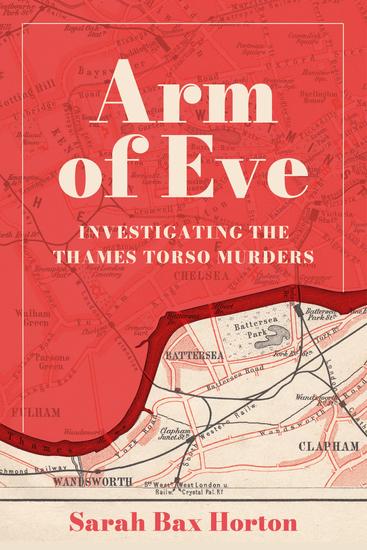
  • Arm of Eve - Investigating the Thames Torso Killer - cover

    Arm of Eve - Investigating the...

    Sarah Bax Horton

    • 0
    • 0
    • 0
    WINNER OF RBAM BOOK OF THE YEAR 2024 AWARD
    'Overshadowed by the hunt for Jack the Ripper, the 'Thames Torso murderer' stalked the docks and quayside of the nation's capital, dismembering his victims at will. Now, the author of a new book believes she has identified the prime suspect.' - Daily Express
    Jack the Ripper is often called the world's most notorious unidentified killer, but he was not the first modern serial killer on the streets of London. Before him was another murderer who hunted from the River Thames – one arguably more sadistic and mercurial.
    The Thames Torso Killer has always lurked in the Ripper's shadow, despite the fact he murdered and dismembered at least four people over two years. He started to kill in 1887, over a year before the Ripper, and his last murder was in 1889, almost ten months after the death of Mary Jane Kelly, the Ripper's last victim.
    In Arm of Eve, Sarah Bax Horton conducts her own investigation and uses modern criminal profiling to come up with her own suspect – a known criminal who knew the Thames like the back of his hand.
    As featured in The Independent, the Daily Mail and The Times, and on BBC2's Lucy Worsley's Victorian Murder Club
    Ver libro
  • War to the Knife - Bleeding Kansas 1854–1861 - cover

    War to the Knife - Bleeding...

    Thomas Goodrich

    • 0
    • 0
    • 0
    This history shines a light on America’s “first civil war”: the bloody conflict in Kansas Territory between abolitionists and proslavery extremists. Long before the secession crisis at Fort Sumter ignited the War between the States, men fought and died on the prairies of Kansas over the incendiary issue of slavery. The bitter conflict was described in the Atchison Squatter Sovereign newspaper as “war to the knife and knife to the hilt.”  In 1854 a shooting war developed between proslavery men from Missouri and free-staters in Kansas over control of the territory. The prize was whether Kansas would become a slave or a free state when admitted to the Union, a question that could decide the balance of power in Washington.  War to the Knife is an absorbing account of this bloody episode in our nation's past, told in the unforgettable words of the men and women involved: Robert E. Lee, William Tecumseh Sherman, Sara Robinson, Jeb Stuart, Abraham Lincoln, William F. Cody, and John Brown—the abolitionist who was hailed by some as a prophet, and denounced as a madman by others.
    Ver libro