¡Acompáñanos a viajar por el mundo de los libros!
Añadir este libro a la estantería
Grey
Escribe un nuevo comentario Default profile 50px
Grey
Suscríbete para leer el libro completo o lee las primeras páginas gratis.
All characters reduced
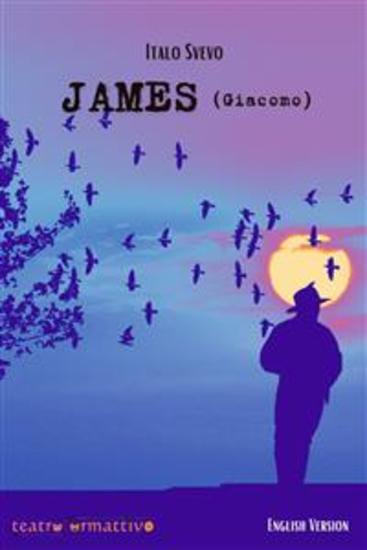
James (Giacomo) - English Version - cover

James (Giacomo) - English Version

Italo Svevo

Editorial: Teatroformattivo

  • 0
  • 0
  • 0

Sinopsis

Giacomo is a farmer that the narrator meets during a walk in the Friuli countryside and who tells him his story. Every time Giacomo finds a job he protests and ends up launching into propaganda and debates to convince his fellow workers to demand optimal working conditions, always causing big problems for his employers. Not finding any more jobs, he becomes a nomad, in vain search for a well-organized job. Therefore, practically non-existent. Until one day he is called back to his hometown for a particular job...
Disponible desde: 11/11/2023.
Otros libros que te pueden interesar

  • Looking Backward 2000 to 1887 - cover

    Looking Backward 2000 to 1887

    Edward Bellamy

    • 0
    • 0
    • 0
    "Looking Backward: 2000-1887" is a utopian science fiction novel written by Edward Bellamy. It was first published in 1888 and is considered one of the most influential works of American socialist literature. The story is set in the year 2000 and follows Julian West, a young man who falls into a deep sleep in 1887 and wakes up in a drastically transformed and idealized future. In the novel, Bellamy presents a vision of a utopian society where social and economic inequalities have been eliminated. The government controls the means of production, and everyone is provided for according to their needs. The novel explores themes of social justice, equality, and the potential for a more equitable and cooperative society.
    Ver libro
  • Little Brother - cover

    Little Brother

    Mary E Mann

    • 0
    • 0
    • 0
    Mary E. Mann does not flinch. In Little Brother, she leads us by the hand into a world where hunger is constant, sorrow is routine, and the arrival of a child is met with neither joy nor mourning—just another mouth, another burden, another resignation. Yet even in this bleakness, life goes on, in ways both unsettling and eerily familiar. A stark, unflinching glimpse into the realities of the forgotten, this story is as haunting as it is quietly devastating.
    Ver libro
  • The Blank Wall - cover

    The Blank Wall

    Elizabeth Sanxay Holding

    • 0
    • 0
    • 0
    Not Yet Available
    Ver libro
  • The Festival - cover

    The Festival

    H.P. Lovecraft

    • 0
    • 0
    • 0
    Title: The Festival 
    Author: H. P. Lovecraft 
    Narrator: Jonathan Dunne 
    Original Publication: 1925 
    Public Domain: Yes 
    Series Placement: Number 40 in the Timeless Terrors series 
    Description: 
    The Festival by H. P. Lovecraft is a descent into ancestral nightmare — a tale where ancient rites and cosmic dread intertwine beneath the surface of New England’s winter calm. Written during Lovecraft’s mature period, the story evokes a world in which the past is never truly dead, and the living are bound to its monstrous inheritance. 
    When a traveler returns to the town of his forebears to attend an ancient Yuletide festival, he finds a celebration not of light, but of the abyss. Beneath the candlelit decay of a medieval church, he witnesses a ceremony older than mankind — a revelation that shatters the boundary between life, death, and the unspeakable beyond. 
    Narrated by Amazon bestselling horror author Jonathan Dunne, this performance captures the story’s cold, ritualistic terror and dreamlike descent into the subterranean unknown. While the text is in the public domain, this narration is an original performance and copyright © 2025 Jonathan Dunne. 
    Part of Timeless Terrors, a series devoted to resurrecting the masters of the macabre, The Festival stands as one of Lovecraft’s most haunting invocations of inherited horror — a chilling reminder that the blood of the past still calls across the centuries.
    Ver libro
  • Howards End - cover

    Howards End

    E. M. Forster

    • 0
    • 0
    • 0
    "Howards End" is one of E.M. Forster's most celebrated novels, first published in 1910. At the heart of the story is the country house, Howards End, which becomes a symbol for the narrative's exploration of the social, economic, and class divisions in early 20th-century England. The novel intertwines the lives of three families: the idealistic, intellectual Schlegel sisters, the wealthy, pragmatic Wilcoxes, and the working-class Basts. Through their interconnected relationships, Forster scrutinizes the changing societal landscape, especially the diminishing values of the Edwardian era and the rise of modernity. Themes of inheritance, belonging, love, and betrayal are delicately interwoven, showcasing Forster's profound understanding of human nature and societal constraints.
    Ver libro
  • Candide - cover

    Candide

    Voltaire

    • 0
    • 0
    • 0
    Candide is characterised by its sarcastic tone, as well as by its erratic, fantastical and fast-moving plot. A picaresque novel with a story similar to that of a more serious bildungsroman, it parodies many adventure and romance clichés, the struggles of which are caricatured in a tone that is mordantly matter-of-fact. Still, the events discussed are often based on historical happenings, such as the Seven Years' War and the 1755 Lisbon earthquake. As philosophers of Voltaire's day contended with the problem of evil, so too does Candide in this short novel, albeit more directly and humorously.    Voltaire ridicules religion, theologians, governments, armies, philosophies, and philosophers through allegory; most conspicuously, he assaults Leibniz and his optimism. Voltaire's men and women point his case against optimism by starting high and falling low. A modern could not go about it after this fashion. He would not plunge his people into an unfamiliar misery. He would just keep them in the misery they were born to. But such an account of Voltaire's procedure is as misleading as the plaster cast of a dance.    Look at his procedure again. Mademoiselle Cunégonde, the illustrious Westphalian, sprung from a family that could prove seventy-one quarterings, descends and descends until we find her earning her keep by washing dishes in the Propontis. The aged faithful attendant, victim of a hundred acts of rape by negro pirates, remembers that she is the daughter of a pope, and that in honor of her approaching marriage with a Prince of Massa-Carrara all Italy wrote sonnets of which not one was passable. We do not need to know French literature before Voltaire in order to feel, although the lurking parody may escape us, that he is poking fun at us and at himself. His laughter at his own methods grows more unmistakable at the last, when he caricatures them by casually assembling six fallen monarchs in an inn at Venice.    A modern assailant of optimism would arm himself with social pity. There is no social pity in "Candide." Voltaire, whose light touch on familiar institutions opens them and reveals their absurdity, likes to remind us that the slaughter and pillage and murder which Candide witnessed among the Bulgarians was perfectly regular, having been conducted according to the laws and usages of war. Had Voltaire lived today he would have done to poverty what he did to war. Pitying the poor, he would have shown us poverty as a ridiculous anachronism, and both the ridicule and the pity would have expressed his indignation.
    Ver libro