Join us on a literary world trip!
Add this book to bookshelf
Grey
Write a new comment Default profile 50px
Grey
Subscribe to read the full book or read the first pages for free!
All characters reduced
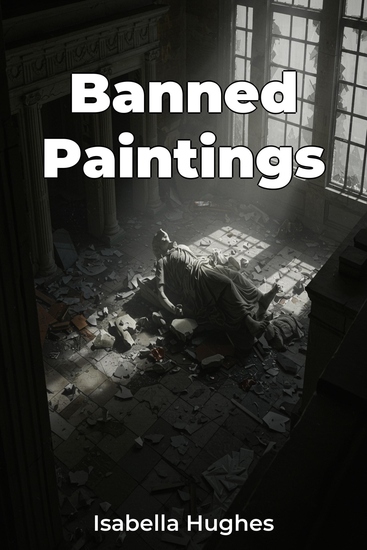
Banned Paintings - cover

Banned Paintings

Isabella Hughes

Translator A AI

Publisher: Publifye

  • 0
  • 0
  • 0

Summary

Banned Paintings explores the compelling history of art censorship, revealing the stories behind artworks deemed too controversial for public consumption. This exploration delves into the tension between creative freedom and societal control, highlighting how art can be both a powerful tool for social commentary and a target of political ideologies. 

 
The book examines instances such as the Nazi regime's suppression of "degenerate art," illustrating how the act of banning art often reflects deeper societal anxieties about power, morality, and the status quo. The book progresses chronologically, beginning with a framework for understanding censorship in the arts and then dedicating sections to major periods and movements in art history where censorship played a significant role. 

 
By studying the reasons behind the banning of particular artworks, the audience gains insights into the values, fears, and prejudices of different cultures and historical periods. This unique approach challenges the conventional understanding of art history, urging a consideration of the social and political forces that have shaped artistic production and reception.
Available since: 02/25/2025.
Print length: 66 pages.

Other books that might interest you

  • Conquer Discipline - The Magic Of Creating Mental Toughness Freedom & Becoming The Best You! - cover

    Conquer Discipline - The Magic...

    N.M. Hill

    • 0
    • 0
    • 0
    How to stop making excuses, ditch delaying tactics, and achieve your goals without feeling like it’s a chore. 
    Is there something you want to accomplish but can’t seem to follow through with, whether it’s making healthier choices, learning a new language, or limiting social media time? 
    If so, then CONQUER DISCIPLINE is for you! 
    How often do you give in to distractions or struggle to finish what you’ve started, then beat yourself up for feeling like a failure? 
    Do you wish you could be one of those people who have laser focus and keep their eyes on the prize no matter what? 
    Here’s a reality check: What spells the difference between one’s success and failure is not merely talent, intelligence, or even luck – it’s self-discipline. 
    Self-discipline, according to the dictionary, is the ability to control yourself and to make yourself work hard or behave in a particular way without needing anyone else to tell you what to do. 
    Unfortunately, while the benefits of self-discipline have long been established, it has earned a bad reputation. 
    Many people – perhaps including yourself – react negatively to it, most likely because it’s often associated with ideas of harsh punishment, heavy burden, and basically a rigid, joyless life. 
    But that notion cannot be farther from the truth. In fact, a study has shown that practicing self-control makes you happier and more satisfied both in the moment and in the long run. 
    Experts also say that self-discipline is like a muscle – the more you exercise it, the stronger it gets. The good news is, unlike a rigorous exercise routine, you don’t need to hire a professional trainer or have fancy equipment and tools to master self-discipline - read the book to discover more...
    Show book
  • Supes Ain't Always Heroes - Inside the Complex Characters and Twisted Psychology of The Boys - cover

    Supes Ain't Always Heroes -...

    Lynn S. Zubernis, Matthew Snyder

    • 0
    • 0
    • 0
    Go deeper inside the hit TV show The Boys and its characters with psychologists, media experts, filmmakers, and more—including the original comic series' cocreator and the actors behind Soldier Boy and Stormfront. 


    Supes Ain't Always Heroes offers a fresh look at The Boys, delving into the show's unflinching depiction of celebrity, politics, social media, corporate greed, racism, sexism, and more: 


    ● The true difference between Homelander and Billy Butcher—and who the show's biggest villain really is 


    ● What Soldier Boy's characterization says about how we define masculinity 


    ● How today's media landscape has contributed to The Boys' success 


    ● What the evolutions of Hughie, Starlight, A-Train, Mother's Milk, and other show standouts reflect about addiction, family, identity, and self-acceptance 


    PLUS: Exclusive interviews with The Boys comics cocreator Darick Robertson and actors Jensen Ackles, Jim Beaver, Aya Cash, and Nathan Mitchell provide a unique glimpse behind the scenes. Comments from editor interviews with more of the show's stars give further insight into their experiences in bringing these complex characters to life.
    Show book
  • Zoroastrianism: The History and Legacy of One of the World’s Oldest Religions - cover

    Zoroastrianism: The History and...

    Charles River Editors

    • 0
    • 0
    • 0
    The Sasanian Empire was important for a number of reasons. Besides being the last of three great Persian dynasties, they carried on many Persian cultural traditions relating to religion and kingship. The Sasanians fostered and promoted the native religion of Zoroastrianism to the point of persecuting other religions from time to time. It was during the Sasanian period that the numerous Zoroastrian hymns, prayers, and rituals were collected under one book, known as the Avesta.  
    	Thanks to the Sasanians’ efforts with regard to religion, modern scholars know much more about Zoroastrianism than they would have if the religion continued to disseminate orally. Their efforts also protected Zoroastrian knowledge in later years after the dynasty was long gone and Islam became ascendant in Persia. Zoroastrianism is technically still a living religion today, but the religion is mysterious and not widely known among those who don’t study it, and historians themselves are divided over when the religion’s prophet lived and when the religion was officially adopted in Persia. Zoroastrianism’s historical development has also failed to intrigue significant numbers of people, perhaps due to its geographical location and cultural background. Zoroastrianism developed among the Persian people, who have traditionally not been part of the standard Western, early Islamic, or Far Eastern cultural groupings, and when Persia later became part of the greater Islamic world, it was to the detriment of Zoroastrianism. Finally, Zoroastrianism is a “closed” religion, which has also kept it shrouded in mystery to a certain degree. Although contemporary Zoroastrians are quite open about their faith and willing to help non-Zoroastrian scholars, converts are rarely accepted by the faithful, adding a sense of insularity to the faith.
    Show book
  • The White House Plumbers - The Seven Weeks That Led to Watergate and Doomed Nixon's Presidency - cover

    The White House Plumbers - The...

    Egil "Bud" Krogh, Matthew Krogh

    • 0
    • 0
    • 0
    NOW A FIVE-PART HBO SERIES, STARRING WOODY HARRELSON AND JUSTIN THEROUXThe true story of The White House Plumbers, a secret unit inside Nixon's White House, and their ill-conceived plans stop the leaking of the Pentagon Papers, and how they led to Watergate and the President's demise.On July 17, 1971, Egil “Bud” Krogh was summoned to a closed-door meeting by his mentor—and a key confidant of the president—John Ehrlichman. Expecting to discuss the most recent drug control program launched in Vietnam, Krogh was shocked when Ehrlichman handed him a file and the responsibility for the Special Investigations Unit, or SIU, later to be notoriously known as “The Plumbers.”The Plumbers’ work, according to Nixon, was critical to national security: they were to investigate the leaks of top secret government documents, including the Pentagon Papers, to the press. Driven by blind loyalty, diligence, and dedication, Krogh, along with his co-director, David Young, set out to handle the job, eventually hiring G. Gordon Liddy and E. Howard Hunt, who would lead the break-in to the office of Dr. Fielding, a psychiatrist treating Daniel Ellsberg, the man they suspected was doing the leaking. Krogh had no idea that his decisions would soon lead to one of the most famous conspiracies in presidential history and the demise of the Nixon administration.The White House Plumbers is Krogh’s account of what really happened behind the closed doors of the Nixon White House, and how a good man can make bad decisions, and the redemptive power of integrity. Including the story of how Krogh served time and later rebuilt his life, The White House Plumbers is gripping, thoughtful, and a cautionary tale of placing loyalty over principle.A Macmillan Audio production from St. Martin’s Press.
    Show book
  • NAZI MOVIES AS PROPAGANDA MACHINE - How Goebbels Changed the German Film Industry Into an Ideological Weapon - cover

    NAZI MOVIES AS PROPAGANDA...

    Davis Truman

    • 0
    • 0
    • 0
    The German film industry transformed from a collection of independent studios into a division of the Nazi Party between 1933 and 1945. German film became a crucial component of the Nazi campaign to ideologically indoctrinate the German populace as part of the Ministry for Popular Enlightenment and Propaganda, led by Joseph Goebbels. However, the business kept up its prior commercial practices and made movies aimed at paying German consumers. Even though Goebbels worked hard to turn German cinema into an ideological weapon, the theater served as a popular consumer marketplace, and the various film tastes of German moviegoers continued to affect the kinds of films made. Therefore, filmmaking in Nazi Germany was influenced by popular taste and Goebbels' ideological objectives. 
    This book will look at several movies that demonstrate Goebbel's evolving propaganda objectives and the changing preferences of the German audience for movies during the Nazi era. Box office statistics from the years before and after the start of World War II offer unique insight into German film consumption and serve to highlight the extent to which the general public supported the war in Germany.
    Show book
  • Forbidden - A 3000-Year History of Jews and the Pig - cover

    Forbidden - A 3000-Year History...

    Jordan D. Rosenblum

    • 0
    • 0
    • 0
    Jews do not eat pig. This (not always true) observation has been made by both Jews and non-Jews for more than three thousand years and is rooted in biblical law. Though the Torah prohibits eating pig meat, it is not singled out more than other food prohibitions. Horses, rabbits, squirrels, and even vultures, while also not kosher, do not inspire the same level of revulsion for Jews as the pig. The pig has become a symbol for people to signal their Jewishness, non-Jewishness, or rebellion from Judaism. 


    Starting with the Hebrew Bible, Jordan D. Rosenblum historicizes the emergence of the pig as a key symbol of Jewish identity, from the Roman persecution of ancient rabbis, to the Spanish Inquisition, to Shakespeare's writings, to modern memoirs of those leaving Orthodox Judaism. The pig appears in debates about Jewish emancipation in eighteenth-century England and in vaccine conspiracies; in World War II rallying cries, when many American Jewish soldiers were "eating ham for Uncle Sam;" and in recent deliberations about the kosher status of Impossible Pork. 


    All told, there is a rich and varied story about the associations of Jews and pigs over time, both emerging from within Judaism and imposed on Jews by others. Expansive yet accessible, Forbidden offers a captivating look into Jewish history and identity through the lens of the pig.
    Show book