¡Acompáñanos a viajar por el mundo de los libros!
Añadir este libro a la estantería
Grey
Escribe un nuevo comentario Default profile 50px
Grey
Suscríbete para leer el libro completo o lee las primeras páginas gratis.
All characters reduced
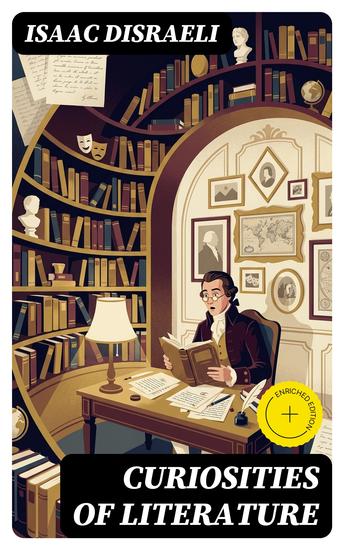
Curiosities of Literature - Enriched edition - cover

Curiosities of Literature - Enriched edition

Isaac Disraeli

Editorial: DigiCat

  • 0
  • 0
  • 0

Sinopsis

In "Curiosities of Literature," Isaac Disraeli embarks on an inquisitive journey through the eclectic landscapes of literary oddities and historical anecdotes. This captivating work, published in 1791, showcases Disraeli's skill in blending erudition with a flair for narrative style, offering readers a mosaic of obscure references, unusual facts, and engaging commentary on the literary figures of his time. The book reflects the Enlightenment's spirit of inquiry, as Disraeli explores literary themes while challenging conventional perceptions, weaving in social critique and a rich tapestry of cultural knowledge that elevates the discourse on literature's role in society. Isaac Disraeli, a prominent figure in the 18th century, was not only a Bedfordshire-born author but also a supportive father of the renowned British Prime Minister Benjamin Disraeli. His diverse background and exposure to a wide array of texts shaped his intellectual pursuits and spurred his fascination with the unconventional aspects of literature. Disraeli's position as an outsider in literary circles allowed him to adopt a unique perspective, crafting this seminal work from a blend of scholarly insight and personal curiosity. "Curiosities of Literature" is an essential read for anyone intrigued by the intricacies of literary history and the peculiarities that define human expression. It invites readers to indulge in the unexpected, offering delightful surprises that illuminate the art of writing and foster a deeper appreciation for the written word. Delve into Disraeli's exploration and uncover the hidden gems that have shaped the literary canon.

In this enriched edition, we have carefully created added value for your reading experience:
- A comprehensive Introduction outlines these selected works' unifying features, themes, or stylistic evolutions.
- A Historical Context section situates the works in their broader era—social currents, cultural trends, and key events that underpin their creation.
- A concise Synopsis (Selection) offers an accessible overview of the included texts, helping readers navigate plotlines and main ideas without revealing critical twists.
- A unified Analysis examines recurring motifs and stylistic hallmarks across the collection, tying the stories together while spotlighting the different work's strengths.
- Reflection questions inspire deeper contemplation of the author's overarching message, inviting readers to draw connections among different texts and relate them to modern contexts.
- Lastly, our hand‐picked Memorable Quotes distill pivotal lines and turning points, serving as touchstones for the collection's central themes.
Disponible desde: 17/05/2022.
Longitud de impresión: 1966 páginas.


Otros libros que te pueden interesar

  • Historical Documents USA - cover

    Historical Documents USA

    Hank Wilson

    • 0
    • 0
    • 0
    Listen to key founding documents, plus a look at significant events that took place between the years of 1810 to 1877, starting with the period of 1810-1840 when one of, if not, the most historically significant events that took place.
    Ver libro
  • Harnessing The Science of Learning - Success Stories to Help Kickstart Your School Improvement - cover

    Harnessing The Science of...

    Nathaniel Swain

    • 0
    • 0
    • 0
    Drawing together the worlds of classroom practice, school leadership, and scientific research, this is an essential how-to guide for initiating and maintaining a school improvement journey based on the science of learning. 


    What we now know about learning and teaching is vast; yet often, wading through the thousands of articles and books on this subject can leave even the most seasoned educator overwhelmed. This guide instead offers a distillation of key understandings―for teaching, literacy, mathematics, curriculum, and implementation―to launch your school improvement work. 


    Harnessing the Science of Learning also features contributions from thought leaders across the fields of learning sciences and educational practice: Pamela Snow, Tanya Serry, Zach Groshell, Reid Smith, Toni Hatten-Roberts, Simon Breakspear, Katie Roberts-Hull, David Morkunas, Steven Capp, Shane Pearson, and Eamon Charles. 


    This book illustrates practical ways to harness this knowledge, using a series of exemplary school case studies. These insightful narratives of transformation are interwoven with summaries of powerful teaching practices, forming a roadmap to drive improvement.
    Ver libro
  • Tulsi Devi - Mistress Of Vrndavana - Divine Servant Of Sri Sri Radha Krsna - cover

    Tulsi Devi - Mistress Of...

    Radha Krsna Das

    • 0
    • 0
    • 0
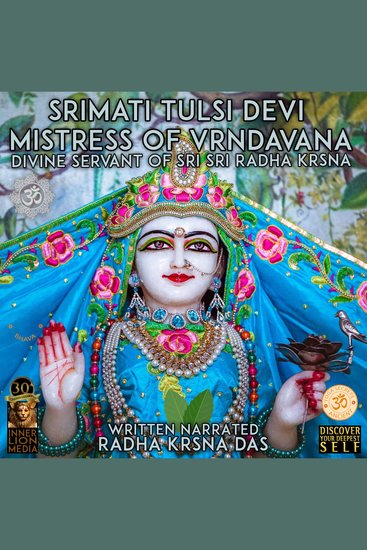
    "Dear Tulsī, you are much beloved by Lord Kṛṣṇa because your leaves are always at His lotus feet. Dear mālatī flower, dear mallikā flower, dear jasmine flower, all of you must have been touched by Kṛṣṇa while He was passing this way after giving us transcendental enjoyment. Have you seen Mādhava passing this way? O mango trees, O trees of jackfruit, O pear trees and āsana trees! O blackberries and bael trees and trees of the kadamba flower—you are all very pious trees to be living on the bank of the Yamunā. Kṛṣṇa must have passed through this way. Will you kindly let us know which way He has gone?" The Srimad Bhagavatam 
     
    Tulsi Devi (Vrinda - Holy Basil) is a sacred plant in Hindu belief. She is regarded as an earthly manifestation of the goddess Srimati Tulsi Devi, and is as an avatar of Lakshmi, and thus the consort of Vishnu. The offering of her leaves is mandatory in the worship of Bhagavan Sri Krishna. Tulsi is regarded as the holiest of all plants and a bridge between heaven and earth. A traditional prayer teaches the creator Brahma and the Ganges resides in her branches, all holy pilgrimage centers in her roots, all deities are in her stem and leaves, and the Vedas are found in the upper part of her branches. The Tulsi herb is a center of household devotion, and is often referred to as the "women's deity" and "a symbol of wifehood and motherhood." Vaishnavites consider it as the manifestation of god in the plant kingdom. Tulsi Devi is one of Krishna’s most intimate servants coming to bless us all with extraordinary fortune. She has delicate purple and green leaves, flower tassels (like miniature temple spires), and an arresting, sweet fragrance famous for attracting the minds of yogis to Krishna’s service via Bhakti Yoga. Tulasi’s wood is carved into the Japa beads on which devotees chant Krishna’s holy name.
    Ver libro
  • The Calm Parent - How to Stop Yelling and Start Guiding - cover

    The Calm Parent - How to Stop...

    Roshni Anand

    • 0
    • 0
    • 0
    This audiobook is narrated by an AI Voice.   
    If you’ve ever ended the day wishing you’d stayed calmer with your kids, this audiobook is for you. The Calm Parent Code teaches you how to understand your own stress triggers, regulate in real time, and guide instead of control. 
    In under ninety minutes you’ll learn how to: 
    • Recognize the early signs of emotional overload before you snap. 
    • Use a 3-step “Pause, Breathe, Pivot” routine to keep your cool in any conflict. 
    • Repair connection after yelling—without guilt or shame. 
    • Set clear boundaries that hold, without raising your voice. 
    Grounded in modern psychology and real-world parenting, this audiobook helps you build a calmer home where respect flows both ways.
    Ver libro
  • Long Distance That Works - Rituals & Roadmap - cover

    Long Distance That Works -...

    Dale Mclaughlin

    • 0
    • 0
    • 0
    This audiobook is narrated by an AI Voice.   
    Distance doesn’t destroy love — disconnection does. 
    In Long-Distance That Works — Rituals & Roadmap, Dale McLaughlin shares a practical guide to keeping love alive across miles, time zones, and screens. 
    Discover the daily rituals, communication habits, and trust-building systems that make long-distance relationships stronger instead of harder. With tools for staying emotionally close, resolving conflict, and planning reunions with purpose, this audiobook turns physical distance into a chance for deeper connection.
    Ver libro
  • Mythical Beasts - Exploring the Realms of the Dead - cover

    Mythical Beasts - Exploring the...

    Odessa Nightshade

    • 0
    • 0
    • 0
    Since the dawn of civilization, humans have woven tales of extraordinary creatures—beasts that soar through the skies, rule the oceans, or guard hidden treasures. These mythical beings have captivated the human imagination, appearing in folklore, literature, and art across the globe. From the mighty dragon to the elusive unicorn, these creatures have not only entertained but also served as symbols of power, wisdom, and even fear. But why do these legends endure? What is it about mythical beasts that continues to fascinate us, even in an age of science and reason?  
    Mythical creatures often serve as reflections of human beliefs, fears, and aspirations. In many cultures, they are more than just fictional beings; they carry deep symbolic meaning. The phoenix, for instance, represents rebirth and resilience, while the werewolf embodies the struggle between human nature and primal instincts. Dragons, depicted as both benevolent and malevolent, can symbolize wisdom or destruction, depending on the culture. These beasts act as metaphors, helping people make sense of the world around them and offering explanations for the unknown.  
    The origins of these legends are often rooted in real-life encounters or natural phenomena. The discovery of dinosaur fossils may have inspired stories of dragons, while exaggerated accounts of distant animals, such as narwhals, could have fueled belief in unicorns. Similarly, shadows on the ocean’s surface or misidentified sea creatures may have given rise to mermaid myths. Over time, these stories evolved, influenced by oral tradition, artistic depictions, and cultural exchange, shaping the diverse legends we know today. 
    Ver libro