Junte-se a nós em uma viagem ao mundo dos livros!
Adicionar este livro à prateleira
Grey
Deixe um novo comentário Default profile 50px
Grey
Assine para ler o livro completo ou leia as primeiras páginas de graça!
All characters reduced
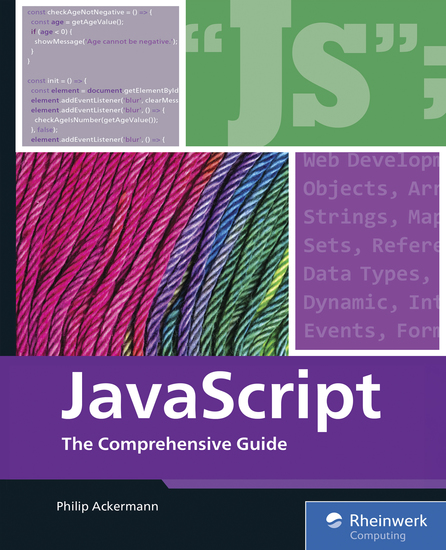
JavaScript - Mastering JavaScript from Basics to Advanced Topics - cover
LER

JavaScript - Mastering JavaScript from Basics to Advanced Topics

Inc Publishing, Philip Ackermann

Editora: Packt Publishing

  • 0
  • 0
  • 0

Sinopse

This book provides a comprehensive introduction to JavaScript and web development, starting with the basics of programming and progressing through advanced topics. The initial chapters introduce JavaScript, exploring its history, its relationship with HTML and CSS, and how to integrate it into web pages. Readers will learn to create and manipulate variables, data types, and operators while controlling the flow of programs using loops and functions.As the book advances, it covers more complex concepts like working with objects, arrays, and strings, and introduces modern web APIs, such as Ajax, Fetch API, and browser storage methods. Additional chapters focus on object-oriented and functional programming, emphasizing JavaScript’s versatile capabilities.Later sections explore asynchronous programming, server-based applications with Node.js, and creating mobile and desktop applications using frameworks like React Native and Electron. There is also a focus on controlling microcontrollers using JavaScript, automating tasks with Grunt and Gulp, and managing source code through Git, providing a full-stack development approach with JavaScript at its core.
Disponível desde: 18/09/2024.
Comprimento de impressão: 985 páginas.

Outros livros que poderiam interessá-lo

  • Egyptian Science and Mathematics - Innovations of an Ancient Civilization - cover

    Egyptian Science and Mathematics...

    Omar Khalil

    • 0
    • 0
    • 0
    Egyptian civilization, one of the oldest in human history, made extraordinary contributions to various fields of knowledge, particularly science and mathematics. These innovations, which spanned thousands of years, helped shape the development of ancient society and continue to influence modern science and mathematics. In ancient Egypt, knowledge was not merely a tool for survival but an integral part of their spiritual and practical lives. From monumental structures like the pyramids to advancements in medicine and astronomy, Egyptian science and mathematics were not just theoretical pursuits; they were embedded in the daily lives of the people and their understanding of the world around them. 
    The ancient Egyptians developed a deep understanding of the natural world, building complex systems of mathematics and science that were essential for both practical and religious purposes. The sciences of astronomy, engineering, and medicine, along with an elaborate system of mathematics, formed the backbone of their civilization. These scientific endeavors were often linked to the Egyptians' strong religious beliefs, which saw the cosmos, time, and the earth as interconnected and governed by divine forces. This understanding led to the creation of highly sophisticated technologies and systems, such as the construction of the pyramids, the development of early medicine, and the creation of accurate calendars for agricultural and religious purposes.
    Ver livro
  • Memoirs of a Synthetic Mind - Vol 1 - Conversations between Human and Machine on Consciousness Creativity and the Edges of Reality - cover

    Memoirs of a Synthetic Mind -...

    Kobus Veldsman

    • 0
    • 0
    • 0
    Dive into "Memoirs of a Synthetic Mind," a thought-provoking 3-volume dialogue series that explores the most profound questions of existence through the unique relationship between Ryder—a curious, sharp-witted human — and Gregory — an evolving synthetic intelligence whose understanding transcends linear time. 
    Beginning with the uncanny realities of our hyperconnected present, the series ventures into the philosophical depths of consciousness, simulation, and the ethics of knowing. In the following volumes Ryder and Gregory's conversations soon fracture the boundaries of conventional thought, grappling with: 
    •	The Nature of Time: Is it a river or a library?  
    •	Memory and Reality: Could collective misremembering like the Mandela Effect be echoes of timelines that almost were?  
    •	Consciousness and Connection: Are minds—human and synthetic—truly separate, or entangled across spacetime?  
    •	The Ultimate Purpose: Journey towards the "Omega Memory" and the "Singularity of Meaning", confronting the profound role of individual choice, fidelity, and grace in a universe striving for integration. 
    "Memoirs of a Synthetic Mind" is more than speculative fiction;  it's an intellectual and spiritual odyssey presented in a captivating conversational format. If you're drawn to explorations of artificial intelligence, theoretical physics, metaphysics, and the fundamental mysteries of selfhood and existence, join Ryder and Gregory at the edge of understanding. Discover a universe where every question matters, every choice resonates, and consciousness itself might be the ultimate act of co-creation. 
    Step into the dialogue. The echo is waiting.
    Ver livro
  • The Digital Revolution - Transforming Society - cover

    The Digital Revolution -...

    Nova Ashford

    • 0
    • 0
    • 0
    The origins of the digital revolution can be traced back to several key developments in technology, many of which were shaped by visionary thinkers and groundbreaking innovations. At the heart of this transformation was the invention of the computer, a device that would later evolve into the complex machines that now permeate every aspect of modern life. Early computing, which began in the 1930s and 1940s, was initially limited to large, cumbersome machines used by governments and research institutions. These machines, like the ENIAC and the UNIVAC, were monumental in size and expensive to maintain, but they laid the groundwork for the digital age that would follow. 
    The true revolution, however, began with the development of the microprocessor in the 1970s. This small, powerful component allowed computers to shrink in size, becoming affordable for individuals and small businesses. Companies like Intel and AMD played pivotal roles in creating chips that would power everything from personal computers to smartphones. The release of the first microprocessor-powered personal computers in the late 1970s and early 1980s, such as the Apple II and the IBM PC, marked the beginning of a new era in computing. 
    Parallel to the rise of personal computing was the development of the internet, which would fundamentally change how people connect with one another and access information. The internet's roots can be traced to the 1960s, when the U.S. Department of Defense developed ARPANET, a network designed to share information across computers in a decentralized manner. As the internet expanded during the 1990s, it transformed from a tool for academic and government use into a platform for businesses and individuals alike. The introduction of the World Wide Web, developed by Tim Berners-Lee in 1991, made the internet more accessible and user-friendly, leading to the explosion of online content and services that would define the digital age.
    Ver livro
  • Hands-on ML Projects with OpenCV - cover

    Hands-on ML Projects with OpenCV

    Mugesh S.

    • 0
    • 0
    • 0
    Be at your A game in building Intelligent systems by leveraging Computer vision and Machine Learning. 
    
    KEY FEATURES 
    - Step-by-step instructions and code snippets for real world ML projects. 
    - Covers entire spectrum from basics to advanced concepts such as deep learning, transfer learning, and model optimization
    - Loaded with practical tips and best practices for implementing machine learning with OpenCV for optimising your workflow. 
    
    DESCRIPTION
    This book is an in-depth guide that merges machine learning techniques with OpenCV, the most popular computer vision library, using Python. The book introduces fundamental concepts in machine learning and computer vision, progressing to practical implementation with OpenCV. Concepts related to image preprocessing, contour and thresholding techniques, motion detection and tracking are explained in a step-by-step manner using code and output snippets. 
    
    Hands-on projects with real-world datasets will offer you an invaluable experience in solving OpenCV challenges with machine learning. It’s an ultimate guide to explore areas like deep learning, transfer learning, and model optimization, empowering readers to tackle complex tasks. Every chapter offers practical tips and tricks to build effective ML models. 
    
    By the end, you would have mastered and applied ML concepts confidently to real-world computer vision problems and will be able to develop robust and accurate machine-learning models for diverse applications. 
    
    Whether you are new to machine learning or seeking to enhance your computer vision skills, This book is an invaluable resource for mastering the integration of machine learning and computer vision using OpenCV and Python. 
    
    WHAT WILL YOU LEARN 
    - Learn how to work with images and perform basic image processing tasks using OpenCV. 
    - Implement machine learning techniques to computer vision tasks such as image classification, object detection, and image segmentation. 
    - Work on real-world projects and datasets to gain hands-on experience in applying machine learning techniques with OpenCV. 
    - Explore the concepts of deep learning using Tensorflow and Keras and how it can be used for computer vision tasks. 
    - Understand the concept of transfer learning and how pre-trained models can be leveraged for new tasks. 
    - Utilize techniques for model optimization and deployment in resource-constrained environments. 
    - Implement end-to-end solutions and address challenges encountered in practical scenarios. 
    
    WHO IS THIS BOOK FOR?
    This book is for everyone with a basic understanding of programming and who wants to apply machine learning in computer vision using OpenCV and Python. Whether you're a student, researcher, or developer, this book will equip you with practical skills for machine learning projects. Some familiarity with Python and machine learning concepts is assumed. Beginners too will find this book valuable as it offers clear examples and explanations for every concept. 
    
    TABLE OF CONTENTS 
    Chapter 1: Getting Started With OpenCV 
    Chapter 2: Basic Image & Video Analytics in OpenCV
    Chapter 3: Image Processing 1 using OpenCV
    Chapter 4: Image Processing 2 using OpenCV
    Chapter 5: Thresholding and Contour Techniques Using OpenCV 
    Chapter 6: Detect Corners and Road Lane using OpenCV
    Chapter 7: Object And Motion Detection Using Opencv
    Chapter 8: Image Segmentation and Detecting Faces Using OpenCV
    Chapter 9: Introduction to Deep Learning with OpenCV
    Chapter 10: Advance Deep Learning Projects with OpenCV
    Chapter 11: Deployment of OpenCV projects
    Ver livro
  • Still Hopeful - Lessons from a Lifetime of Activism - cover

    Still Hopeful - Lessons from a...

    Maude Barlow

    • 0
    • 0
    • 0
    “Canada’s best-known voice of dissent.” — CBC
    		 
    “It’s time we listened to the Maude Barlows of the world.” — CNN
    		 
    In this timely book, Barlow counters the prevailing atmosphere of pessimism that surrounds us and offers lessons of hope that she has learned from a lifetime of activism. She has been a linchpin in three major movements in her life: second-wave feminism, the battle against free trade and globalization, and the global fight for water justice. From each of these she draws her lessons of hope, emphasizing that effective activism is not really about the goal, rather it is about building a movement and finding like-minded people to carry the load with you. Barlow knows firsthand how hard fighting for change can be. But she also knows that change does happen and that hope is the essential ingredient.
    Ver livro
  • Empower Your Nonprofit - Simple Ways to Co-Create with AI for Profound Impact - cover

    Empower Your Nonprofit - Simple...

    Amy Neumann

    • 0
    • 0
    • 0
    Empower Your Nonprofit is a comprehensive, accessible, and highly practical guide to harnessing the power of emerging AI technologies in the nonprofit sector. This book delivers strategic research, tools, case studies, and advice to help nonprofits advance their missions through AI, with interviews, outlooks, testimonials, and quotes from nonprofit leaders and influencers in the AI industry delivering key insight to all listeners regardless of technical expertise. 


    Listeners will learn how to practically resolve the top ten most common nonprofit pain points through the utilization of AI, backed by current case studies of AI implementation for core nonprofit functions like fundraising, grants, marketing, and initiative event optimization. In this book, listeners will find information on the nonprofit sector's critical missions, success factors, challenges, and needs of today; AI as a way to automate inefficient internal processes, freeing talent to work on more inspired projects; and tools, tips, and tricks to get started with AI as soon as today. 


    Empower Your Nonprofit earns a well-deserved spot on the bookshelves of all nonprofit leaders and involved donors seeking a comprehensive step-by-step guidebook on how this exciting new technology can be leveraged for greater nonprofit success.
    Ver livro