Junte-se a nós em uma viagem ao mundo dos livros!
Adicionar este livro à prateleira
Grey
Deixe um novo comentário Default profile 50px
Grey
Assine para ler o livro completo ou leia as primeiras páginas de graça!
All characters reduced
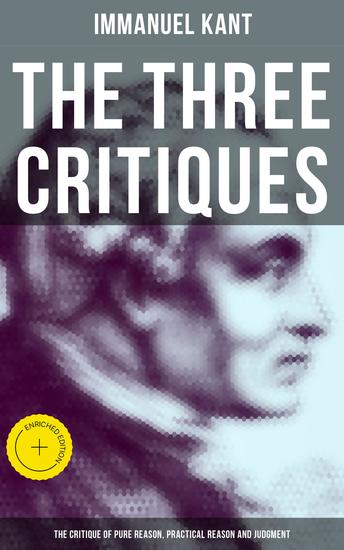
The Three Critiques: The Critique of Pure Reason Practical Reason and Judgment - Enriched edition The Base Plan for Transcendental Philosophy and The Theory of Moral Reasoning - cover
LER

The Three Critiques: The Critique of Pure Reason Practical Reason and Judgment - Enriched edition The Base Plan for Transcendental Philosophy and The Theory of Moral Reasoning

Immanuel Kant

Tradutor J. H. Bernard, T. K. Abbott, J. M. D. Meiklejohn

Editora: Musaicum Books

  • 0
  • 0
  • 0

Sinopse

Immanuel Kant's 'The Three Critiques: The Critique of Pure Reason, Practical Reason and Judgment' is a groundbreaking philosophical work that delves into the realms of epistemology, ethics, and aesthetics. In this collection, Kant explores the nature of human knowledge, the principles governing moral actions, and the criteria for determining aesthetic judgments. Written in a dense and analytical style, Kant's three critiques are considered some of the most influential works in Western philosophy, shaping the course of modern thought. The intricate arguments and systematic reasoning presented in the book make it a challenging but rewarding read for those interested in deepening their understanding of philosophical principles. Kant's insights into reason, ethics, and aesthetics continue to provoke scholarly debate and reflection, cementing his legacy as one of the most important figures in the history of philosophy. 'The Three Critiques' serves as a foundational text for anyone seeking to engage with Kant's complex and thought-provoking ideas, making it a must-read for students and scholars of philosophy.

In this enriched edition, we have carefully created added value for your reading experience:
- A comprehensive Introduction outlines these selected works' unifying features, themes, or stylistic evolutions.
- The Author Biography highlights personal milestones and literary influences that shape the entire body of writing.
- A Historical Context section situates the works in their broader era—social currents, cultural trends, and key events that underpin their creation.
- A concise Synopsis (Selection) offers an accessible overview of the included texts, helping readers navigate plotlines and main ideas without revealing critical twists.
- A unified Analysis examines recurring motifs and stylistic hallmarks across the collection, tying the stories together while spotlighting the different work's strengths.
- Reflection questions inspire deeper contemplation of the author's overarching message, inviting readers to draw connections among different texts and relate them to modern contexts.
- Lastly, our hand‐picked Memorable Quotes distill pivotal lines and turning points, serving as touchstones for the collection's central themes.
Disponível desde: 06/12/2017.
Comprimento de impressão: 1050 páginas.
Outros livros que poderiam interessá-lo

  • The End of the Roman Republic - cover

    The End of the Roman Republic

    Editors Charles River

    • 0
    • 0
    • 0
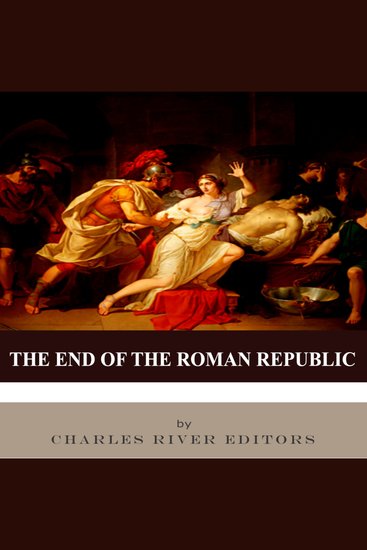
    Possibly the most important man of antiquity, and even all of history, was Julius Caesar. Alexander Hamilton, the famous American patriot, once remarked that “the greatest man who ever lived was Julius Caesar”. Such a tribute, coming from one of the Founding Fathers of the quintessential modern democracy in reference to a man who destroyed the Roman Republic, is testament to the enduring mark that Caesar left upon the world. The ultimate conqueror, statesman, dictator, visionary, and opportunist, during his time in power Caesar expanded the borders of Rome to almost twice their previous size, revolutionized the infrastructure of the Roman state, and destroyed the Roman Republic for good, leaving a line of emperors in its place. His legacy is so strong that his name has become, in many languages, synonymous with power. 
    	During one of the most turbulent periods in the history of Rome, men like Julius Caesar, Mark Antony, and Octavian participated in two civil wars that would spell the end of the Roman Republic and determine who would become the Roman emperor. In the middle of it all was history’s most famous woman, the Egyptian pharaoh Cleopatra, who famously seduced both Caesar and Antony and thereby positioned herself as one of the most influential people in a world of powerful men. Cleopatra was a legendary figure even to contemporary Romans and the ancient world, and she was a controversial figure who was equally reviled and praised through the years, depicted as a benevolent ruler and an evil seductress.  
    Octavian was the first true Roman Emperor, and the first man since the Tarquinus, five centuries earlier, to establish a successful hereditary ruling dynasty in what had been a proud Republic for over half a millennium. He was a canny strategist, an excellent orator, a fine writer, a generous patron of the arts and enthusiastic promoter of public works, but above all he was a master politician.
    Ver livro
  • Modern Discovery of Australia and New Zealand The: The History of the Indigenous Natives and the Initial European Expeditions and Settlements - cover

    Modern Discovery of Australia...

    Editors Charles River

    • 0
    • 0
    • 0
    A land of almost 3 million square miles has lain since time immemorial on the southern flank of the planet, so isolated that it remained entirely outside of European knowledge until 1770. However, the first human footprints on this vast territory were felt 70,000 years earlier, as people began to cross the periodic land bridges and the short sea crossings from Southeast Asia. 
    By the mid-17th century, the existence of a land in the south referred to as Terra Australis was generally known and understood by the Europeans, and incrementally, its shores were observed and mapped. Van Diemen’s Land, an island off the south coast of Australia now called Tasmania, was identified in 1642 by Dutch mariner Abel Tasman, and a few months later, the intrepid Dutchman would add New Zealand to the map of the known world. 
    At the time, the English were the greatest naval power in Europe, but they arrived on the scene rather later. The first to appear was William Dampier, captain of the HMS Roebuck, in 1699, after he had been granted a Royal Commission by King William III to explore the east coast of New Holland. By then, the general global balance of power was shifting, and with the English gaining a solid foothold in India, their supremacy in the Indian Ocean trade zone began. The Dutch, once predominant in the region, began slowly to lose ground, slipping out of contention as a major global trading power. So too were the Portuguese, also once dominant in the region. It was now just the French and the English who were facing one another down in a quest to dominate the world, but their imperial interests were focused mainly in India and the East Indies, as well as the Caribbean and the Americas. As a result, the potential of a vast, practically uninhabited great southern continent did not yet hold much interest. By then the world was largely mapped, with just regions such as the Arctic Archipelago and the two poles remaining terra incognita.
    Ver livro
  • From Ritual to Romance - cover

    From Ritual to Romance

    Jessie Weston

    • 0
    • 0
    • 0
    In the introductory Chapter the reader will find the aim and object of these studies set forth at length. In view of the importance and complexity of the problems involved it seemed better to incorporate such a statement in the book itself, rather than relegate it to a Preface which all might not trouble to read. Yet I feel that such a general statement does not adequately express my full debt of obligation. Among the many whose labour has been laid under contribution in the following pages there are certain scholars whose published work, or personal advice, has been specially illuminating, and to whom specific acknowledgment is therefore due. Like many others I owe to Sir J. G. Frazer the initial inspiration which set me, as I may truly say, on the road to the Grail Castle. Without the guidance of The Golden Bough I should probably, as the late M. Gaston Paris happily expressed it, still be wandering in the forest of Broceliande!
    Ver livro
  • Trade in the Ancient World: The History and Legacy of Trade in Europe the Near East and Africa during Antiquity - cover

    Trade in the Ancient World: The...

    Editors Charles River

    • 0
    • 0
    • 0
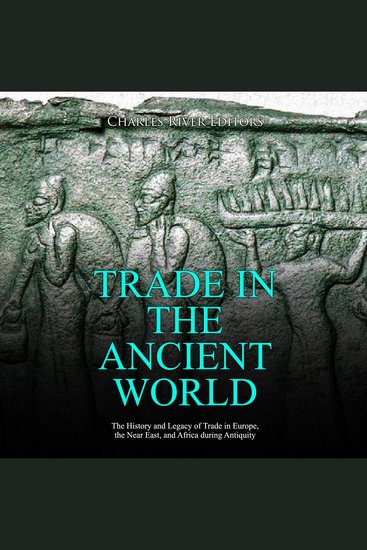
    The concept of international trade was born in the ancient Mediterranean, which provided the perfect set of circumstances needed to produce an intricate trading system whose influence can still be seen in present-day economic practices. The ancient Mediterranean was home to a diverse range of cultures and landscapes, encompassing deserts, forests, islands and fertile plains. Different natural resources were available in different geographical areas, and with the advent of sailing ships around 3000 BCE, people were suddenly able to travel much further afield than ever before. This created an opportunity to trade local resources in international markets in exchange for exotic goods not available at home. At the same time, this shift in Mediterranean trade from a local to international scale was a catalyst for immense social, political and economic changes that helped to shape the course of Western Civilization as a whole. Ancient trade in the Mediterranean brought cultures into increasingly close contact with one another, and just as in the globalized world today, these cross-cultural influences came to shape the development of belief systems, languages, economics, politics, and art throughout wide expanses of land.  
    Over the centuries, the profits generated from trade helped establish wealthy nations and fuel economic development across the sea. By taxing imports and exports, governments could afford large infrastructure projects, like the construction of roads and harbors, which in turn helped to further increase trade and wealth. As a result, wars were fought for control of important trade routes and to maintain access to crucial commodities such as grain and precious metals. Economics became a primary consideration when establishing government policies and dealing with international relations. Some cities, most notably Rome and Athens, even built empires on the back of their mercantile success.
    Ver livro
  • James Baldwin - The Life Album - cover

    James Baldwin - The Life Album

    Magdalena J. Zaborowska

    • 0
    • 0
    • 0
    James Baldwin (1924–1987) was a pivotal figure of the twentieth century, an influential author, intellectual, and activist who led a celebrated public life—and whose words and image and persona remain current in our culture. Baldwin's many incarnations have reemerged in the digital age as Baldwin's work becomes a touchstone for a new generation. It is the private, vulnerable, and messier Baldwin—the man behind the prophet and the online meme—who is the focus of this book. 


    Magdalena J. Zaborowska draws on Baldwin's archives and material legacy—from his unpublished papers to his books to his house in France—to offer a fresh look at the writer's understated and obscured private life. Taking a cue from Baldwin's own love of the blues, Zaborowska presents his biography as a series of tracks on a vinyl record, introducing, developing, and remixing the themes and relationships from his life. She recounts episodes from Baldwin's troubled childhood, his struggles with sexuality and gender, his intimate relationships, and the overlooked influence of women, Jews, and queers on his writing. This Life Album revolves around Baldwin's development of a unique worldview, "Black queer humanism," premised on African diaspora aesthetics, resilience, joy, community, internationalism, activism, and justice.
    Ver livro
  • Who Discovered America? - The Enigma of Who Came Before Columbus - cover

    Who Discovered America? - The...

    Davis Truman

    • 0
    • 0
    • 0
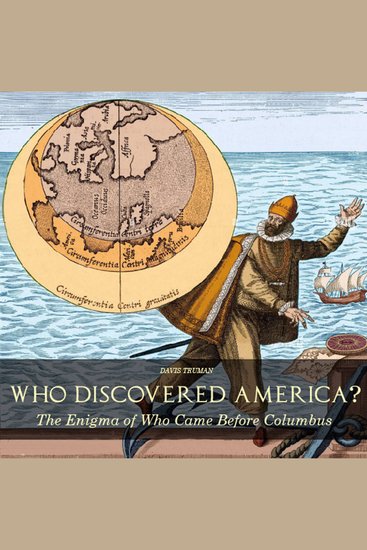
    In the heart of history's greatest enigma lies an untold tale, an ancient mystery that has captivated the imagination of generations. "Who Discovered America? The Enigma of Who Came Before Columbus" delves deep into the realms of forgotten civilizations and the whispers of a forgotten past. 
    Journey through time and across continents as this captivating narrative unravels the web of secrets surrounding the discovery of America. Was Columbus the first to set foot upon these hallowed shores, or were there intrepid explorers whose names have long been lost to the annals of time? 
    Immerse yourself in the stories of fearless voyagers whose daring escapades carried them to the distant shores of the New World. From the Vikings of the North to the mysterious Phoenicians, each chapter paints a vivid portrait of these brave souls who may have paved the way for Columbus' epic voyage. 
    So, join us on this extraordinary journey as we venture into the forgotten footprints of history, piecing together the puzzle of America's true discoverers and unlocking the secrets of an enigma that has fascinated humanity for generations.
    Ver livro