Junte-se a nós em uma viagem ao mundo dos livros!
Adicionar este livro à prateleira
Grey
Deixe um novo comentário Default profile 50px
Grey
Assine para ler o livro completo ou leia as primeiras páginas de graça!
All characters reduced
The Ethics of Immanuel Kant - Metaphysics of Morals - Philosophy of Law & The Doctrine of Virtue + Perpetual Peace + The Critique of Practical Reason: Theory of Moral Reasoning - cover
LER

The Ethics of Immanuel Kant - Metaphysics of Morals - Philosophy of Law & The Doctrine of Virtue + Perpetual Peace + The Critique of Practical Reason: Theory of Moral Reasoning

Immanuel Kant

Tradutor Thomas Kingsmill Abbott, William Hastie

Editora: Good Press

  • 0
  • 0
  • 0

Sinopse

In "The Ethics of Immanuel Kant," the reader is invited into the intricate moral philosophy that has profoundly influenced modern ethical discussions. Kant meticulously delineates his deontological ethics, emphasizing the significance of duty, autonomous will, and the categorical imperative. His literary style is marked by rigorous argumentation and a meticulous structure, reflecting his Enlightenment context where reason was revered as the foundation of human morality. Kant's work invites a critical examination of morality beyond mere consequentialism, asserting that moral laws must be universalizable and act as the guiding force in human actions. Immanuel Kant, a pivotal figure in Western philosophy, developed his ethical theory during a time of societal upheaval and intellectual ferment at the onset of the modern age. His educational background in mathematics and logic profoundly shaped his philosophical inquiries. Kant grappled with the implications of free will, rationality, and the nature of human existence, leading him to this seminal work that seeks to establish an ethical framework grounded in reason, rather than empirical consequences. Readers seeking to engage with fundamental questions of morality and human conduct will find "The Ethics of Immanuel Kant" essential. Its enduring relevance offers profound insights into ethical reasoning applicable not only in philosophical discourse but also in contemporary moral dilemmas. This text serves as a cornerstone for anyone wishing to explore the interplay between freedom, duty, and ethical imperatives, making it a vital addition to the library of any serious student of philosophy.
Disponível desde: 08/01/2024.
Comprimento de impressão: 805 páginas.

Outros livros que poderiam interessá-lo

  • The Theory of Moral Sentiments - cover

    The Theory of Moral Sentiments

    Adam Smith

    • 0
    • 0
    • 0
    "The Theory of Moral Sentiments" is a book written by Adam Smith, a Scottish philosopher and economist who lived from 1723 to 1790. First published in 1759, the book is considered one of the most important works in the field of moral philosophy. 
    In the book, Smith explores the nature of morality and the role of sympathy and empathy in human interactions. He argues that human beings are naturally inclined to feel sympathy for others, and that this sympathy forms the basis of moral judgments. He also discusses the concept of the "impartial spectator," an imagined observer who helps us to judge the morality of our own actions. 
    Smith's ideas in "The Theory of Moral Sentiments" have had a profound impact on fields beyond moral philosophy, including economics and political theory. In his later work, "The Wealth of Nations," Smith developed his ideas on the nature of markets and the division of labor, which have become foundational concepts in modern economics. 
    Overall, "The Theory of Moral Sentiments" is a key work in the development of Western moral philosophy, and is still widely studied and debated today.
    Ver livro
  • Historical Influences - How History Shaped Contemporary Jewish Culture - cover

    Historical Influences - How...

    Joseph Arston

    • 0
    • 0
    • 0
    Jewish culture and identity are deeply rooted in ancient history, shaped by significant events, traditions, and teachings that continue to influence contemporary Jewish life. From biblical narratives to the Second Temple period, these early foundations laid the groundwork for Jewish beliefs, customs, and communal structures. 
    The impact of biblical narratives is one of the most defining aspects of Jewish history. The Torah, regarded as the cornerstone of Jewish faith and law, provides a historical and spiritual framework that has guided Jewish life for millennia. Stories of the patriarchs, such as Abraham, Isaac, and Jacob, emphasize themes of faith, covenant, and resilience. The Exodus story, recounting the Israelites’ liberation from Egypt, remains a central symbol of perseverance and divine intervention, shaping Jewish festivals like Passover and reinforcing the concept of Jewish unity. The laws and ethical teachings in the Torah continue to influence Jewish traditions, values, and social practices. 
    Jewish identity in the ancient world was shaped by interactions with surrounding civilizations. Living in lands governed by powerful empires such as Egypt, Babylon, Persia, and Rome, Jewish communities maintained their distinct religious and cultural practices while also adapting to changing political and social landscapes. The Babylonian Exile in the 6th century BCE was a turning point, as it not only led to the destruction of the First Temple but also forced Jews to develop new ways of preserving their heritage in foreign lands. This period saw the rise of synagogue worship and the emphasis on textual study, both of which remain central to Jewish life today.
    Ver livro
  • Staying One Step Ahead - Ending the Story of Active Shooter in America's Schools - cover

    Staying One Step Ahead - Ending...

    Tom Czyz

    • 0
    • 0
    • 0
    It’s a tragedy this book has to exist. America’s schools are trapped in a deadly cycle of déja vu. But from these heartbreaking tragedies, we can learn to do better—and learn how to stay one step ahead of the next school shooting.
    Ver livro
  • The General And The Legion - How Julius Caesar Built Ruled And Relied on The Roman War Machine - cover

    The General And The Legion - How...

    Davis Truman

    • 0
    • 0
    • 0
    This audiobook is narrated by an AI Voice.   
    In the annals of military history, few names evoke the same awe and legacy as Julius Caesar. The General and the Legion is a gripping exploration of how one man's political genius, military brilliance, and strategic human insight transformed a republic into an empire, one loyal legion at a time. 
    From the chaotic streets of Roman politics to the thunder of marching boots across Gaul, this powerful narrative dissects Caesar's meteoric rise and the disciplined force that enabled it. This book peels back the layers of the myth to reveal the man who led not just Rome's war machine. He embodied it. 
    Inside, you'll discover: 
    •	Caesar's evolution in the political arena and how it shaped his command style. 
    •	The inner workings of Roman military life and the culture of the legions. 
    •	How Caesar earned, kept, and at times manipulated the fierce loyalty of his soldiers. 
    •	Insights into military pay, morale, and the subtle strategies behind soldier satisfaction. 
    A unique look at Caesar's famed clemency and diplomatic mind, tools as deadly as his sword. The art of reward, favor, and empire-building through personal loyalty. Perfect for history lovers, military strategists, and leadership enthusiasts alike, The General and the Legion reveals how Caesar conquered and why his soldiers followed him to the ends of the earth—and beyond.
    Ver livro
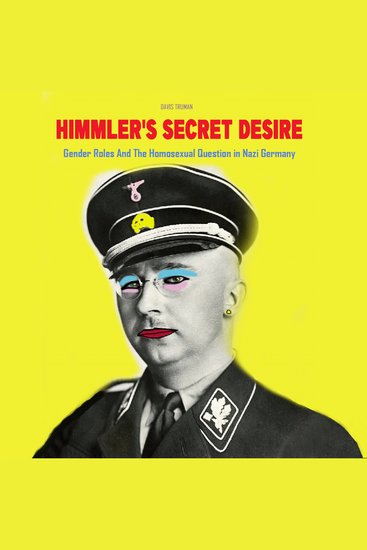
  • Himmler's Secret Desire - Gender Roles And The Homosexual Question in Nazi Germany - cover

    Himmler's Secret Desire - Gender...

    Davis Truman

    • 0
    • 0
    • 0
    This audiobook is narrated by an AI Voice.   
    In the whirlwind of early 20th-century Germany, Heinrich Himmler grapples with questions of masculinity and identity amidst a society in flux. Denied the opportunity to prove himself in war, Himmler is forced to confront his own biases when faced with the complexities of homosexuality. 
    Coming from a conservative background, Himmler's beliefs clash with the realization that masculinity can manifest in diverse ways, including within the LGBTQ+ community. As he ascends to power, his inner struggle reaches a climax with the notorious Bad Tölz speech of 1937, marking a dark chapter in Nazi history. 
    "Himmler's Secret Desire" delves deep into Himmler's journey, offering insights into Nazi attitudes towards gender and sexuality. It serves as a poignant reminder of the dangers of prejudice and the ongoing pursuit of acceptance and understanding.
    Ver livro
  • WWII Warfare - The Technological Nightmare That Transformed Modern Combat (3 in 1) - cover

    WWII Warfare - The Technological...

    Sage Winters

    • 0
    • 0
    • 0
    This book contains the following titles: 
    - Tanks of the Eastern Front: The Eastern Front of World War II was a vast and brutal theater of combat that spanned thousands of miles, from the icy steppes of northern Russia to the warm plains of the Ukraine. It was here that some of the largest and most decisive battles of the war took place, involving millions of soldiers, tanks, and aircraft. The conflict between Nazi Germany and the Soviet Union began in 1941 with the German invasion under Operation Barbarossa, and it would continue until the final Soviet assault on Berlin in 1945. This epic struggle not only shaped the outcome of the war but also fundamentally altered the future of Europe and the global balance of power. 
    - War on the Waves: The naval power wielded by the world’s great nations during World War II shaped not only the outcome of the conflict but also the geopolitical landscape for decades to come. Control of the seas became a decisive factor in determining the success or failure of military strategies and the fate of nations. This maritime struggle, fought on vast oceans and distant shores, was as much a war of technology, tactics, and intelligence as it was of sheer naval might. 
    - Blitzkrieg: The outbreak of World War II in 1939 heralded the arrival of a new era in military strategy, characterized by speed, surprise, and relentless coordination. At the heart of this revolution was Blitzkrieg, or "lightning warfare," a doctrine developed and executed primarily by Nazi Germany. Blitzkrieg was a military strategy that sought to overcome the static, trench-based warfare that had defined World War I. The tactics were designed to strike quickly and decisively, bypassing traditional defenses and causing maximum disruption. Its goal was not just to win battles but to create a psychological shock, overwhelming the enemy with rapid, coordinated strikes before they could mount a defense.
    Ver livro