Junte-se a nós em uma viagem ao mundo dos livros!
Adicionar este livro à prateleira
Grey
Deixe um novo comentário Default profile 50px
Grey
Assine para ler o livro completo ou leia as primeiras páginas de graça!
All characters reduced
The Mosaic Effect - How the Chinese Communist Party Started a Hybrid War in America’s Backyard - cover
LER

The Mosaic Effect - How the Chinese Communist Party Started a Hybrid War in America’s Backyard

Scott McGregor, Ian Mitchell

Editora: Optimum Publishing International

  • 0
  • 0
  • 0

Sinopse

In The Mosaic Effect, the authors chronicle how they assembled a formidable team of intelligence collectors, including seasoned journalists, former agents, law enforcement experts, dedicated researchers, and incognito informants within the Chinese diaspora. With precision and dedication, they employ a fusion of modern investigative techniques and age-old tradecraft. Together, they assemble a captivating mosaic of intelligence, piecing together the intricate web of CCP influence that reaches into the highest echelons of global power.
		 
The Mosaic Effectisn't just an exposé but an urgent cautionary tale. It invites you to peer into the covert realm manipulated by the CCP within the Western sphere. This isn't merely a story—it's a high-stakes narrative of intrigue and espionage that offers an intimate look into a dimension of global affairs concealed from public gaze. Welcome to a world of international espionage, intrigue, and the relentless pursuit of democratic values, all woven into a narrative that demands the attention of discerning readers immersed in global politics and the preservation of democracy.
		 
For those who are well-versed in global politics, espionage aficionados, and public policy writers, The Mosaic Effect is your exclusive passageway to understand what has happened and what needs to be done to safeguard democracy.
Disponível desde: 03/11/2023.
Comprimento de impressão: 472 páginas.

Outros livros que poderiam interessá-lo

  • Social Justice - Strategies for Empowerment and Advocacy - cover

    Social Justice - Strategies for...

    Kevin Thorley

    • 0
    • 0
    • 0
    Social justice has a rich and complex history, shaped by numerous social, political, and economic movements over centuries. Its roots can be traced back to the Enlightenment era, where philosophers like John Locke and Jean-Jacques Rousseau introduced ideas of equality, individual rights, and the social contract. These concepts laid the groundwork for future social justice movements by emphasizing the inherent rights and dignity of every individual. 
      
    In the late 18th and early 19th centuries, the abolition of slavery marked a significant milestone in the evolution of social justice. Abolitionists fought tirelessly to end the inhumane practice of slavery, advocating for the freedom and equal treatment of all people regardless of race. This movement not only aimed to abolish slavery but also to challenge the deeply entrenched racial hierarchies and discrimination that persisted even after slavery was formally ended. 
      
    The labor movements of the 19th and early 20th centuries further expanded the scope of social justice by addressing economic inequalities and workers' rights. These movements sought fair wages, safe working conditions, reasonable working hours, and the right to unionize. The struggle for labor rights highlighted the connection between economic justice and broader social equity, demonstrating that fair treatment in the workplace is essential for overall social justice.
    Ver livro
  • The Collapse of the Indus Valley Civilization - Unraveling the Mystery Behind One of the World’s Oldest Lost Civilizations - cover

    The Collapse of the Indus Valley...

    David Hill

    • 0
    • 0
    • 0
    The Indus Valley Civilization was one of the most advanced and mysterious ancient societies, yet it mysteriously declined and vanished. What caused the fall of this once-great civilization? Was it climate change, invasions, or internal decline? 
    This audiobook explores the rise, achievements, and sudden disappearance of the Indus Valley Civilization. From their sophisticated cities like Mohenjo-Daro and Harappa to their advanced drainage systems and trade networks, uncover the untold story of a lost world. 
    The Collapse of the Indus Valley Civilization is a must-listen for history lovers, archaeology enthusiasts, and anyone fascinated by the mysteries of ancient civilizations.
    Ver livro
  • Mastering the World: The Story of Liu Bang - cover

    Mastering the World: The Story...

    GaoYuan

    • 0
    • 0
    • 0
    Description:
    Liu Bang can be regarded as a master among emperors. For Li Shimin and Zhu Yuanzhang, who were also emperors, held him in high esteem. Liu Bang grew up in the marketplace. He was neither proficient in writing as a literati nor good at fighting as a warrior. However, under his leadership, he gradually defeated many prominent figures, overthrew Xiang Yu, and brought peace to the whole country. Later, through the hands of others, he got rid of Han Xin, eliminating potential threats. It was he who founded the great Han Empire that lasted for four hundred years. Both Emperor Taizong Li Shimin of the Tang Dynasty and Emperor Taizu Zhu Yuanzhang of the Ming Dynasty, who had planned and conquered the country, gave him extremely high praise. Even Mao Zedong commented that "Liu Bang was a brilliant statesman" and "a very formidable one among the feudal emperors".
    Author Biography:
    The author of the book is a Chinese-American management consultant living in the United States. His books have been widely recognized by the public, and the purchased reviews on online bookstores have exceeded 300,000 five-star reviews. He has authored books such as "The Subconscious Mind", "The Handbook of Cultivating Aura", and "Self-Control", etc.
    Ver livro
  • France and England’s Most Famous Palaces: The History of the Most Famous Royal Residences in Western Europe - cover

    France and England’s Most Famous...

    Editors Charles River

    • 0
    • 0
    • 0
    When people think of the British Royal family, and more specifically where they live, the first image that often pops into mind is that of stately Buckingham Palace, with its changing of the guard and the occasional royal coach leaving or entering. Others may think of the royal country estate of Windsor Castle, a favorite of both Britain’s longest-reigning and second longest-reigning monarchs. And there was a time when both royal residences played second fiddle to a much better known home, the elegant Kensington Palace. Buckingham Palace is not different, for though it was originally built as a home of a private citizen, once a king bought it, its future was sealed.  
    	For the French, and those who study their history, Versailles is a symbol of, as Charles Dickens once put it, “the best of times…the worst of times.” It was here that the Sun King, Louis XIV, built a palace worthy of a great nation during a time when peace was, at best, short-lived. It was at Versailles that Russian Tsar Peter the Great studied the palace’s architecture and gardens so that he could recreate them in his home country. Indeed, the greatest minds and artistic geniuses of the later stages of the Renaissance came to Versailles to build and paint, and it was here that Madame de Pompadour and her successor, Madame du Barry, used their wit and beauty to charm a king into doing their bidding. However, as history constantly demonstrates, nothing good lasts forever, and so it was with Versailles.  
    	France, like all European countries, has had its fair share of palaces over time, but none suffered the rise and fall of fortune like the Tuileries. Built by a widow with a flair for architecture, it grew for more than a decade, along with the royal family that it housed. Then, during the French Revolution, it fell from grace with that family and even became a sight of execution, its famous gardens providing the background for the infamous guillotine. 
    Ver livro
  • Taking Charge of Adult ADHD Second Edition - Proven Strategies to Succeed at Work at Home and in Relationships - cover

    Taking Charge of Adult ADHD...

    PhD Russell A. Barkley,...

    • 0
    • 0
    • 0
    If you're among the millions of adults with attention-deficit/hyperactivity disorder (ADHD), you need the latest facts about the disorder and its treatment. You need practical strategies to help develop your strengths and achieve your goals, whether on the job, in family relationships, or in personal pursuits. From renowned ADHD researcher/clinician Russell A. Barkley, this is the book for you. Dr. Barkley takes you through the process of seeking professional help, addresses frequently asked questions about medications and other treatments, and offers a wealth of advice and tips—all science-based. Featuring the latest resources and medication facts, the revised and updated second edition includes new or expanded discussions of mindfulness, emotional self-control, time management, building a successful career, maintaining a healthy lifestyle, and more. Finally, an authoritative one-stop resource to help you take back your life from ADHD.
    Ver livro
  • Gone With The World Wars - cover

    Gone With The World Wars

    Hildegard Bonacker Bruni

    • 0
    • 0
    • 0
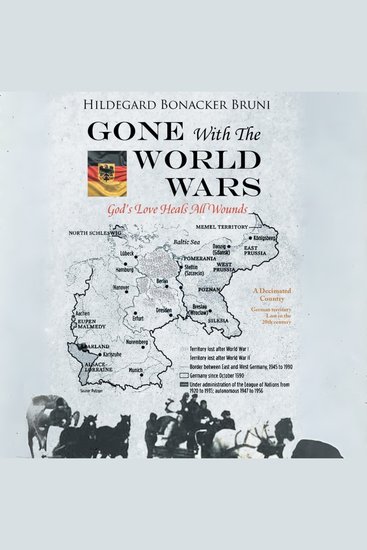
    In the wake of World War II, one-third of East Germany, including East Prussia, was given to Poland and Russia with the consent of the four allies governing occupied Germany-America, England, France, and Russia. In the process, 14 million Germans who called that area home were driven from their land, receiving horrible treatment and never allowed to return. 
    This is the story of one family's journey to safety and the miracles of God that lined their path to deliverance. In Gone with the World Wars, Hildegard Bonacker Bruni shares the inspiring true account of her family's incredible passage during and after World War II and the amazing faithfulness of God that protected them every step of the way. 
    Hildegard shares the testimony of her parents, Gustav and Emilie Bonacker, who were born in East Prussia and lived through WWI and WWII. In July 1944, Gustav was drafted into the army, and in August of the same year, Emilie, along with seven of her children, had to escape on horse and buggy for eight months until she reached the refuge of Sophienhof, in Schleswig Holstein. By the grace of God, Hildegard's family survived, overcoming the life-threatening trials of hunger, sickness, freezing temperatures, and constant bomb attacks. 
    Gone with the World Wars documents this brave family's experiences, which are representative of many German families during the time, revealing what they lived through both during and after the war. 
    With her family's story as a reflection of what truly happened during World War II, Hildegard dedicated her life to uncovering the truth of both world wars, the historical background of each, and how the various types of government affected the lives of the German people, her family included.
    Ver livro