¡Acompáñanos a viajar por el mundo de los libros!
Añadir este libro a la estantería
Grey
Escribe un nuevo comentario Default profile 50px
Grey
Suscríbete para leer el libro completo o lee las primeras páginas gratis.
All characters reduced
Celtic Scotland - cover

Celtic Scotland

Ian Armit

Editorial: John Donald

  • 0
  • 0
  • 0

Sinopsis

This authoritative and handsomely illustrated book is aimed at the general reader who wants to know about the mysterious people who inhabited Scotland from the Bronze Age onwards. They created wonderful works of art in gold and silver and their brochs and hillforts are scattered over the Scottish landscape. Many modern-day Scots are descended from them.
Using the results of modern archaeology and historical sources, Ian Armit answers the key questions about who the Celts were, wherethey came from, their relationship with other Celtic tribes throughout Europe, their customs and beliefs and their daily life. It is a fascinating story told with flair and clarity by one of Britain's leading experts on the Celts.
Disponible desde: 20/02/2025.
Longitud de impresión: 192 páginas.


Otros libros que te pueden interesar

  • Willow's Story - cover

    Willow's Story

    Louise Allen

    • 0
    • 0
    • 0
    A young girl’s life is shadowed by secrets and lies... 
     
    When Willow arrives in the Allen household, curious things begin to happen. 
     
     
    Who is the strange child dressed in outlandish clothes who refuses a mobile phone? What are the mysterious allegations that have been made about her? 
     
    Determined to find out Louise gets more than she bargained for, as she unravels the truth about Willow’s family background and uncovers some distressing 
    secrets.
    Ver libro
  • Campus Speech and Academic Freedom - A Guide for Difficult Times - cover

    Campus Speech and Academic...

    Erwin Chemerinsky, Howard Gillman

    • 0
    • 0
    • 0
    Expert guidance for navigating the difficult new issues around free speech rights in higher education 
    In their earlier book, Free Speech on Campus, Erwin Chemerinsky and Howard Gillman argued that colleges and universities should permit the expression of the widest possible range of views. Nearly ten tumultuous years later, many issues have arisen that this simple principle does not adequately address. To what extent must an institution provide expensive security for extremely controversial speakers? Should colleges and universities defend faculty, students, or administrators who find themselves the victims of social media firestorms? How should they handle the expression of controversial views or the use of offensive language in classrooms? May academic departments or other administrative units—or an entire school—take positions on controversial political issues? What rules should exist around campus protests or disruptive activities? How should we assess government efforts to control faculty speech or curricular choices? In Campus Speech and Academic Freedom, two law professors and university administrators who have confronted these questions for years draw on their extensive real-world experience to help campus leaders, campus communities, government officials, and the public better understand and address the contentious issues surrounding campus speech.
    Ver libro
  • Social Studies for a Better World - An Anti-Oppressive Approach for Elementary Educators - cover

    Social Studies for a Better...

    Katy Swalwell, Noreen Naseem...

    • 0
    • 0
    • 0
    Plan and deliver a curriculum to help your students connect with the humanity of others! 


    In the wake of 2020, we need today's young learners to be prepared to develop solutions to a host of entrenched and complex issues, including systemic racism, massive environmental problems, deep political divisions, and future pandemics that will severely test the effectiveness and equity of our health policies. What better place to start that preparation than with a social studies curriculum that enables elementary students to envision and build a better world? 


    In this engaging guide two experienced social studies educators unpack the oppressions that so often characterize the elementary curriculum—normalization, idealization, heroification, and dramatization—and show how common pitfalls can be replaced with creative solutions. Whether you're a classroom teacher, methods student, or curriculum coordinator, this is a book that can transform your understanding of the social studies disciplines and their power to disrupt the narratives that maintain current inequities.
    Ver libro
  • You Are the Reality of the Invisible God - cover

    You Are the Reality of the...

    Pastor Philip

    • 0
    • 0
    • 0
    Becoming aware of God is a gift that sets His creation before us.  Look around you. Wherever you are, you will see the greatness of God and cannot help but praise Him.
    Ver libro
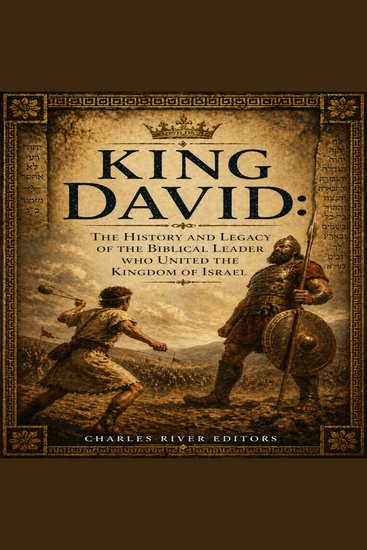
  • King David: The History and Legacy of the Biblical Leader Who United the Kingdom of Israel - cover

    King David: The History and...

    Charles River Editors

    • 0
    • 0
    • 0
    Before any type of unified political entity named Israel existed, the Jewish groups whose descendants would later form Israel identified themselves by their particular tribe. If asked their nationality or country of origin, they would likely identify themselves as Danites (from the tribe of Dan; Ex. 31:6) or Ephraimites (from the tribe of Ephraim; Judg. 12:5), etc. The main way to differentiate these tribes from other tribes in Canaan was their common worship of the deity YHWH, but in terms of language or other cultural characteristics, it would have been difficult to tell a Canaanite from an Israelite.  
    	Before David’s rise, the prophet Samuel emerged as the supreme spiritual authority, serving as the bridge between the will of Yahweh and earthly power and holding the sacred authority to appoint and remove kings. After rejecting Saul for his transgressions, Samuel was sent by God to Bethlehem, in the heart of the territory of the tribe of Judah. It is here that the Biblical narrative turns its focus to the origins of David. Modern historical scholarship quickly dismantles the romantic image of David as a poor shepherd boy of humble origins - his father Jesse was in fact a respected elder of Bethlehem, a prosperous landowner with significant land and large herds of livestock. 
    	The family's internal dynamics were not without tension. David was the youngest son, and given the demographic pressures mentioned above and the system of primogeniture, his prospects of receiving a meaningful share of the inheritance were slim. This pushed him to leave home and quickly develop other skills to get by: he became both a formidable warrior and a skilled lyre player, an instrument that signaled his belonging to a well-off class. Furthermore, David's complete absence when the prophet Samuel arrived, left tending the flock in the fields while his brothers took part in the ritual, highlights his initially marginalized and underestimated position, even in his own father's eyes.
    Ver libro
  • Plastic Capitalism - Banks Credit Cards and the End of Financial Control - cover

    Plastic Capitalism - Banks...

    Sean H. Vanatta

    • 0
    • 0
    • 0
    American households are awash in expensive credit card debt. But where did all this debt come from? In this history of the rise of postwar American finance, Sean H. Vanatta shows how bankers created our credit card economy and, with it, the indebted nation we know today. 


    America's consumer debt machine was not inevitable. In the years after World War II, state and federal regulations ensured that many Americans enjoyed safe banks and inexpensive credit. Bankers, though, grew restless amid restrictive rules that made profits scarce. They experimented with new services and new technologies. They settled on credit cards, and in the 1960s mailed out reams of high-interest plastic to build a debt industry from scratch. 


    In the 1960s and 70s consumers fought back, using federal and state policy to make credit cards safer and more affordable. But bankers found ways to work around local rules. Beginning in 1980, Citibank and its peers relocated their card plans to South Dakota and Delaware, states with the weakest consumer regulations, creating "on-shore" financial havens and drawing consumers into an exploitative credit economy over which they had little control. We live in the world these bankers made.
    Ver libro