¡Acompáñanos a viajar por el mundo de los libros!
Añadir este libro a la estantería
Grey
Escribe un nuevo comentario Default profile 50px
Grey
Suscríbete para leer el libro completo o lee las primeras páginas gratis.
All characters reduced
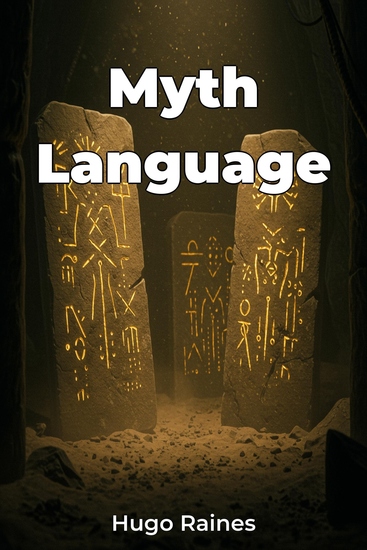
Myth Language - cover

Myth Language

Hugo Raines

Traductor A AI

Editorial: Publifye

  • 0
  • 0
  • 0

Sinopsis

Myth Language explores the hidden linguistic structures that give power and longevity to enduring myths across cultures. It reveals how specific linguistic patterns, such as recurring motifs and archetypal characters, create narratives that resonate deeply. Understanding these patterns allows for a deeper analysis of how myths convey meaning and reinforce cultural values. For example, the hero's journey, a common narrative structure, appears in various mythologies, highlighting universal human experiences.The book uniquely focuses on the "myth language" itself, the specific grammatical, syntactical, and rhetorical devices used in these narratives, rather than solely focusing on thematic or symbolic interpretations. It systematically analyzes formulaic expressions and traces these patterns across diverse traditions, from Greek and Roman to Norse and Near Eastern myths. This approach is valuable for students of language arts, biblical studies, and comparative religion, offering tools for analyzing cultural narratives and religious traditions.The book begins by introducing core concepts and methodologies, then delves into specific linguistic patterns and formulaic expressions, demonstrating their presence in various mythologies. It culminates by tracing these linguistic patterns across different cultures, highlighting universal elements and culturally specific adaptations. By understanding "myth language," readers can enhance their appreciation of literature and gain new insights into the religious and spiritual traditions that have shaped human history.
Disponible desde: 06/05/2025.
Longitud de impresión: 66 páginas.

Otros libros que te pueden interesar

  • The Egyptian Book of the Dead - The Papyrus Of Ani - cover

    The Egyptian Book of the Dead -...

    E. A. Wallis Budge

    • 0
    • 0
    • 0
    The Papyrus of Ani is a papyrus manuscript in the form of a scroll with cursive hieroglyphs and color illustrations that was created c.1250 BCE during the 19th Dynasty of the New Kingdom of ancient Egypt. Egyptians compiled an individualized book for certain people upon their death called the Book of Going Forth by Day, more commonly known as the Book of the Dead, typically containing declarations and spells to help the deceased in their afterlife. 
    The Papyrus of Ani is the manuscript compiled for the Theban scribe Ani. The scroll was discovered in Luxor in 1888 by Egyptians trading in illegal antiquities. It was acquired by E. A. Wallis Budge, as described in his autobiography By Nile and Tigris. Shortly after Budge first saw the papyrus, Egyptian police arrested several antiquities dealers and sealed up their houses, one of which contained the objects Budge had purchased from the dealers. Budge distracted the guards by offering them a meal while locals tunneled under the house's walls to retrieve the objects, including the Papyrus of Ani. Stored in several custom tin boxes, the papyrus and other objects Budge had acquired were then smuggled to the principal librarian at the British Museum. Budge was afterward paid a 150GBP "gratuity" from the British Treasury on behalf of the British Museum for acquiring the papyrus.
    Ver libro
  • Writing And Drawing As Art Forms - How To Express Yourself In Articles Books And Drawings On- And Off-Line! - cover

    Writing And Drawing As Art Forms...

    Owen Jones

    • 0
    • 0
    • 0
    In this digital age, artists have discovered a new frontier for sharing and selling their creations. From ebooks to paintings, the online world offers a vast array of platforms and strategies for artists to showcase and monetise their work. “Writing and Drawing As Art Forms” is a concise guide designed to help artists navigate this digital landscape and turn their passion into profit. 
    This book explores the various avenues available for artists to monetise their art, whether through selling ebooks, prints, or original artworks. It provides practical insights into understanding the market, choosing the right platforms, pricing artwork effectively, promoting art strategically, building a brand, and providing exceptional customer service. 
    Whether you’re an author seeking to self-publish your writing or an illustrator looking to sell your digital art, this guide offers valuable tips and resources to help you succeed in the online art market.
    Ver libro
  • Oceans of Grain - How American Wheat Remade the World - cover

    Oceans of Grain - How American...

    Scott Reynolds Nelson

    • 0
    • 0
    • 0
    An "incredibly timely" global history journeys from the Ukrainian steppe to the American prairie to show how grain built and toppled the world's largest empires (Financial Times). To understand the rise and fall of empires, we must follow the paths traveled by grain—along rivers, between ports, and across seas. In Oceans of Grain, historian Scott Reynolds Nelson reveals how the struggle to dominate these routes transformed the balance of world power. Early in the nineteenth century, imperial Russia fed much of Europe through the booming port of Odessa, on the Black Sea in Ukraine. But following the US Civil War, tons of American wheat began to flood across the Atlantic, and food prices plummeted. This cheap foreign grain spurred the rise of Germany and Italy, the decline of the Habsburgs and the Ottomans, and the European scramble for empire. It was a crucial factor in the outbreak of the First World War and the Russian Revolution. A powerful new interpretation, Oceans of Grain shows that amid the great powers’ rivalries, there was no greater power than control of grain.“American cotton changed the world in the first half of the nineteenth century, American wheat in its second half. Scott Reynolds Nelson’s globe-spanning exploration of the powers of a humble grain to topple empires, enable industrialization, build cities, and redirect trade flows is the kind of commodity history one wishes for: attentive to politics, connected as well as comparative in perspective, and with a knack for telling details. After reading this fast-paced book, the wars, revolutions, and empires of the nineteenth century will never seem the same.”―Sven Beckert, author of Empire of Cotton
    Ver libro
  • How to Recognize Toxic Time Management - cover

    How to Recognize Toxic Time...

    Olivia Werner

    • 0
    • 0
    • 0
    [How to Recognize Toxic Time Management] delves into the intricate dance between human consciousness and temporal existence, unraveling the subtle violence we inflict upon ourselves in our desperate attempts to control time. With unflinching precision, this meditation on modern life exposes how we've weaponized our hours against ourselves, transforming productivity tools into instruments of self-harm. Through lyrical prose that echoes the intimacy of internal dialogue, the book illuminates the spaces between our intentions and actions, where toxicity breeds in the guilt of rest and the shame of pause. Drawing from deep psychological insights and embodied wisdom, it maps the territory of our temporal anxiety while offering a revolutionary perspective: that true freedom comes not from mastering time, but from transforming our relationship with it. This isn't just another time management guide; it's a radical reimagining of how we move through our days, challenging the cultural narratives that have taught us to view every moment as a unit of production to be optimized.
    Ver libro
  • The Politics of Digital Pharmacology - Exploring the Craft of Collective Care - cover

    The Politics of Digital...

    Felix Heidenreich, Florian...

    • 0
    • 1
    • 0
    Digitization is transforming our world economically, culturally, and psychologically. The influx of new forms of communication, networking, and business opportunities, as well as new types of distraction, self-observation, and control into our societies represents an epochal challenge. Following Bernard Stiegler's concept of pharmacology, Felix Heidenreich and Florian Weber-Stein propose to view these new forms as digital pharmaka. Properly dosed, they can enable new self-relationships and forms of sociality; in the case of overdose, however, there is a risk of intoxication.
    In this essay, Felix Heidenreich, Florian Weber-Stein, and, in a detailed interview, Bernard Stiegler analyze this complex change in our world and develop new skills to use digital pharmaka.
    Ver libro
  • Japanese Folktales and Legends: An Enthralling Collection of Stories Mythical Creatures Heroes and Timeless Tales - cover

    Japanese Folktales and Legends:...

    Billy Wellman

    • 0
    • 0
    • 0
    Uncover the Heart of Japan Through Its Legendary Stories 
    Step into the world of Japanese folklore, where a samurai’s sword is more than just a weapon—it’s a symbol of honor, courage, and the samurai way of life. This audiobook takes you on a journey through the stories that have shaped Japanese culture for centuries. 
    Discover the enduring power of Japanese mythology and its influence on culture and values. From the celestial kami to the brave samurai, from cunning tricksters to fearsome yokai, each tale offers a unique glimpse into the Japanese spirit. 
    Here’s a taste of what you’ll uncover:The creation myths of Izanagi and Izanami, the divine couple who shaped the Japanese islands.The story of Amaterasu, the sun goddess who hid in a cave and plunged the world into darkness.The fascinating rituals of Shinto, where every rock, tree, and stream is alive with the presence of kami.The epic adventures of Miyamoto Musashi, Japan’s most famous swordsman, and his legendary duels.The tale of the 47 Ronin, whose loyalty and bravery have become the ultimate symbol of samurai honor.The mysterious and mischievous kitsune, fox spirits known for their shape-shifting abilities.Beautiful yet tragic love stories like “The Tale of the Bamboo Cutter” and “The Crane Wife.”The harrowing legend of Okiku, the story that inspired a famous horror movie.And much, much more! 
    Each story reveals a piece of the Japanese spirit and shows how these old tales still matter today. Scroll up and click the “add to cart” to start your journey into the world of Japanese folktales and legends!
    Ver libro