¡Acompáñanos a viajar por el mundo de los libros!
Añadir este libro a la estantería
Grey
Escribe un nuevo comentario Default profile 50px
Grey
Suscríbete para leer el libro completo o lee las primeras páginas gratis.
All characters reduced
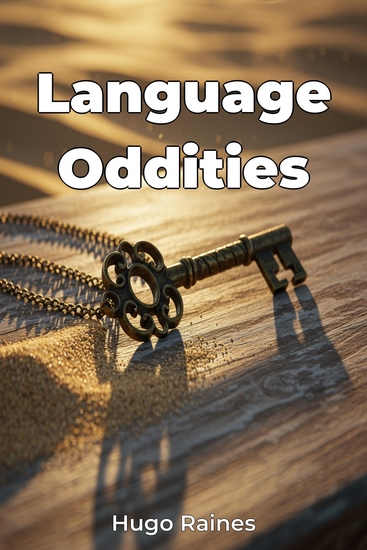
Language Oddities - cover

Language Oddities

Hugo Raines

Traductor A AI

Editorial: Publifye

  • 0
  • 0
  • 0

Sinopsis

Language Oddities explores the captivating realm of linguistic diversity, focusing on untranslatable words and unusual grammatical structures that reveal how language shapes our understanding of the world. These linguistic quirks, often overlooked, offer valuable insights into human cognition and cultural values. For example, the existence of untranslatable words demonstrates how certain concepts are deeply embedded within a specific culture. Similarly, variations in grammatical rules highlight the diverse ways humans organize and express ideas.

 
This reference book approaches its subject by first introducing fundamental linguistic concepts before showcasing a range of untranslatable words and unique grammatical structures. Each chapter delves into a particular class of language oddity, providing rich examples that contextualize these oddities within their historical and social origins. By placing linguistic peculiarities at the center of analysis, Language Oddities provides a fresh perspective on the nature of language.

 
The book progresses by systematically examining different types of language oddities, using real-world examples to illustrate complex concepts. The final chapter synthesizes key findings, exploring broader implications for cross-cultural communication and language learning. Ultimately, the book aims to foster a greater appreciation for the richness and complexity of human language.
Disponible desde: 31/03/2025.
Longitud de impresión: 76 páginas.

Otros libros que te pueden interesar

  • Dictionary of Witchcraft - cover

    Dictionary of Witchcraft

    Collin de Plancy

    • 0
    • 2
    • 0
    The original and authoritative A-to-Z reference guide to witchcraft, paganism, and magic, compiled by the famed nineteenth-century French occultist.   Following its original publication in 1818, Collin de Plancy’s Dictionnaire Infernal became a landmark study of witchcraft, pagan religions, and the occult. The first reference work to seriously document manifestations, magic, and superstitions, this historical dictionary details beings, characters, books, deeds, and causes that pertain to the manifestations and magic of trafficking with Hell, as well as divinations, occult sciences, grimoires, marvels, errors, prejudices, traditions, folktales, the various superstitions, and all manner of marvelous, surprising, mysterious, and supernatural beliefs.   A significant influence on the Romantic literary movement and notably consulted by author Victor Hugo, it remains an essential text for any student of the dark arts or demonology.
    Ver libro
  • Cognitive Shortcuts That Mislead - Mental Shortcuts That Aren't Always Right (2 in 1) - cover

    Cognitive Shortcuts That Mislead...

    William Rands

    • 0
    • 0
    • 0
    This book consists of two titles, which are: 
    - The Confirmation Bias: Confirmation bias is a cognitive phenomenon that plays a significant role in shaping our beliefs and perceptions. It refers to the tendency of individuals to search for, interpret, and remember information in a way that confirms their preexisting beliefs or theories, while disregarding or minimizing evidence that contradicts those beliefs. This bias is not limited to any particular field or context and can influence people in a variety of ways, from politics and religion to personal relationships and health decisions. 
    - The Representativeness Heuristic: At its core, the representativeness heuristic simplifies decision-making by allowing individuals to rely on surface-level similarities rather than delving into deeper, more complex analyses. For example, if someone observes a well-dressed, articulate individual discussing financial markets, they might assume the person is a financial expert, even without any concrete evidence. This judgment stems from the resemblance of the observed traits to the prototype of a financial expert. However, such assumptions often overlook critical information, such as actual expertise or experience. 
     
    Ver libro
  • Swedish Made Easy - Lower beginner - Volume 1 of 3 - cover

    Swedish Made Easy - Lower...

    Lingo Wave

    • 0
    • 0
    • 0
    We broke our new series on learning Swedish down into different learning stages. Start with the “Lower Beginner” books followed by the “Beginner” and “Upper Beginner” books. Next, progress to the “Intermediate” series, then test and reinforce your knowledge with the “Conversations” series.  
    This audiobook is divided into units.While it provides different learning patterns and accommodates various needs, this audiobook focuses on helping you improve your ability to understand, speak, and memorise Swedish. The sample will give you a taste of what you can look forward to.  
    In Unit 1 you will hear Swedish decoded with each syllable spoken very slowly and clearly with repetition. Immediately before each sentence is spoken, you will hear the translation, so you will always understand what is being said. Unit 2 focuses solely on increasing your listening ability, which will improve your abilities to engage in dialogue with a native Swedish speaker. This chapter requires you to listen very carefully to nuances in the language.  
    By Unit 3 you will already notice progress in your abilities to speak and understand Swedish. The spoken translation is followed by two repetitions in Swedish at a completely natural speed. While you are learning to process naturally spoken Swedish, Units 3 and 4 will help you memorise new vocabulary and full sentences. In Unit 5 you can test yourself on how much you have learned. If you are having difficulties, we suggest you revisit the listening, speaking, or memorisation section of Units 1, 2 3 or 4, according to what you need more help with. 
    Topics covered in this book: 
    - Greeting 
    - Asking personal information 
    - Asking about people or things 
    - Talking about the current time and date 
    - Talking about the location of things 
    - Describing things  
    - Likes and dislikes 
    - Talking about abilities 
    - Talking about appearance 
    - Talking about personality 
    - Talking about the weather 
    - Talking about food 
    - Talking about the house
    Ver libro
  • The Prince and the Pauper - cover

    The Prince and the Pauper

    Mark Twain

    • 0
    • 0
    • 0
    Originally published in 1881, Mark Twain's The Prince and the Pauper is a timeless tale of switched identities. After the young Prince Edward VI of England and a peasant boy switch places, the "little king" tries to escape from a world in which he must beg for food, sleep with rodents, face ridicule, and avoid assassination. Meanwhile, the peasant, who is now the prince, dreads exposure and possible execution-while members of the Court believe he has gone mad. As a result of the swap, both boys learn that social class, like so much of life, is determined by chance and random circumstance. Originally published in 1881, The Prince and the Pauper is one of Mark Twain's earliest social satires. With his caustic wit and biting irony, Twain satirizes the power of the monarchy, unjust laws and barbaric punishments, superstitions, and religious intolerance. Although usually viewed as a child's story, The Prince and the Pauper offers adults critical insight into a people and time period not really all that different from our own.
    Ver libro
  • Tommy French - How British First World War Soldiers Turned French into Slang - cover

    Tommy French - How British First...

    Julian Walker

    • 0
    • 1
    • 0
    ‘Napoo’, ‘compray’, ‘san fairy ann’, ‘toot sweet’ are anglicized French phrases that came into use on the Western Front during the First World War as British troops struggled to communicate in French. Over four years of war they created an extraordinary slang which reflects the period and brings the conflict to mind whenever it is heard today.  Julian Walker, in this original and meticulously researched book, explores the subject in fascinating detail. In the process he gives us an insight into the British soldiers’ experience in France during the war and the special language they invented in order to cope with their situation.  He shows how French place-names were anglicized as were words for food and drink, and he looks at what these slang terms tell us about the soldiers’ perception of France, their relationship with the French and their ideas of home. He traces the spread of ‘Tommy French’ back to the Home Front, where it was popularized in songs and on postcards, and looks at the French reaction to the anglicization of their language.
    Ver libro
  • Indonesian Made Easy - Lower beginner - Volume 1 of 3 - cover

    Indonesian Made Easy - Lower...

    Lingo Wave

    • 0
    • 0
    • 0
    We broke our new series on learning Indonesian down into different learning stages. Start with the “Lower Beginner” books followed by the “Beginner” and “Upper Beginner” books. Next, progress to the “Intermediate” series, then test and reinforce your knowledge with the “Conversations” series.  
    This audiobook is divided into units.While it provides different learning patterns and accommodates various needs, this audiobook focuses on helping you improve your ability to understand, speak, and memorise Indonesian. The sample will give you a taste of what you can look forward to.  
    In Unit 1 you will hear Indonesian decoded with each syllable spoken very slowly and clearly with repetition. Immediately before each sentence is spoken, you will hear the translation, so you will always understand what is being said. Unit 2 focuses solely on increasing your listening ability, which will improve your abilities to engage in dialogue with a native Indonesian speaker. This chapter requires you to listen very carefully to nuances in the language.  
    By Unit 3 you will already notice progress in your abilities to speak and understand Indonesian. The spoken translation is followed by two repetitions in Indonesian at a completely natural speed. While you are learning to process naturally spoken Indonesian, Units 3 and 4 will help you memorise new vocabulary and full sentences. In Unit 5 you can test yourself on how much you have learned. If you are having difficulties, we suggest you revisit the listening, speaking, or memorisation section of Units 1, 2 3 or 4, according to what you need more help with. 
    Topics covered in this book: 
    - Greeting 
    - Asking personal information 
    - Asking about people or things 
    - Talking about the current time and date 
    - Talking about the location of things 
    - Describing things  
    - Likes and dislikes 
    - Talking about abilities 
    - Talking about appearance 
    - Talking about personality 
    - Talking about the weather 
    - Talking about food 
    ...
    Ver libro