¡Acompáñanos a viajar por el mundo de los libros!
Añadir este libro a la estantería
Grey
Escribe un nuevo comentario Default profile 50px
Grey
Suscríbete para leer el libro completo o lee las primeras páginas gratis.
All characters reduced
Haiku Origins - cover

Haiku Origins

Hugo Raines

Traductor A AI

Editorial: Publifye

  • 0
  • 0
  • 0

Sinopsis

Haiku Origins explores the captivating evolution of haiku, revealing its journey from classical Japanese poetry to a globally embraced art form. Delving into literary and cultural history, the book illuminates how elements like kigo (seasonal word) and kireji (cutting word) contribute to haiku's layered meanings within its concise structure.

 
Haiku's deceptively simple 5-7-5 syllable structure belies its profound artistry, offering a unique vessel for capturing fleeting moments and evoking emotions. The book traces haiku's roots in earlier Japanese forms like tanka and hokku, highlighting its development through the works of master poets such as Basho and Issa. Understanding haiku's historical context, including the influence of Zen Buddhism and the Edo period, is key to appreciating its significance.

 
Each chapter builds upon the last, beginning with historical predecessors and culminating in an examination of haiku's global spread and impact on other art forms. By analyzing original Japanese haiku and critical essays, Haiku Origins connects to broader fields like history, cultural studies, and linguistics. It emphasizes the dynamic interplay between form and content, showing how the constraints of the structure enhance creative possibilities, making it valuable to both academic readers and anyone interested in poetry or Japanese culture.
Disponible desde: 06/05/2025.
Longitud de impresión: 80 páginas.

Otros libros que te pueden interesar

  • Freedom - cover

    Freedom

    Anónimo

    • 0
    • 0
    • 0
    Create a life you don’t need a vacation from. It’s not what we know that matters, it’s what we practice. Life begins in the presence of freedom. We can wait to live the life of freedom we want until we check off all the boxes we think are necessary to do so, or we can recognize the freedom we already have and build from there. Freedom is the result of taking radical responsibility for one’s life, through the personal boundaries that dissolve self-destructive behaviors and the empowering act of nonviolent, community civic engagement. 
    This book is intended to ignite solutions to income inequality and inspire individuals to design a life they don’t need a vacation from.
    Ver libro
  • The Picture of Dorian Gray - cover

    The Picture of Dorian Gray

    Oscar Wilde

    • 0
    • 0
    • 0
    The timeless story of the beatific Dorian Gray, who never seems to age, and whose features never show the stains of life, no matter how debauched his existence becomes. What is is his secret? And what is the secret of a certain portrait that he keeps forever hidden, behind a curtain, in a locked room of his house, to which he has the only key? The only novel ever completed by Oscar Wilde, the Portrait of Dorian Gray was released in 1890 to rapturous outrage and censure, and has sold well (where permitted) ever since. 
    Narrated by Michael Ward.
    Ver libro
  • Pink Cars and Pocketbooks - How American Women Bought Their Way into the Driver's Seat - cover

    Pink Cars and Pocketbooks - How...

    Jessica A. Brockmole

    • 0
    • 0
    • 0
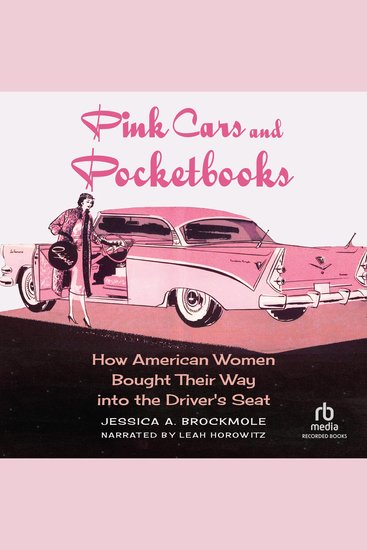
    A fascinating history of how the automotive industry and consumers battled to define what women wanted in a car. 
      
    Since the commercial introduction of the automobile, US automakers have always sought women as customers and advertised accordingly. How, then, did car culture become so masculine? In Pink Cars and Pocketbooks, Jessica Brockmole shares the untold history of women's relationship with automobiles: a journey marked by struggle, empowerment, and the relentless pursuit of independence. 
      
    This groundbreaking work explores the evolution of women's automotive participation and the cultural shifts that have redefined their roles as drivers, mechanics, and consumers. Brockmole traces the rise of gendered marketing of automobiles over the course of the twentieth century. Auto companies created ads that conformed to commonly held ideas about women's relationships with automobiles. As the century progressed, marketing to women became less informative and even more gendered: the automotive industry portrayed women as passengers, props, or reluctant drivers, interested primarily in aesthetics. And yet, by the 1970s, female drivers were communicating directly with each other, forming clubs, and teaching each other through women-focused repair manuals.  
      
    By examining market research studies, advertising archives, trade journals, women's magazines, newspapers, driving handbooks, and repair manuals, this book shows how women bought their way into the automobile and masculine car culture. Brockmole uncovers the stories of pioneering women who defied conventions, such as trailblazer Alice Ramsey, the first woman to drive across the United States in 1909, and Barb Wyatt, whose contributions to automotive manuals broke new ground. Women have always been users of technology, and this book illustrates how the auto industry evolved—as well as how it chose not to evolve—in response.
    Ver libro
  • The ABC’s of Preschool - Your Guide to Owning Operating and Thriving in Early Childhood Education - cover

    The ABC’s of Preschool - Your...

    Amber Jayne

    • 0
    • 0
    • 0
    MS. AMBER'S UNIQUE APPROACH IS HER ABILITY TO INTERTWINE HER PERSONAL STORIES OF TRIUMPHS 
    AND SETBACKS, CREATING A NARRATIVE THAT IS BOTH RELATABLE AND INSPIRING. 
    She encourages readers to dream big and, more importantly, equips them with the tools they need to find their own success in the world of preschool education. 
    In The ABC's of Preschool you'll find a roadmap to a more fulfilling life and a 
    thriving career. 
    Create Financial Security: Discover the path to a financially rewarding career in 
    the field of early childhood education. You can achieve both financial stability 
    and the satisfaction of making a profound impact on your community. 
    Spend Quality Time With Your Children: Unleash the potential for more quality 
    time with your own children during their crucial formative years. 
    Realize Your Dream Childcare Center: Learn how to create, open, and operate 
    your dream preschool. Gain the knowledge and insights needed to not only start 
    your center but ensure it THRIVES for years to come.
    Ver libro
  • Eye Movement Desensitization and Reprocessing (EMDR) - Processing Trauma through Eye Movement - cover

    Eye Movement Desensitization and...

    Vivian Westlake

    • 0
    • 0
    • 0
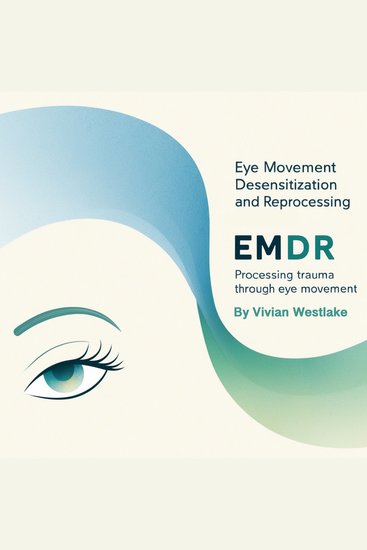
    Eye Movement Desensitization and Reprocessing (EMDR) is a therapeutic approach that has garnered widespread recognition for its effectiveness in treating trauma, particularly post-traumatic stress disorder (PTSD). Developed by Francine Shapiro in the late 1980s, EMDR is founded on the concept that distressing memories can become “stuck” in the brain, leading to emotional and psychological difficulties. By using bilateral stimulation—usually in the form of guided eye movements—EMDR aims to facilitate the processing of these memories, enabling individuals to integrate them in a way that reduces emotional distress. 
    At its core, EMDR is grounded in the understanding that trauma can impair the brain's natural processing abilities. When a traumatic event occurs, the brain’s memory systems may not fully encode the memory, leaving the experience fragmented and unresolved. As a result, individuals may experience intrusive thoughts, flashbacks, and heightened emotional responses associated with the unresolved trauma. EMDR aims to "unstick" these memories and allow the brain to reprocess them, turning them from vivid, emotionally charged experiences into less distressing memories that can be stored in a more adaptive manner. 
    The key to EMDR's effectiveness lies in its use of bilateral stimulation. During the therapy session, the client follows the therapist’s fingers or another form of rhythmic bilateral stimulation (e.g., auditory tones or tactile taps) while focusing on distressing memories. This process is thought to mimic the natural mechanisms the brain uses during REM sleep, a stage associated with memory consolidation and emotional processing. By engaging both hemispheres of the brain in this way, EMDR helps clients process traumatic memories, alleviating their emotional charge and reducing their impact on daily life.
    Ver libro
  • Birmingham Campaign The: The History of the SCLC’s Non-Violent Protests in Alabama’s Biggest City - cover

    Birmingham Campaign The: The...

    Editors Charles River

    • 0
    • 0
    • 0
    Today every American is taught about watershed moments in the history of minorities’ struggles for civil rights over the course of American history: the Civil War, Brown v. Board of Education, Rosa Parks’ refusal to give up her seat, Dr. Martin Luther King, Jr.’s “I Have a Dream” speech, and the passage of the Civil Rights Act of 1964. Indeed, the use of the phrase “Civil Rights Movement” in America today almost invariably refers to the period of time from 1954-1964. 
    	However, the Civil Rights Movement actually came into existence long before it is presumed to have done so. The movement's primary work was slow, evolving, gradual and long-term. Its more glamorous moments, such as the Montgomery Bus Boycott (1955–1956), the Selma to Montgomery March (1965), and the March on Washington (1963), mainly were supplemental to the all-important grassroots work already going on in communities, churches, legislatures, and courts. The nascent stages of the movement actually began far earlier, among abolitionists and the writings and activism of Frederick Douglass and others.  
    	Beginning in the summer of 1962, King and the Southern Christian Leadership Conference (SCLC) began to express interest in targeting one of the South's most brutally segregated cities. Nicknamed “Bombingham,” the city had witnessed the bombing of over a dozen black homes and churches in the previous five years. A victory in Birmingham was a goal that would embolden the Civil Rights Movement like never before.
    Ver libro