¡Acompáñanos a viajar por el mundo de los libros!
Añadir este libro a la estantería
Grey
Escribe un nuevo comentario Default profile 50px
Grey
Suscríbete para leer el libro completo o lee las primeras páginas gratis.
All characters reduced
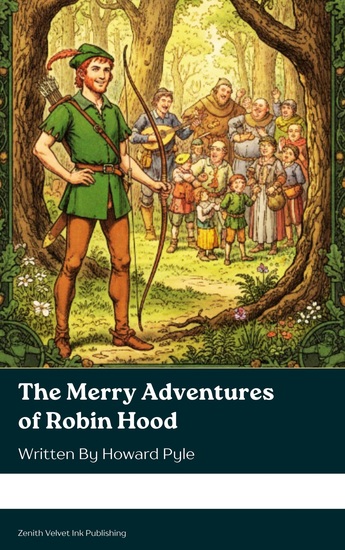
The Merry Adventures of Robin Hood - cover

The Merry Adventures of Robin Hood

Howard Pyle

Editorial: Zenith Velvet Ink Publishing

  • 0
  • 0
  • 0

Sinopsis

What if one outlaw—armed with nothing but a bow, a sharp wit, and a noble heart—could defy tyranny and inspire a legend? 🏹

In The Merry Adventures of Robin Hood, Howard Pyle brings to life the beloved tales of the bold outlaw who steals from the rich, gives to the poor, and champions justice in Sherwood Forest. With irresistible humor, heroic spirit, and unforgettable characters, this classic novel captures the magic of medieval England like no other.

This beautifully crafted edition invites readers to join Robin Hood and his band of loyal Merry Men through:

Thrilling archery contests, daring rescues, and bold escapades

Witty encounters with Friar Tuck, Little John, Maid Marian, and more

Adventures filled with courage, loyalty, generosity, and rebellion

Pyle's iconic storytelling that shaped Robin Hood's modern legend

A lively blend of humor, heart, and heroism that delights all ages

Pyle's vivid illustrations, lively language, and action-packed scenes make this novel a true treasure for fans of adventure, folklore, and timeless heroes. Whether you're discovering Robin Hood for the first time or revisiting a childhood favorite, this edition offers a rich, immersive reading experience.

Step into Sherwood Forest—add this legendary classic to your library today and relive the daring adventures of Robin Hood and his Merry Men.
Disponible desde: 17/11/2025.
Longitud de impresión: 214 páginas.
Otros libros que te pueden interesar

  • Essays and Lectures (Unabridged) - cover

    Essays and Lectures (Unabridged)

    Oscar Wilde

    • 0
    • 0
    • 0
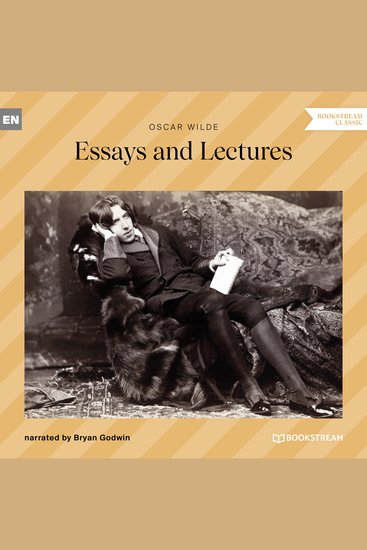
    'Essays and Lectures' is a collection of essays and lectures by Oscar Wilde. 'Essays and Lectures' contains "The Rise of Historical Criticism", "The English Renaissance of Art", "House Decoration", "Art and the Handicraftsman", "Lecture to Art Students", "London Models" and "Poems in Prose".
    Ver libro
  • In Our Time - cover

    In Our Time

    Ernest Hemingway

    • 0
    • 0
    • 0
    "In Our Time" is a collection of short stories by Ernest Hemingway, first published in 1925. The book is divided into two parts: the first consists of short vignettes, often referred to as "interchapters," while the second contains longer stories.  
    Set against the backdrop of World War I and the aftermath of the war, the collection explores themes of disillusionment, loss, and the struggle to find meaning in a chaotic world. Hemingway's spare, economical prose style, known for its understatement and minimalism, is on full display throughout the book. 
    The interchapters serve as interludes between the longer stories, providing glimpses into the lives of ordinary people and capturing moments of everyday existence. These vignettes offer insights into the human condition, often with a sense of detachment and stoicism. 
    The longer stories delve deeper into the lives of characters grappling with the effects of war, both physical and psychological. From soldiers coping with trauma to expatriates navigating the complexities of love and relationships, Hemingway paints a vivid portrait of individuals struggling to find their place in a world marked by violence and uncertainty. 
    "In Our Time" showcases Hemingway's mastery of the short story form and his ability to capture the essence of the human experience with precision and clarity. Through its exploration of themes such as war, trauma, and resilience, the collection remains a timeless work of literature that continues to resonate with readers today.
    Ver libro
  • A Journey into the Center of the Earth - cover

    A Journey into the Center of the...

    Jules Verne

    • 1
    • 0
    • 0
    "Descend into the crater of Snaefellsjökull, and you will reach the center of the earth. I have done it." — Arne Saknussemm
    
    When the eccentric Professor Otto Lidenbrock discovers a cryptic runic manuscript by an ancient Icelandic alchemist, he embarks on an audacious mission: to follow the author's path into the very heart of the planet. Accompanied by his reluctant nephew Axel and their stoic guide Hans, the trio descends into the bowels of a dormant volcano. What they find defies all scientific laws of the 19th century—a vast, sunless world of luminous forests, subterranean oceans, and living relics of the prehistoric past.
    
    A Masterpiece of Scientific Speculation: Verne was a master of "hard" sci-fi, grounding his fantastic tales in the geology and paleontology of his day. As the characters descend, they move backward through time, passing through different geological strata. The novel turns a treacherous expedition into an immersive lesson on the history of our planet.
    
    The Prehistoric Sea: The centerpiece of the adventure is the "Lidenbrock Sea," a massive underground ocean illuminated by a strange electrical phenomenon. Here, the explorers witness a titanic struggle between a Plesiosaur and an Ichthyosaur, creatures long thought extinct. Verne's descriptions of these ancient behemoths remain some of the most vivid in adventure fiction.
    
    A Trio of Contrasts: The story is driven by its characters: the obsessed and brilliant Professor Lidenbrock, the cautious and skeptical Axel, and the unflappable Hans Bjelke. Their dynamic provides a human anchor to the overwhelming wonders of the deep, exploring themes of courage, intellectual curiosity, and the limits of human endurance.
    
    The Great Ascent: Trapped and running out of supplies, the team's journey reaches a fever pitch as they face volcanic eruptions and magnetic storms. Their unconventional "exit" from the Earth's interior is one of the most famous and thrilling finales in the genre.
    
    Descend into the unknown. Purchase "A Journey to the Center of the Earth" today.
    Ver libro
  • Twice Told Tales - cover

    Twice Told Tales

    Nathaniel Hawthorne

    • 0
    • 0
    • 0
    Twice-Told Tales is a short story collection in two volumes by Nathaniel Hawthorne. The first was published in the spring of 1837, and the second in 1842. The stories had all been previously published in magazines and annuals, hence the name.Hawthorne was an American novelist, dark romantic, and short story writer. His works often focus on history, morality, and religion. He was born in 1804 in Salem, Massachusetts, from a family long associated with that town. Hawthorne entered Bowdoin College in 1821 and graduated in 1825. He published his first work in 1828, the novel Fanshawe; he later tried to suppress it, feeling it was not equal to the standard of his later work.[He published several short stories in periodicals, which he collected in 1837 as Twice-Told Tales. The following year, he became engaged to Sophia Peabody. He worked at the Boston Custom House and joined Brook Farm, a transcendentalist community, before marrying Peabody in 1842. The couple moved to The Old Manse in Concord, Massachusetts, later moving to Salem, the Berkshires, then to The Wayside in Concord. The Scarlet Letter was published in 1850, followed by a succession of other novels. A political appointment as consul took Hawthorne and family to Europe before their return to Concord in 1860. Hawthorne died on May 19, 1864, and was survived by his wife and their three children.
    Ver libro
  • Beyond Good and Evil - Prelude to a Philosophy of the Future - cover

    Beyond Good and Evil - Prelude...

    Friedrich Wilhelm Nietzsche

    • 0
    • 0
    • 0
    A caustic criticism of nearly every philosophic predecessor and a challenge of traditionally held views on right and wrong, Friedrich Nietzsche’s Beyond Good and Evil paved the way for modern philosophical thought. Through nearly three hundred transformative aphorisms, Nietzsche presents a worldview in which neither truth nor morality are absolutes, and where good and evil are not opposites but counterparts that stem from the same desires. This work dramatically rejects the tradition of Western thought with its notions of truth and God, good and evil. Nietzsche demonstrates that the Christian world is steeped in a false piety and infected with a "slave morality." With wit and energy, he turns from this critique to a philosophy that celebrates the present and demands that the individual impose their own "will to power" upon the world. Beyond Good and Evil was a foundational text for early twentieth-century thinkers, including philosophers, psychologists, novelists, and playwrights. Today’s readers will delight in Nietzsche’s pithy wit and irony while gaining a deeper understanding of his core ideology.
    Ver libro
  • Narrative of A Gordon Pym - cover

    Narrative of A Gordon Pym

    Anónimo

    • 0
    • 0
    • 0
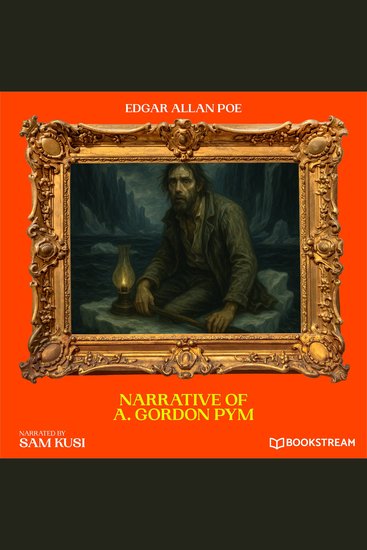
    The Narrative of Arthur Gordon Pym of Nantucket, written and published in 1838, is the only complete novel by the American writer Edgar Allan Poe. The novel is set between 1827 and 1828 and relates the tale of the young Arthur Gordon Pym, who stows away aboard a whaler called the Grampus. Various adventures and misadventures befall Pym, including shipwreck, mutiny, and cannibalism, before he is saved by the crew of the Jane Guy. Aboard this vessel, Pym and a sailor named Dirk Peters continue their adventures farther south. Docking on land, they encounter hostile, black-skinned natives before escaping back to the ocean. The novel ends abruptly as Pym and Peters continue toward the South Pole.
    The story starts out as a fairly conventional adventure at sea, but it becomes increasingly strange and hard to classify. Poe, who intended to present a realistic story, was inspired by several real-life accounts of sea voyages, and drew heavily from J. N. Reynolds and referenced the Hollow Earth theory. He also drew from his own experiences at sea. Analyses of the novel often focus on possible autobiographical elements as well as its portrayal of race and the symbolism in the final lines of the work.
    Ver libro