Junte-se a nós em uma viagem ao mundo dos livros!
Adicionar este livro à prateleira
Grey
Deixe um novo comentário Default profile 50px
Grey
Assine para ler o livro completo ou leia as primeiras páginas de graça!
All characters reduced
The Dreams in the Witch House - cover
LER

The Dreams in the Witch House

Howard Phillips Lovecraft

Editora: Edizioni Aurora Boreale

  • 0
  • 0
  • 0

Sinopse

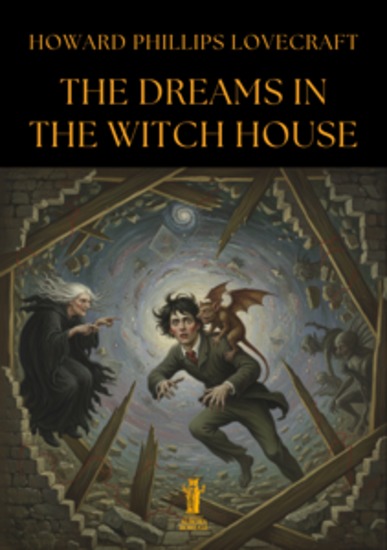
Howard Phillips Lovecraft (1890-1937) was an American writer, poet, literary critic and essayist, recognized as one of the greatest writers of horror literature together with Edgar Allan Poe and considered by many to be one of the precursors of Anglo-American science fiction. His works, a contamination between horror, soft science fiction, dark fantasy and low fantasy, have often been described, even by himself, with the term weird fiction (where weird stands for "strange"), being recognized among the main origins of the modern literary genre of the new weird.The Dreams in the Witch House is a short horror story by Howard Phillips Lovecraft, first published in the July 1933 issue of Weird Tales. It represents a pinnacle of Lovecraft's later style, where he successfully bridges the gap between traditional Gothic horror and the emerging genre of science fiction. The story is set in the fictional, mist-shrouded city of Arkham, Massachusetts, a recurring location in the Cthulhu Mythos.The narrative follows Walter Gilman, a student of mathematics and folklore at Miskatonic University. Driven by a morbid curiosity, Gilman rents a room in the "Witch House", a building rumored to have been the home of Keziah Mason, an old woman who escaped the Salem witch trials in 1692. Gilman is particularly interested in the house because of its strange architecture; the walls and ceilings are built at odd, non-Euclidean angles that seem to defy physical laws.As Gilman delves deeper into his studies of quantum physics and higher dimensions, he begins to experience feverish dreams. In these nightmares, he is pulled through the sharp angles of his room into abysses of cosmic space, guided by the crone Keziah Mason and her familiar, Brown Jenkin—a grotesque, human-faced rat. The story suggests that what ancient legends called "witchcraft" was actually a primitive understanding of mathematics and the ability to travel through the fourth dimension.
Disponível desde: 13/01/2026.


Outros livros que poderiam interessá-lo

  • Algernon Blackwood: The Man Who Found Out - A Nightmare - cover

    Algernon Blackwood: The Man Who...

    Algermon Blackwood

    • 0
    • 0
    • 0
    A researcher goes on an expedition to find "The Tablets of the Gods" which have plagued his dreams since his boyhood. He finds them, and the horrible truth of humanity's true purpose in the universe. This story, "The Man Who Found Out" is an example to me of pure cosmic horror in that the horror comes totally from knowledge which is (in-story) so terrible that it forever blights the minds of anyone who discovers it. Two highly intelligent and well informed men, Professor Ebor and then Dr. Laidlaw, learn the contents of the Tablets of the Gods, and even though this information is short enough to be on two ordinary-sized tablets, it is enough to induce absolute belief in its veracity and utterly destroy hope in the reader. Yeah, that is pretty scary. There are no monsters in the tale, nothing but Forbidden Knowledge -- which, apparently, is Forbidden with good reason
    Ver livro
  • Leaves Brown - cover

    Leaves Brown

    Ian Rogers

    • 0
    • 0
    • 0
    tbc
    Ver livro
  • Bog Wife The: Book summary & analysis - cover

    Bog Wife The: Book summary &...

    Alexander Pike

    • 0
    • 0
    • 0
    This content is an independent and unofficial summary created for informational and educational purposes only. It is not affiliated with, authorized, approved, licensed, or endorsed by the original author or publisher. All rights to the original work belong to its respective copyright holders. This summary is not intended to substitute the original book, but to offer a concise overview and interpretation of its main ideas.


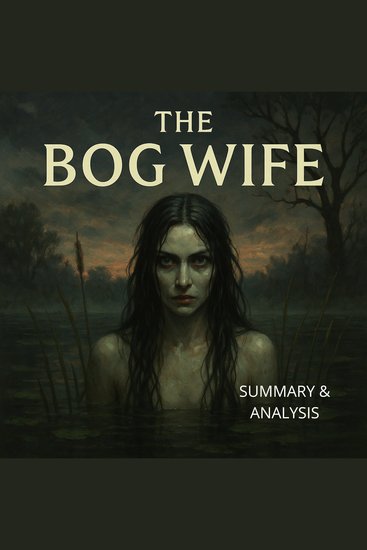
    The Bog Wife is a gripping, atmospheric novel that intertwines the mystical with the harrowing. Set in the desolate swamps of Northern Europe, this story follows a woman's journey through the shadows of history, folklore, and love. When a mysterious and ancient artifact is discovered, it triggers a chain of events that forces the protagonist to confront her own dark past and the complex, haunting legacy of her ancestors. As secrets unfold and family ties unravel, she is caught between the present and the eerie pull of ancient forces.
     
    This audiobook delves deep into themes of identity, the weight of heritage, and the struggle between love and fear, offering listeners an unforgettable listening experience full of mystery and suspense. Richly atmospheric, The Bog Wife invites the listener into a world where the past and present are inextricably linked, and where survival is never as simple as it seems.
    Ver livro
  • The Crown Derby Plate - cover

    The Crown Derby Plate

    Marjorie Bowen

    • 0
    • 0
    • 0
    Written in 1933, this classic ghost story features Bowen's typically superb descriptions of desolation and decay.
    Ver livro
  • The Story of the Spaniards Hammersmith - An interesting ghost story written by a mother son duo - cover

    The Story of the Spaniards...

    Kate & Hesketh Pritchard

    • 0
    • 0
    • 0
    Major Hesketh Vernon Prichard, DSO MC FRGS FZS was born on the 17th November 1876 in Jhansi, North-Western Provinces, India, then part of the British Empire. 
     
    His achievements in life, beyond his literary career, are both voluminous and startling. 
     
    He was an explorer, adventurer, marksman, game hunter and first-class cricketer.  In his literary career he wrote short stories, novels, travel pieces and was also a newspaper correspondent. 
     
    His father died a few weeks before his birth and his mother, Kate, with whom he co-authored much of his literary output raised him herself.  They returned to England where he was educated and excelled at cricket.  After school he trained to be a lawyer but never practiced.  At 19 he was publishing the first of his stories.   
     
    Over the following years he was commissioned to write many pieces as he explored and journeyed around the world including to Haiti, Labrador and Patagonia, where little was known and he thought it his duty to investigate and inform others of his findings.  On some of these his mother also travelled with him as they continued their literary journey. 
     
    He managed to become part of the Great War effort at 37, although was considered too old for front line duty.  Instead he turned his skills to helping establish an Army school of Snipers to mitigate and improve the skills of British snipers and their then appalling losses.  In this he was eventually successful and is credited with the saving of thousands of lives. 
     
    Hesketh Prichard died from sepsis on the 14th June 1922, at Old Gorhambury House, in Hertfordshire, England.  He was 45. 
     
    His mother, Kate, survived him and died in 1935.
    Ver livro
  • Nightmare Abbey - cover

    Nightmare Abbey

    Thomas Love Peacock

    • 0
    • 0
    • 0
    Nightmare Abbey was Peacock's third long work of fiction to be published. It was written in late March and June 1818, and published in London in November of the same year. The novella was lightly revised by the author in 1837 for republication in Volume 57 of Bentley's Standard Novels. The book is Peacock's most wellliked and frequentlyread work. 
     
    The novel was a topical work of Gothic fiction in which the author satirized tendencies in contemporary English literature, in particular Romanticism's obsession with morbid subjects, misanthropy and transcendental philosophical systems. Most of its characters are based on historical figures whom Peacock wished to pillory. 
     
    It has been observed that "the plots of Peacock's novels are mostly devices for bringing the persons together and the persons are merely the embodiment of whims and theories, or types of a class". Nightmare Abbey embodies the critique of a particular mentality and pillories the contemporary vogue for the macabre. To his friend Percy Bysshe Shelley, Peacock described the object of his novel as being "to bring to a sort of philosophical focus a few of the morbidities of modern literature". Appearing in the same year as Northanger Abbey, it similarly contrasts the product of the inflamed imagination, or what Peacock's Mr. Hilary describes as the "conspiracy against cheerfulness", with the commonplace course of everyday life, with the aid of lighthearted ridicule. 
     
    Several of the chapters take a dramatic form interspersed with stage directions in order to illustrate without comment how much the speakers characterize themselves through their conversation. The actor and director Anthony Sharp was eventually to take this approach to its logical conclusion and reduced the whole novel to a successful and popular script. First performed in February 1952, it was eventually published in 1971. A one of a kind audio encounter from Icon Audiobooks!
    Ver livro