¡Acompáñanos a viajar por el mundo de los libros!
Añadir este libro a la estantería
Grey
Escribe un nuevo comentario Default profile 50px
Grey
Suscríbete para leer el libro completo o lee las primeras páginas gratis.
All characters reduced
Cancelling Socrates - cover

Cancelling Socrates

Howard Brenton

Editorial: Nick Hern Books

  • 0
  • 0
  • 0

Sinopsis

'They say Pericles caught democracy from you in bed.'
Today, Socrates is revered as the founding father of Western philosophy. But in 399 BC Athens, he was a pain in the neck.
The plague is over, democracy is (just about) restored, and everyone would like to get back to normal. How hard is it for one ageing firebrand to stop asking questions? It's time to shut him up...
Based on eyewitness accounts, Howard Brenton's Cancelling Socrates is a provocative and witty play about an uncompromising voice in dangerous times. It was premiered at Jermyn Street Theatre, London, in June 2022, directed by the venue's Artistic Director Tom Littler.
Disponible desde: 09/06/2022.
Longitud de impresión: 88 páginas.

Otros libros que te pueden interesar

  • Shakespeare Monologues Collection vol 06 - cover

    Shakespeare Monologues...

    William Shakespeare

    • 0
    • 0
    • 0
    LibriVox readers present the sixth collection of monologues from Shakespeare’s plays. Containing 20 parts. William Shakespeare (April 26, 1564 – April 23, 1616) remains widely to be considered the single greatest playwright of all time. He wrote in such a variety of genres - tragedy, comedy, romance, &c - that there is always at least one monologue in each of his plays. Some of these teach a lesson, some simply characterize Shakespeare at his best, some are funny, some sad, but all are very moving. Each monologue will touch everybody differently. Some people will be so moved by a particular monologue that they will want to record it. (summary by Shurtagal)
    Ver libro
  • Rubáiyát of Omar Khayyám The (Fitzgerald 5th edition) - cover

    Rubáiyát of Omar Khayyám The...

    Omar Khayyám

    • 0
    • 0
    • 0
    The Rubáiyát of Omar Khayyám is so-named from the Persian word rubáiyát - a Persian word denoting a specific type of two-line stanza. Omar's Rubaiyat is a beautiful anthology of Islamic wisdom literature: originally penned in medieval Persian during the late 11th century AD.  
    The best known English translations are those by Edward Fitzgerald: his fifth (and last) translation includes a mere 101 quatrains - a fraction of Omar's original work. Fitzgerald's selection loosely groups quatrains by theme; rendering quatrains into English as four-line, rhymed stanzas.  
    Omar's writings are pervaded by the consciousness of the transient quality of life. In his Rubáiyát, the author ponders the limits of human knowledge and morality: and confronts his readers point-blank with the difficult questions that challenge every generation:  
    - what is the ultimate benefit derived from human knowledge?  
    - given human mortality; is is best to guide our lives by the dictates of reason, or sensuality?  
    - what happens to my soul when I die?  
    - why did God - the Creator - give me existence?  
     
    (Introduction by Godsend)
    Ver libro
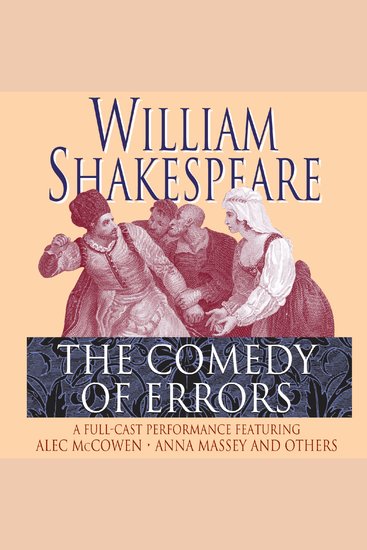
  • The Comedy of Errors - cover

    The Comedy of Errors

    William Shakespeare

    • 0
    • 0
    • 0
    We came into the world like brother and brother; And now let's go hand in hand, not one before another. - Dromio of Ephesus 
    The Comedy of Errors is likely the very first play Shakespeare ever wrote, and for that reason alone it deserves a special place in literary history. Yet, despite the author's lack of maturity, the play is unmistakably the work of a burgeoning master. A farce of a type that was wildly popular in Shakespeare's day, The Comedy of Errors transcends its genre, and is as accessible and as entertaining as any of the Bard's later comedies. Revolving around the naturally comedic themes of identical twins and mistaken identity, The Comedy of Errors is a delightful milestone in the remarkable career of the greatest dramatist of all time.
    Ver libro
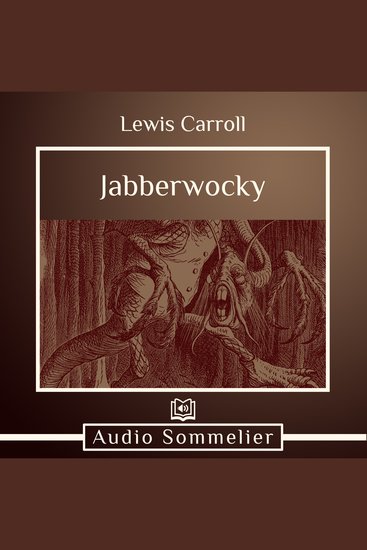
  • Jabberwocky - cover

    Jabberwocky

    Lewis Carroll

    • 0
    • 0
    • 0
    “Jabberwocky” is one of the most well-known nonsense poems in the English language. Though full of playful made-up words like “brillig,” “mimsy,” and frumious,” the poem still tells a story. A young warrior faces up against the fearsome Jabberwock, armed with a “vorpal blade,” and comes out triumphant: “O frabjous day! Callooh! Callay!” This poem first appeared in the middle of Through the Looking-Glass, and What Alice Found There, Carroll’s follow-up to the well-beloved children’s classic Alice’s Adventures in Wonderland.
    Ver libro
  • Nothing and Everything - cover

    Nothing and Everything

    Engin Ozertugrul

    • 0
    • 0
    • 0
    In Nothing and Everything, Dr. Engin Ozertugrul offers a deeply personal exploration of human existence where paradox and transcendence coexist. Known for Interview with OCD, Ozertugrul uses poetry to unpack the intricate relationship between consciousness, emotion, and divinity. Eschewing structured rhyme, he employs repetition, simplicity, and second-person narration to reveal a universal truth: we are all connected and uncertain, and that is where beauty lies.This collection avoids common poetic tropes like romance or singular religious views, focusing instead on raw human experiences—fear, sadness, anger, and hope. Each poem wrestles with the limits of understanding without succumbing to nihilism, guiding readers toward meditative peace born of acceptance and awareness.Inspired by Transcendental Meditation (TM) and thinkers such as Rumi, Spinoza, Jung, Kant, Emerson, and Blake, the poems reflect spiritual insights reinterpreted through a contemporary lens. Ozertugrul credits TM for shaping his understanding of consciousness and personal transformation.“This book is about being human,” he says—embracing challenges, disappointments, fears, anger, and joy. Written with what he calls “a better use of his OCD mind,” the poems use layered repetition to create a spiritual hypnosis.Nothing and Everything will resonate with readers interested in meditation, mindfulness, and nontraditional spirituality, especially those connected to TM and the David Lynch Foundation. Though not self-help, it offers comfort not by providing answers but by giving space to sit with questions.
    Ver libro

  • Short Poetry Collection 027 - cover

    Short Poetry Collection 027

    Various

    • 0
    • 0
    • 0
    LibriVox’s Short Poetry Collection 027: a collection of 20 public-domain poems.
    Ver libro