¡Acompáñanos a viajar por el mundo de los libros!
Añadir este libro a la estantería
Grey
Escribe un nuevo comentario Default profile 50px
Grey
Suscríbete para leer el libro completo o lee las primeras páginas gratis.
All characters reduced
Memoirs of the Reign of King George the Third (Vol 1-4) - Enriched edition Complete Edition - cover

Memoirs of the Reign of King George the Third (Vol 1-4) - Enriched edition Complete Edition

Horace Walpole

Editorial: DigiCat

  • 0
  • 0
  • 0

Sinopsis

In "Memoirs of the Reign of King George the Third" (Vol. 1-4), Horace Walpole presents a vivid and personally-informed account of British politics during the tumultuous years of George III's reign. This work is notable for its intricate narrative style and rich use of detail, blending historical fact with personal observation, thus offering a unique perspective on political events from a key figure of the time. Walpole's fluency in both the spoken and written word allows for a reflective exploration of key issues such as court intrigue, public sentiment, and the impacts of the American Revolutionary War, establishing the text as an essential primary source for understanding the complexities of the late 18th century. Horace Walpole, born into the Whig aristocracy and known as the son of the first Prime Minister, was deeply entrenched in the politics and culture of his time. His experiences as a politician, collector, and writer informed his perceptive commentary on the period, revealing his keen insights into both the social dynamics and the political machinations of the British court. Walpole's literary career, significantly shaped by his friendship with contemporaries and his nuanced understanding of political nuance, culminates in this comprehensive memoir that serves as a historical touchstone. I highly recommend this work to scholars, history enthusiasts, and general readers alike. Walpole's memoirs provide invaluable context and depth to an era often viewed through superficial lenses. By engaging with this text, readers will not only uncover the vibrant tapestry of 18th-century Britain but will also appreciate Walpole's sophisticated blend of personal experience and historical narrative.

In this enriched edition, we have carefully created added value for your reading experience:
- A succinct Introduction situates the work's timeless appeal and themes.
- The Synopsis outlines the central plot, highlighting key developments without spoiling critical twists.
- A detailed Historical Context immerses you in the era's events and influences that shaped the writing.
- An Author Biography reveals milestones in the author's life, illuminating the personal insights behind the text.
- A thorough Analysis dissects symbols, motifs, and character arcs to unearth underlying meanings.
- Reflection questions prompt you to engage personally with the work's messages, connecting them to modern life.
- Hand‐picked Memorable Quotes shine a spotlight on moments of literary brilliance.
- Interactive footnotes clarify unusual references, historical allusions, and archaic phrases for an effortless, more informed read.
Disponible desde: 16/11/2023.
Longitud de impresión: 1226 páginas.
Otros libros que te pueden interesar

  • Leonardo Da Vinci - cover

    Leonardo Da Vinci

    Sigmund Freud

    • 0
    • 0
    • 0
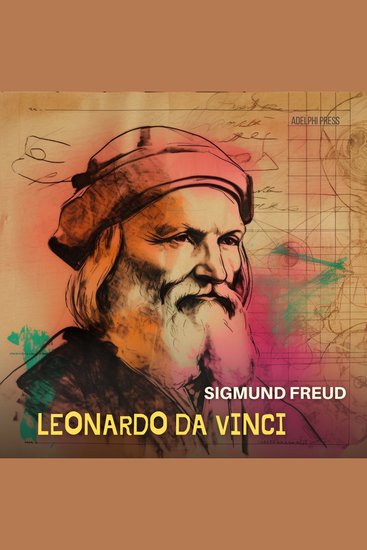
    Freud's analysis of Leonardo's life is based on his belief that the creative process is deeply rooted in the unconscious mind, and that the artist's work is a reflection of their deepest desires and fears. In this book, he examines the artist's childhood, family background, and early influences, as well as his relationships with his patrons, friends, and lovers. Overall, "Leonardo da Vinci" provides a unique perspective on the life and work of one of history's most fascinating and enigmatic figures, offering a compelling insight into the creative process and the psychological forces that drive it. Read in English, unabridged.
    Ver libro
  • Vedic Cosmology - cover

    Vedic Cosmology

    Prana Govinda Das

    • 0
    • 0
    • 0
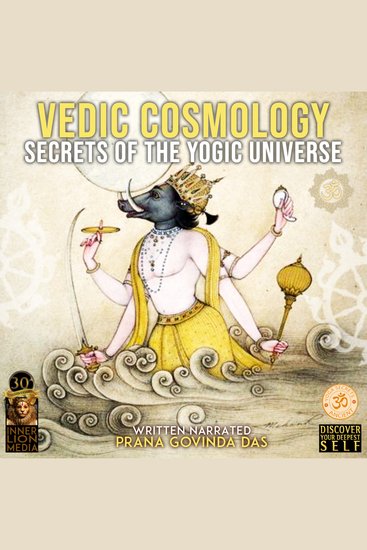
    Noted internationally known Self-help advocate and teacher of devotional yoga Prana Govinda Das was born in Liverpool, England in 1968 admittedly a pretty good year for all things bright and beautiful. He says, "From as early as I can remember I had an unquenchable thirst for knowledge, and a desire to understand the true nature of man and this world we live in. I was also always seeking out people who could answer all the questions I had about life, the universe and everything." After studying film production in the early nineties Prana was able to fulfill his lifelong desire to travel to India. admittedly his first trip changed his life completely and forever. "At that point," He recalls, "my thirst for material knowledge turned to desire to understand the spiritual side of life. For the next six years I returned frequently to, where I studied many different paths of Hinduism, Buddhism and other forms of yoga and meditation. However, even after learning and experiencing so much I was still left incomplete." in 2001 during the young man's sixth trip to India, he travelled to Vrindavan, a holy town associated with Lord Krishna south of Delhi. It was there he met his spiritual guide, and mentor Srila Bhaktivedanta Naryana Goswami. Some twenty years on, Prana has been resident in his teacher's temples all over the world, particularly India, Australia, America, and Europe. Welcome then to the inspirational, engrossing, all-inclusive teachings of Prana Govinda Das.
    Ver libro
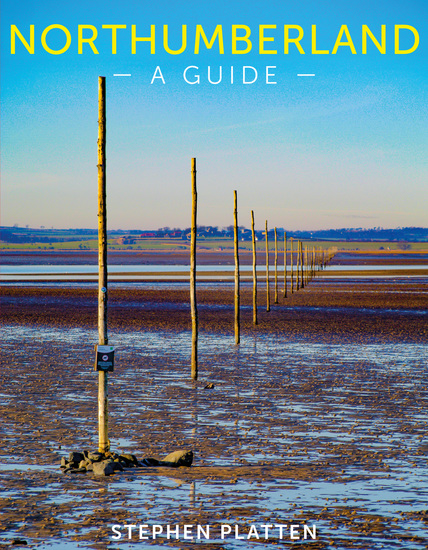
  • Northumberland - A guide - cover

    Northumberland - A guide

    Stephen Platten

    • 0
    • 0
    • 0
    Northumberland, one of the most sparsely-populated counties in England, with unique features like the Holy Island of Lindisfarne and Hadrian’s Wall, was also a crucible of European civilization and remains a treasury of culture. Giving birth to railways worldwide through George Stephenson, it saw the beginnings of hydraulics, hydro-electricity and turbines and, with Joseph Swan, witnessed the earliest light from electric incandescent lamps; it was a laboratory of invention.
    
     
    Northumberland has, however, changed dramatically over the course of the last century: deep coal-mining, shipbuilding and much heavy engineering have gone, but new industries have flowered. So, the largest man-made lake in northwest Europe, lying within the largest man-made forest is set within the north west of the county, bringing water in abundance and supporting entirely new leisure and tourist activities. The lower Tyne has been transformed both architecturally, and culturally.
    
     
    This unique guide to England’s most northern county explores the land, the people, the flora and fauna alongside its architecture and history. A gazetteer takes readers to Northumberland’s towns and cities – Newcastle, Hexham, and Berwick-upon-Tweed, but also to villages, hamlets, castles, beaches, churchyards, great houses, ruined abbeys, and vast wild open countryside. Among the places visited are the castles at Warkworth, Bamburgh, Dunstanburgh and Alnwick, the Farne Islands and the remote valleys of Allendale and the South Tyne, battle sites at Heavenfield, Otterburn and Flodden, alongside Vanbrugh’s final triumphant Palladian mansion at Seaton Delaval.
    
     
    Fully illustrated with more than 240 photographs, this guidebook invites travellers and locals alike to explore the unique features and the true character of Northumberland.
    Ver libro
  • Phaedrus - cover

    Phaedrus

    Plato

    • 0
    • 0
    • 0
    In "Phaedrus," Plato explores the nature of love, rhetoric, and the soul. Set in a scenic Athenian countryside, Socrates engages in a profound dialogue with Phaedrus, unravelling the complexities of love and its impact on the human spirit. The discourse delves into the art of persuasion and the immortality of the soul, offering timeless insights into the human condition and philosophical inquiry. Read in English, unabridged.
    Ver libro
  • Evolution Is Wrong - A Radical Approach to the Origin and Transformation of Life - cover

    Evolution Is Wrong - A Radical...

    Erich von Däniken

    • 0
    • 0
    • 0
    A Fascinating Exploration on Why the Darwinists’ Theory No Longer Explains EverythingThere was once a set of ideas called the theory of evolution, conceived by clever people and confirmed by countless scientists. Then people discovered the electron microscope. This made it possible to make the molecules within the cell visible, and suddenly questions about evolution arose that were not possible before. Which force actually bundles the atoms in the right order? What moves the molecular chains into the correct position? How did the first living unit within the cell actually come about? How does inheritance work, how does information pass on to the next generation? Did humans descend only and exclusively from primates—as Charles Darwin and countless other great minds assumed—or did additional “engines” intervene in evolution? Today it is clear: countless questions can no longer be answered with the previous theory of evolution. There is a form of life called “Blob” (Physarum polycephalum). The “thing” has neither eyes nor ears, neither a mouth nor a nose or even a brain. Nevertheless, it takes in food, overcomes obstacles by the shortest route and exchanges information with other “blobs.” The “blob” contradicts any evolutionary thought that one develops from the other. Or the “gastric-brooding frogs” (Rheobatrachus) found in Australia. They hatch their young in the stomach. Impossible in a slow, evolutionary process. Everywhere there are characteristics of animals that do not want to fit into the theory of evolution anywhere. And man? Are we really the most adapted life-form on this planet? Today, more and more scientists who contradict the previous theory of evolution speak out. The theory fits the changes within the species, but it can no longer be reconciled with the inner workings of the cell. Some other influence that has so far escaped us is affecting evolution. It is called “Intelligent Design.” Intelligent planning is suspected behind this. Anyone or anything—a spirit of the universe? Aliens?—could be behind this planning. Erich von Däniken uses countless examples to demonstrate the impossibility of the previous evolutionary idea. He quotes scientists who argue against the previous teaching, but also those who defend it. Unfortunately, established science still refuses to look at discrepancies and holes in the theory of evolution, even though it is quite obvious that there is more going on with regard to the development of all species, as well as human culture, than could be explained by the theory of evolution alone.
    Ver libro
  • Crusade of Varna The: The History of the Unsuccessful Attempt to Prevent the Ottoman Empire’s Expansion into Central Europe - cover

    Crusade of Varna The: The...

    Editors Charles River

    • 0
    • 0
    • 0
    In terms of geopolitics, perhaps the most seminal event of the Middle Ages was the successful Ottoman siege of Constantinople in 1453. The city had been an imperial capital as far back as the 4th century, when Constantine the Great shifted the power center of the Roman Empire there, effectively establishing two almost equally powerful halves of antiquity’s greatest empire.  The fall of Constantinople is still well-known today, but the Ottoman Empire was already pushing into Europe beforehand, and it would take repeated efforts by various European coalitions to prevent a complete Ottoman takeover of the continent. At the time, the most powerful European countries in Eastern Europe and the Balkans were Poland and Hungary. Russia was still throwing off the Mongol yoke, France and England were fighting an interminable war, Germany was broken into hundreds of entities, and the Holy Roman Empire was fighting the rise of Protestantism. The Italian merchant city-states of Venice and Genoa were intimately tied to the Balkans, the Byzantine Empire, the Black Sea, and the Ottomans. Genoa had been something of an Ottoman ally since the 1300s, even while the Ottomans were looming as a grave threat to Europe. 
    	The Ottoman Sultan Murad II became known as the Ghazi Sultan and was seen as not only defending Islam against the Christians but also as a defender of other, less powerful Muslim beys. Thus, he gained support from Muslims both far and near before he turned his armies towards Venice, the Karamids, Serbia, and finally Hungary, which would get the Europeans’ attention. In the historic tradition that already dated back over 300 years, a crusade was called to stop the Ottomans, and the main battle would be fought near Varna, a fortified city on the Black Sea coast of what is now Bulgaria. The result would set into motion the Ottomans’ far more famous forays into Europe. 
    Ver libro