
Junte-se a nós em uma viagem ao mundo dos livros!
Adicionar este livro à prateleira
Grey
Deixe um novo comentário Default profile 50px
Grey
Assine para ler o livro completo ou leia as primeiras páginas de graça!
All characters reduced
The Collection of Antiquities - cover
LER

The Collection of Antiquities

Honore de Balzac

Tradutor Ellen Marriage

Editora: DigiCat

  • 0
  • 0
  • 0

Sinopse

In "The Collection of Antiquities," Honoré de Balzac weaves a rich narrative that explores the intricate interplay between art, social aspiration, and economic ambition in 19th century France. This novella is characterized by Balzac's characteristic realism and psychological depth, as he uses detailed character studies and a vivid depiction of Parisian life to reveal the moral dilemmas entwined with the quest for status and cultural capital. The story follows the motivations that underpin the obsessive pursuit of antiquities, symbolizing not only personal identity but also societal values during a time of rapid transformation in French society. Honoré de Balzac, a pivotal figure in the literary movement of Realism, was profoundly influenced by his observations of the social structure in France. His expansive body of work, especially within "La Comédie Humaine," frequently illuminates the conflicts of aspiration and avarice that define the human experience. Balzac's encirclement with the artistic milieu and the antiquities market provided him with keen insights into the desires and deceptions that surround collectors and connoisseurs alike, passions deeply embedded in his own life. Readers with an interest in the intersection of art and identity will find "The Collection of Antiquities" an enthralling exploration of how material culture shapes human behavior. Balzac's nuanced portrayal invites both enthusiasts of literature and art history to reflect on the enduring significance of the past in an ever-changing modernity.
Disponível desde: 01/08/2022.
Comprimento de impressão: 139 páginas.

Outros livros que poderiam interessá-lo

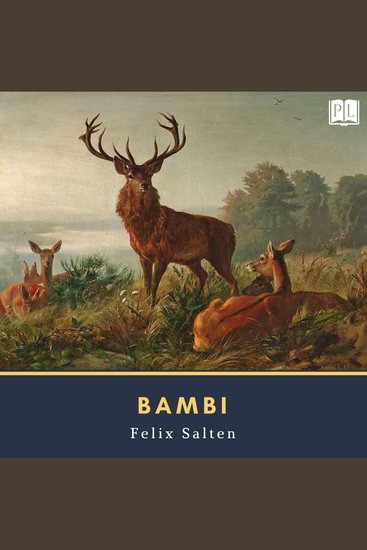
  • Bambi - A Life in the Woods - cover

    Bambi - A Life in the Woods

    Felix Salten

    • 0
    • 0
    • 0
    Bambi follows the life of the eponymous roe deer, from birth to maturity. Through the years Bambi meets friends, learns how to survive in the forest, finds love, and learns how to survive "He" - the name animals give to man. The novel gives a glimpse into forest life: dangerous, yet awe-inspiring; unforgiving, yet beautiful.
    Written by Felix Salten and published in 1923 in German, it was translated to English in 1928 by Whittaker Chambers. It is considered one of the first environmental novels, and in 1936 was banned by Nazi Germany for being a parable of the persecution of Jews in Europe.
    Although adapted into multiple movies, ballets, and plays, Bambi is perhaps most popularly remembered as the subject of Walt Disney's famous animated feature of the same name.
    Ver livro
  • The Fall of the House of Usher - cover

    The Fall of the House of Usher

    Sampi Books, Edgar Allan Poe

    • 0
    • 0
    • 0
    In Edgar Allan Poe's "The Fall of the House of Usher", a visitor arrives at the sinister Usher mansion to find Roderick Usher in deep despair over the illness of his sister, Madeline. After her mysterious death and burial, supernatural tensions and horrors culminate in the tragic collapse of the house and its inhabitants.
    Ver livro
  • Twenty-Six Men and a Girl - From their pens to your ears genius in every story - cover

    Twenty-Six Men and a Girl - From...

    Maxim Gorky

    • 0
    • 0
    • 0
    Alexei Maximovich Peshkov was born on 28th March 1868, in Nizhny Novgorod, Russia. 
    Better known as Maxim Gorky he was orphaned at 11 and ran away from home at 12.  At 19 he had already attempted suicide and thereafter travelled, by foot, across the Russian Empire for 5 years. 
    His first book ‘Essays & Stories’ in 1898 was a sensation and so began a long career as an author of short stories, novels and plays.  Gorky saw writing as a moral and political act that would help to change the unjust world around him.  He was an ardent early advocate of the emerging Marxist movement and publicly opposed the Tsarist regime leading several times to his arrest.  
    In 1904 he began his own theatre but the censor banned every play and Gorky was forced to abandon the project. 
    But Gorky was a financially successful author, editor, and playwright and gave monies to political parties as well as for civil rights and social reform.  The brutal shooting of workers, which set in motion the Revolution of 1905, pushed Gorky more decisively toward radical solutions.  
    In 1906 he went to the United States to raise funds for the Bolsheviks. Those experiences including a scandal over travelling with his lover and not his wife deepened his contempt for the ‘bourgeois soul.’ 
    Gorky now moved to Capri in Italy, both for health reasons and to escape the increasingly repressive times in Russia.  
    An amnesty for the 300th anniversary of the Romanov dynasty saw him return to Russia in 1914. His politics remained close to the Bolshevik cause.  But soon, after the 1918 revolution, his essays referred to Lenin as a tyrant for his senseless arrests and repression.  He was soon appealing to the outside world for food aid after the catastrophic crop failure. 
    In October 1921 Gorky returned to Italy, now in Fascist hands, and settled in Sorrento until 1932.  His health worsened with the onset of tuberculosis. 
    He wrote several successful books there but now decided to find an understanding with the communist regime. Stalin invited him home and his return was hailed as a major propaganda victory.  He was decorated with the Order of Lenin, and a province, a park, and various streets re-named in his honour. 
    But he had his faults too.  In 1933, Gorky co-edited a book on the White Sea-Baltic Canal and denied even a single prisoner died during its construction, but thousands had. As well, knowing that some Nazis were homosexual, a phrase was attributed to him that said ‘exterminate all homosexuals and fascism will vanish’.  Although he was himself was quoting another he was decidedly homophobic. 
    With the increase of Stalinist repression in 1935 Gorky was placed under unannounced house arrest. 
    Maxim Gorky died on the 18th June 1936 from pneumonia.  He was 68. 
    Stalin and Molotov were among those who carried Gorky's urn of ashes at his funeral.
    Ver livro
  • Winnie-the Pooh and The House at Pooh Corner - cover

    Winnie-the Pooh and The House at...

    Alan Alexander Milne

    • 0
    • 0
    • 0
    Enjoy this collection of all 20 beloved Winnie-the-Pooh stories, featuring Christopher Robin and his friends! Join the Pooh, Piglet, Eeyore, and the rest for delightful mishaps and adventures filled with Warmth, Whimsy, and Honey. Rediscover the charming tales that have captured hearts for generations.
    Ver livro
  • Lecture to Art Students (Unabridged) - cover

    Lecture to Art Students...

    Oscar Wilde

    • 0
    • 0
    • 0
    Oscar Wilde (16 October 1854 - 30 November 1900) was an Irish poet and playwright. After writing in different forms throughout the 1880s, he became one of the most popular playwrights in London in the early 1890s.
    LECTURE TO ART STUDENTS: Delivered to the Art students of the Royal Academy at their Club in Golden Square, Westminster, on June 30, 1883. The text is taken from the original manuscript. In the lecture which it is my privilege to deliver before you to-night I do not desire to give you any abstract definition of beauty at all.
    Ver livro
  • Plea for Total Abstinence A (Unabridged) - cover

    Plea for Total Abstinence A...

    Charles Dickens

    • 0
    • 0
    • 0
    Charles Dickens was a writer and social critic who created some of the world's best-known fictional characters and is regarded as the greatest novelist of the Victorian era. His works enjoyed unprecedented popularity during his lifetime, and by the twentieth century critics and scholars had recognised him as a literary genius. His novels and short stories enjoy lasting popularity.
    A PLEA FOR TOTAL ABSTINENCE: One day this last Whitsuntide, at precisely eleven o'clock in the
    forenoon, there suddenly rode into the field of view commanded by the windows of my lodging an equestrian phenomenon.
    Ver livro