Join us on a literary world trip!
Add this book to bookshelf
Grey
Write a new comment Default profile 50px
Grey
Subscribe to read the full book or read the first pages for free!
All characters reduced
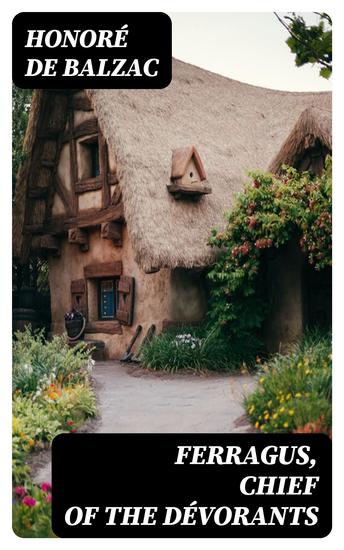
Ferragus Chief of the Dévorants - cover

Ferragus Chief of the Dévorants

Honoré de Balzac

Translator Katharine Prescott Wormeley

Publisher: DigiCat

  • 0
  • 0
  • 0

Summary

In "Ferragus, Chief of the Dévorants," Honoré de Balzac intricately weaves a tale that delves into the darker recesses of human ambition and societal influence. As part of his monumental series "La Comédie Humaine," this novel combines psychological insight with a vivid portrayal of 19th-century Parisian life. Balzac's rich prose and meticulous attention to detail are evident as he explores themes of secret societies, hidden identities, and the moral ambiguities of power, all rendered in a style that balances grim realism with romanticism, making it a hallmark of French literary tradition. Balzac, often regarded as a precursor to modern realism, drew upon his own experiences in a rapidly changing society, which often mirrored the tensions present in his narratives. His profound understanding of social dynamics and personal relationships, cultivated through his extensive observations of Parisian life, informs this compelling tale. "Ferragus" reflects Balzac's interest in the intricate web of human relationships and underscores his fascination with the struggles between personal desires and societal expectations. I highly recommend "Ferragus, Chief of the Dévorants" to readers interested in the complexities of human nature and societal constructs. Balzac's adept storytelling, combined with his profound insights into the human condition, makes this novel not only an engaging read but also a critical commentary on the era, offering timeless lessons that resonate deeply in today's world.
Available since: 09/16/2022.
Print length: 112 pages.

Other books that might interest you

  • The Invisible Man Time Machine - cover

    The Invisible Man Time Machine

    H. G. Wells

    • 0
    • 0
    • 0
    Two novellas by the incomparable H.G. Wells: First, The Invisible Man - A scientist theorizes that if a person's refractive index is changed to exactly that of air his body does not absorb or reflect light, then he will not be visible. He successfully carries out this procedure on himself, but cannot become visible again, becoming mentally unstable as a result.Next, The Time Machine - Follow the Time Traveller to the year 802,701 A.D. He finds a golden race of small, soft, innocent people. but what is it that lurks in the dark shadows? And what happens when the time machine is stolen?
    Show book
  • Mansfield Park - cover

    Mansfield Park

    Jane Austen

    • 0
    • 0
    • 0
    Taken from the poverty of her parent's home in Portsmouth, Fanny Price is brought up with her rich cousins at Mansfield Park, acutely aware of her humble rank and with her cousin Edmund as her sole ally. During her uncle's absence in Antigua, the Crawfords arrive in the neighborhood bringing with them the glamour of London life and a reckless taste for flirtation. Mansfield Park is considered Jane Austen's first mature work, with its quiet subtle examination of social position and moral integrity. 
     
    Jane Austen was an English novelist known primarily for her six major novels, which interpreted, critiqued, and commented upon the British landed gentry at the end of the 18th century. Austen's plots often explore the dependence of women on marriage in the pursuit of favorable social standing and economic security.
    Show book
  • Love's Pilgrimage - A Novel - cover

    Love's Pilgrimage - A Novel

    Upton Sinclair

    • 0
    • 0
    • 0
    "Love's Pilgrimage: A Novel" by Upton Sinclair is a deeply emotional exploration of love, faith, and self-discovery. The story follows a young woman’s journey as she grapples with societal expectations, religious doubts, and the complexities of romantic relationships. Set against the backdrop of early 20th-century America, Sinclair delves into themes of personal freedom, spiritual awakening, and the search for meaning. As the protagonist navigates heartbreak and moral dilemmas, she embarks on a transformative quest for truth and fulfillment. Blending romance with social critique, the novel examines the tension between tradition and individuality. A poignant reflection on the human condition, it highlights Sinclair’s ability to intertwine personal struggles with broader societal issues.
    Show book
  • The Battle of Life - cover

    The Battle of Life

    Charles Dickens

    • 0
    • 0
    • 0
    The Battle of Life is a lesser-known yet deeply touching novella by Charles Dickens that explores themes of love, sacrifice, forgiveness, and quiet heroism. Set in a peaceful English village, the story shifts away from bustling cities and social institutions to focus on the emotional struggles that define human life.
    
    The narrative centers on two devoted sisters whose lives are shaped by loyalty and deep affection. When romantic misunderstandings and emotional conflicts threaten their happiness, one sister makes a profound personal sacrifice in the belief that love sometimes requires self-denial. As years pass, the true meaning of her actions—and the hidden strength behind them—gradually comes to light.
    
    Unlike Dickens's darker social novels, The Battle of Life presents a more intimate and reflective portrait of human experience. The "battle" of the title is not one of war or violence, but of inner conflict: the struggle between selfish desire and selfless love, between resentment and forgiveness.
    
    Tender, gentle, and morally uplifting, The Battle of Life celebrates compassion, reconciliation, and the quiet victories of the heart. With its emotional depth and timeless message, the story stands as a reminder that the greatest battles are often fought within—and that love, patience, and understanding can lead to lasting peace.
    Show book
  • The Way We Live Now - cover

    The Way We Live Now

    Anthony Trollope

    • 0
    • 0
    • 0
    Set in the corrupt and morally bankrupt world of Victorian London, "The Way We Live Now" is a scathing satire of the greed, ambition, and societal vices of the era. The novel weaves together multiple plotlines, revolving around the unscrupulous financier Augustus Melmotte and a cast of ambitious characters seeking financial gain or advantageous marriages. Trollope's incisive portrayal of the financial world, political maneuverings, and social machinations reveals the darker side of Victorian society. With its astute critique and vivid characterizations, "The Way We Live Now" remains a compelling and relevant commentary on the pursuit of wealth and status.
    Show book
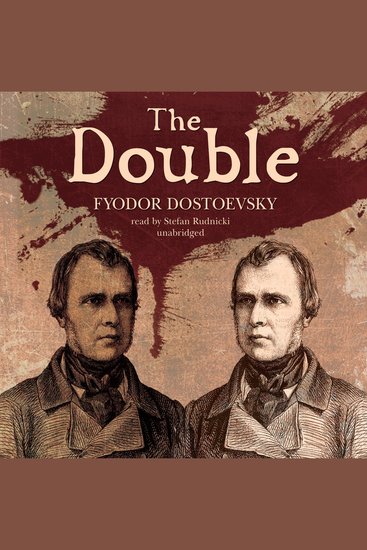
  • The Double - cover

    The Double

    Fyodor Dostoevsky

    • 0
    • 0
    • 0
    This is the story of Yakov Petrovich Golyadkin. 
    Mr. Golyadkin, a minor government official, is a rather middling man. Then one day he meets his "double"—a man with the same name, face, and background. Initially charmed by the coincidence, Golyadkin soon notices a discernable cooling in the reaction of his friends and colleagues, while his double seems to grow in popularity. Mr. Golyadkin, unable to escape the relentless presence of "Golyadkin junior," finds that even the most ordinary activities begin to take on a terrifying significance, until he finds himself on the verge of a breakdown. 
    The Double introduced the concept of the split personality or divided soul that would become a common psychological feature of the characters of Dostoevsky's later novels. Considered the most Gogolesque of Dostoevsky's works, the novella brilliantly depicts Golyadkin's descent into madness in a way that is hauntingly poetic. The Double illustrates Dostoevsky's uncanny ability to capture the complexity of human emotion especially the darker side of the human psyche. In this remarkable work of doppelgänger literature, Dostoevsky examines the neurosis and paranoia that cripple a seemingly ordinary man, producing a thoroughly modern nightmare, brilliantly foreshadowing the works of Kafka and Sartre.
    Show book