Junte-se a nós em uma viagem ao mundo dos livros!
Adicionar este livro à prateleira
Grey
Deixe um novo comentário Default profile 50px
Grey
Assine para ler o livro completo ou leia as primeiras páginas de graça!
All characters reduced
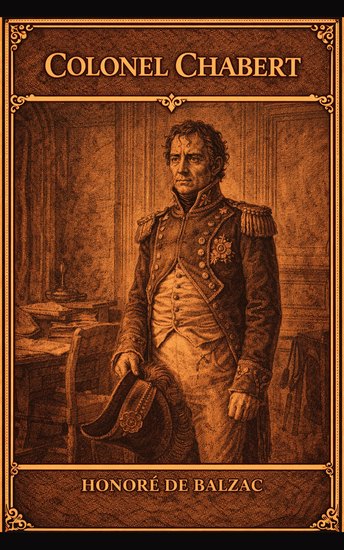
Colonel Chabert - cover
LER

Colonel Chabert

Honoré de Balzac

Editora: CLXBX

  • 0
  • 0
  • 0

Sinopse

Colonel Chabert is a haunting and masterfully crafted novella by Honoré de Balzac that explores identity, betrayal, justice, and the crushing indifference of society. Set in post-Napoleonic France and part of Balzac's monumental series La Comédie Humaine, this gripping tale examines what happens when a man declared dead returns to reclaim his name, his honor, and his life — only to discover that the world has moved on without him.

Colonel Hyacinthe Chabert, a heroic cavalry officer under Napoleon, was presumed killed during the Battle of Eylau. Left for dead beneath a pile of corpses, he miraculously survives, only to endure years of hardship, wandering, and suffering. When he finally makes his way back to Paris, he finds that his identity has been erased. His wife has remarried, his estate has been claimed, and the legal system recognizes him as nothing more than a ghost.

Reduced to poverty and dismissed as an impostor, Chabert seeks the help of a young lawyer, Derville, in an attempt to restore his legal status and recover what was once his. Through courtroom negotiations, tense confrontations, and deeply emotional exchanges, Balzac unfolds a powerful drama of justice and moral compromise. The colonel's wife, now elevated in society through her new marriage, refuses to relinquish the wealth and status she has gained, setting the stage for a tragic conflict between love, greed, and survival.

Balzac's narrative offers a penetrating critique of a society driven by ambition, social advancement, and self-interest. The novel exposes the rigid bureaucracy of the legal system and the moral decay beneath the glittering surface of Parisian high society. Colonel Chabert's struggle becomes more than a personal quest — it becomes a symbol of the forgotten heroes of a fallen empire and the casualties of political change.

At its heart, Colonel Chabert is a deeply human story. Chabert is portrayed not merely as a wronged man, but as a figure of dignity and tragic nobility. His unwavering sense of honor contrasts sharply with the cold calculations of those around him. As he confronts the painful reality that time and society have erased him, readers are drawn into a poignant meditation on identity, loyalty, and the cost of survival in a world governed by power and appearances.

Balzac's prose is precise, realistic, and psychologically rich. With sharp insight and emotional depth, he captures both the external mechanisms of law and the internal turmoil of a man fighting for recognition. The novella remains strikingly relevant, touching on timeless themes of displacement, bureaucratic injustice, and the fragility of personal identity.

Powerful, tragic, and thought-provoking, Colonel Chabert stands as one of Balzac's most compelling shorter works. It is a story of resurrection without redemption, of heroism forgotten, and of a society that rewards cunning over courage. For readers who appreciate classic literature filled with emotional intensity and social commentary, this unforgettable narrative offers both heartbreak and profound reflection.
Disponível desde: 18/02/2026.
Comprimento de impressão: 83 páginas.

Outros livros que poderiam interessá-lo

  • The Snow-Burner - cover

    The Snow-Burner

    Henry Oyen

    • 0
    • 0
    • 0
    This tale by Henry Oyen is as rugged as it gets. Welcome to the world of the "Reivers", also known as "Snow-Burners" to the Native Americans of the North. Our brutal and forceful "hero" gets assigned to run a work camp filled with foreigners. Will he attend to business in his usual alpha male ways, or could he possibly crack? (Published in c. 1916)
    Ver livro
  • César Birotteau - cover

    César Birotteau

    Honoré de Balzac

    • 0
    • 0
    • 0
    César Birotteau is one of Honoré de Balzac's most powerful and psychologically intricate novels, offering a profound exploration of ambition, pride, financial speculation, and moral redemption in post-Napoleonic France. As part of Balzac's monumental series La Comédie Humaine, this novel stands as a vivid portrait of Parisian society and the fragile nature of success in a rapidly modernizing world.
    
    The story follows César Birotteau, a modest and honest perfume merchant in Paris who has risen from humble beginnings to respectable prosperity. A devoted husband, loyal royalist, and proud shopkeeper, Birotteau embodies middle-class virtue and unwavering belief in hard work and social advancement. His business thrives, his reputation is solid, and he dreams of securing an even grander future for himself and his family. But beneath his optimism lies a dangerous naiveté.
    
    Encouraged by flattery and seduced by the promise of rapid wealth, Birotteau embarks on ambitious financial ventures — including risky real estate speculation and lavish social events meant to elevate his social standing. In a society driven by appearances, ambition, and fierce competition, he becomes entangled in schemes far beyond his understanding. Manipulated by more cunning and calculating figures, Birotteau's fortunes begin to unravel with devastating speed.
    
    Balzac masterfully captures the mechanics of financial speculation, the ruthless nature of Parisian commerce, and the intricate web of social hierarchies that define the era. The novel provides an almost forensic look at bankruptcy — not just as a financial event, but as a moral and social catastrophe. As Birotteau's empire collapses, he faces humiliation, betrayal, and public disgrace. Yet, even in ruin, he clings to his principles of honor and integrity.
    
    At its heart, César Birotteau is not merely a story of financial downfall but a deeply human tale about dignity, perseverance, and redemption. Unlike many of Balzac's more cynical portrayals of society, this novel offers a moving study of a fundamentally decent man crushed by forces he scarcely comprehends. Birotteau's determination to repay his debts and restore his honor becomes a testament to moral resilience in a world increasingly ruled by greed and speculation.
    
    Balzac's richly detailed narrative brings 19th-century Paris to life — from bustling shops and glittering salons to legal offices and shadowy backrooms where fortunes are made and destroyed. Through sharp social observation and psychological depth, the author exposes both the aspirations and the vulnerabilities of the rising bourgeois class.
    
    Poignant, ironic, and deeply realistic, César Birotteau remains strikingly relevant today. It speaks to the timeless dangers of overreaching ambition, the volatility of financial markets, and the enduring value of personal integrity. Balzac transforms the fall of one small businessman into a universal meditation on success, failure, and the true cost of dreams.
    
    For readers interested in classic literature, economic drama, or penetrating social commentary, César Birotteau offers an unforgettable journey into the heart of human ambition and the fragile architecture of fortune.
    Ver livro
  • The Raven - cover

    The Raven

    Edgar Allan Poe

    • 0
    • 0
    • 0
    "The Raven" is a narrative poem by American writer Edgar Allan Poe. First published in January 1845, the poem is often noted for its musicality, stylized language and supernatural atmosphere. It tells of a distraught lover who is paid a visit by a mysterious raven that repeatedly speaks a single word. The lover, often identified as a student, is lamenting the loss of his love, Lenore. Sitting on a bust of Pallas, the raven seems to further antagonize the protagonist with its repetition of the word "nevermore". The poem makes use of folk, mythological, religious, and classical references.
    Ver livro
  • A Passion in the Desert - From their pens to your ears genius in every story - cover

    A Passion in the Desert - From...

    Honoré de Balzac

    • 0
    • 0
    • 0
    Honoré de Balzac was born on the 20th May, 1799 in the French city of Tours into an upper middle class family.  
    At birth Balzac was wet-nursed and often then schooled away from home by parents who seemed remote.  So difficult was life that at 15 he attempted suicide. The family’s intention was for him to have a career in law but Balzac preferred literature.  An avid reader, he began writing but his early attempts showed little promise.  
    He thereafter settled in Paris and began to publish anonymously across political, philosophical, and historical novels. 
    In 1825, Balzac purchased a printing house.  He was soon bankrupt and forced to return to writing in order to reduce his debts.  But his literary fortunes had changed, and his writing was now to achieve considerable success.  He was accepted among the city’s literary élites and its salons and would play an important role in establishing the copyright law in France.  
    Balzac often worked on more than one project at a time and in his magnus opus ‘The Human Comedy’ all types of texts were collected to offer a rare narrative of different classes and social stereotypes of society.  For many Balzac is considered the father of French realism, yet his works also cover philosophical and psychological questions.  His writing was a fundamental source of inspiration for many distinguished and later writers such as Flaubert, Zola and Proust.  
    Balzac also tried his hand at magazine publication with ‘La Chronique de Paris’ and ‘La Revue Parisienne.’  Although he was partnered with others such as Victor Hugo, it was another complete financial failure.  
    As a committed Catholic, Balzac’s stories also dealt with themes of mysticism, esotericism and spirituality, as well as universality and humanism.  
    In politics, he was a staunch defender of the French Crown but unlike his contemporaries he was not an implacable enemy of the republicans.  He often presented disagreements between royalists and republicans as a tolerable difference in political opinion.  
    Despite many relationships Balzac married only towards the end of his life and it was in 1833 that he met the Polish Countess Hanska, who only became his wife 17 years later after an extensive relationship by correspondence and, by then, his health was ruinously bad.  
    Honoré de Balzac died on 18th August 1850 in Paris.  He was 51.
    Ver livro
  • Swiss Family Robinson - cover

    Swiss Family Robinson

    Johann David Wyss

    • 0
    • 0
    • 0
    First published in 1812, The Swiss Family Robinson may sometimes seem old-fashioned to modern readers, especially the family’s attitude toward wildlife (if it moves, shoot it). However, it’s a truly exciting adventure and a timeless story of warm and loving family life. As the narrator says: “It was written... for the instruction and amusement of my children. Children are, on the whole, very much alike everywhere, and you four lads fairly represent multitudes... It will make me happy to think that my simple narrative may lead some of these to observe how blessed are the results of patient continuance in well-doing, what benefits arise from the thoughtful application of knowledge and science, and how good and pleasant a thing it is when brethren dwell together in unity, under the eye of parental love.” Written by Swiss pastor Johann David Wyss and edited by his son Johann Rudolf Wyss (this edition lists J.R. as the author), the novel was intended to teach his four sons about family values, good husbandry, the uses of the natural world, and self-reliance. It’s fun to think of the long-ago author reading his own books of natural history and creating this novel to share his interests with his boys. 
     
    Wyss was a Swiss author, best remembered for The Swiss Family Robinson. He was born and died in Bern. It is said that he was inspired by Daniel Defoe's Robinson Crusoe, but wanted to write a story from which his own children would learn, as the father in the story taught important lessons to his children. The Swiss Family Robinson was first published in German in 1812, then translated into English two years later. It has since become one of the most popular books of all time.
    Ver livro
  • The Call of the Wild - cover

    The Call of the Wild

    Jack London

    • 0
    • 0
    • 0
    "The Call of the Wild, a timeless adventure novel by Jack London, was first published in 1903. This gripping tale takes readers on a journey through the rugged wilderness of the Yukon Territory during the Klondike Gold Rush.    The story revolves around Buck, a remarkable dog—a crossbreed between a St. Bernard and a Scotch shepherd. Buck's carefree life in Santa Clara County, California is abruptly disrupted when he is stolen and transported northward. His journey leads him to the bustling town of Skagway, Alaska, and eventually to Dawson City, Yukon. Here, during the late 1890s gold rush, strong sled dogs are in high demand.    As Buck adapts to his new life as part of a dog team delivery service, he discovers his primal instincts and learns to survive in the harsh Arctic environment. His bond with his last owner, John Thornton, takes him even further north, somewhere between Yukon and Alaska. Buck responds to "the call of the wild," shedding the comforts of civilization and embracing his true nature as a master of the wilderness 1.    This captivating novel has also been adapted into films, including the 2020 movie of the same name. In the film, Buck's adventures come to life on the big screen, with an impressive cast including Harrison Ford, Omar Sy, and Cara Gee."
    Ver livro