Join us on a literary world trip!
Add this book to bookshelf
Grey
Write a new comment Default profile 50px
Grey
Subscribe to read the full book or read the first pages for free!
All characters reduced
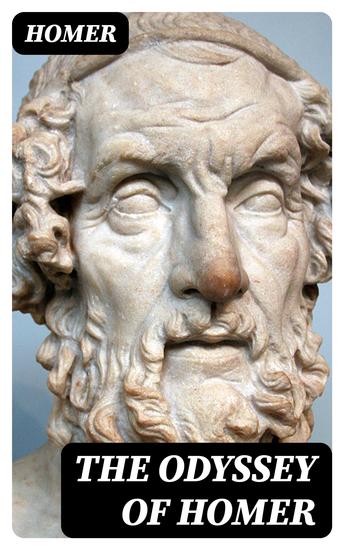
The Odyssey of Homer - cover

The Odyssey of Homer

Homer Homer

Translator William Cowper

Publisher: DigiCat

  • 0
  • 0
  • 0

Summary

Homer's "The Odyssey" is a cornerstone of Western literature, epitomizing the epic narrative form with its intricate weaving of adventure, morality, and the human experience. Set in the aftermath of the Trojan War, the poem chronicles the arduous journey of Odysseus as he navigates myriad challenges, including mythical creatures, divine interventions, and the longing for home. Its lyrical style, marked by vivid imagery and repetitive structures, engages readers while reflecting the oral traditions of its time, demonstrating the fusion of myth and reality within a rich cultural context. Homer, the ancient Greek poet believed to have composed "The Odyssey" in the 8th century BCE, draws upon a vast tapestry of historical, social, and mythical elements that deeply resonate with the experiences of his age. Though little is known about the poet's life, the themes of loss, perseverance, and identity in his work reflect universal human concerns, suggesting that his perspective may have been shaped by both personal and collective strife within the ancient Greek world. This timeless epic is highly recommended for readers seeking a profound understanding of human resilience and the pursuit of belonging. With its universal themes and captivating narrative, "The Odyssey" continues to inspire modern audiences, offering insights into the complexities of the human spirit that remain relevant across centuries.
Available since: 05/28/2022.
Print length: 315 pages.

Other books that might interest you

  • Asphyxia - The Story of a Life Scripted in Parentheses - cover

    Asphyxia - The Story of a Life...

    Thomas Tomazo Pagonis

    • 0
    • 0
    • 0
    This audiobook is narrated by an AI Voice.   
    Asphyxia is a hauntingly lyrical novel that unfolds like a cinematic screenplay in parenthetical time and conditional mood. Told through the voice of Nefeli—a young woman observing her life on a mental screen—this work blurs the boundaries between memory, myth, narration, and madness. Set in a literary universe where authors are tyrants, muses are merciless, and reality is often just a rumour, the story follows Nefeli’s metaphysical descent into guilt, obsession, and poetic hallucination. 
    Through the echo of voices—narrators, poets, and ghosts—the book explores the invisible lives of the mentally fragile, those who vanish quietly between diagnoses and metaphors. With a cast of characters both archetypal and painfully human, Asphyxia is not a love story, nor a murder mystery, though it flirts with both. It is a philosophical narrative about stories themselves: who writes them, who performs them, and who suffers them. 
    Written by Tomazo Pagonis and originally crafted in Greek, this audiobook has been translated into rich British English by Marilu Pagoni. It is recommended for lovers of experimental fiction, metafictional narrative, and those who sense their own lives unfolding in parentheses.
    Show book
  • The Black Man's Lament or How to Make Sugar - Poem by a 18th Century female author who was also an abolitionist pioneer - cover

    The Black Man's Lament or How to...

    Amelia Opie

    • 0
    • 0
    • 0
    Amelia Alderson, an only child, was born on the 12th November 1769 in Norwich, England. 
    After the death of her mother on New Year’s Eve 1784 she became her father's housekeeper and hostess. 
    The young Amelia was energetic, attractive, and an admirer of fashion.  She spent much of her youth writing poetry and plays and putting on local amateur theatricals.  At 18 she had published anonymously ‘The Dangers of Coquetry’. 
    Amelia married in the spring of 1798 to the artist John Opie at the Church of St Marylebone, in Westminster, and together they lived in Berners Street where Amelia was already living. 
    Her next novel in 1801 ‘Father and Daughter’, was very popular even though it dealt with such themes as illegitimacy, a socially difficult subject for its times.  From this point on published works were far more regular.  The following year her volume ‘Poems’ appeared and was again very popular.  Novels continued to flow and she never once abandoned her social activism and her call for better treatment of women and the dispossessed in her works.  She was also keenly involved in a love of society and its attendant frills. 
    Encouraged by her husband to write more she published Adeline Mowbray in 1804, an exploration of women's education, marriage, and the abolition of slavery.  
    Her husband died in 1807 and she paused from writing for a few years before resuming with further novels and poems.  Of particular interest was her short poem ‘The Black Man's Lament’ in 1826.  Her life now was in the main spent travelling and working for charities and against slavery.  She even helped create a Ladies Anti-Slavery Society in Norwich which organised a parliamentary petition of 187,000 names of which hers was the first name. 
    After a visit to Cromer, a seaside resort on the North Norfolk coast, she caught a chill and retired to her bedroom.  
    Amelia Opie died on the 2nd December 1853 in Norwich.  She was 84.
    Show book
  • Poetry Book Society Autumn 2023 Bulletin - cover

    Poetry Book Society Autumn 2023...

    Alice Kate Mullen

    • 0
    • 0
    • 0
    The quarterly poetry magazine of the Poetry Book Society, founded by T.S. Eliot, featuring poems, reviews and exclusive interviews from Choice Poet Daljit Nagra and Recommended poets Mary Jean Chan, Jen Campbell, Terrance Hayes, Jacqueline Saphra, Mary Oliver, Lutz Seiler, and Stefan Tobler.
    Show book
  • Unmothered - cover

    Unmothered

    A J Akoto

    • 0
    • 0
    • 0
    A Debut collection from Black British poet A J Akoto. When is a mother a myth, and when is she a monster?
    In an intimate and unflinching collection, A J Akoto tracks the complex bind of mother-daughter relationships. Through separation and attempts to mend, longing, and the fluidity of myth/story-telling in defining histories and identities, she collapses the elision between womanhood and motherhood/daughterhood, bringing to the forefront that which usually remains unspoken.
    Show book
  • 100 Selected Poems: Emily Dickinson - cover

    100 Selected Poems: Emily Dickinson

    Emily Dickinson

    • 0
    • 0
    • 0
    *100 Selected Poems* by Emily Dickinson offers readers a carefully curated glimpse into the profound and enigmatic world of one of America’s most celebrated poets. This collection brings together poems that explore themes central to Dickinson’s life and work, such as nature, solitude, love, death, and immortality. Her writing style—marked by unique punctuation, innovative rhythms, and striking imagery—invites readers into her introspective observations and keen philosophical insights. Each poem captures Dickinson’s ability to express deep emotions with brevity, revealing layers of meaning in just a few lines. *100 Selected Poems* is an ideal introduction for those new to Dickinson’s work and a beloved resource for longtime admirers, showcasing the quiet yet powerful voice of a poet whose reflections on life continue to resonate.
    Show book
  • we be theorizin - black poiēsis no 1 vol 44 - cover

    we be theorizin - black poiēsis...

    Kendra Nicole Bryant Aya

    • 0
    • 0
    • 0
    we be theorizin: black poiēsis no. 1. vol. 44 is a collection of haikus, tankas, sonnets, free verse, and spoken word poems written in the Black Arts Movement tradition. Compiled of 44 poems and 149 end notes, we be theorizin reflects the protest of the Black Arts and Civil Rights Movements, while giving homage to the theoretical dexterity from which Black feminism and womanism were born. we be theorizin is organized into three parts: "thru morning pulses"; "we be theorizin"; and "Black life unexpected"—each of which includes a prose essay as introductory matter to the poems compiled in each section. From poems acknowledging the Black Lives Matter Movement to others recalling 20th century Black literature and critical race thoughts, we be theorizin loves on Black culture, while talkin b(l)ack to the empire. "Ey yo!" writes Kendra in her opening poem, "callin Òrìṣàs: . . . come out come out wherever you are."
    Show book