¡Acompáñanos a viajar por el mundo de los libros!
Añadir este libro a la estantería
Grey
Escribe un nuevo comentario Default profile 50px
Grey
Suscríbete para leer el libro completo o lee las primeras páginas gratis.
All characters reduced
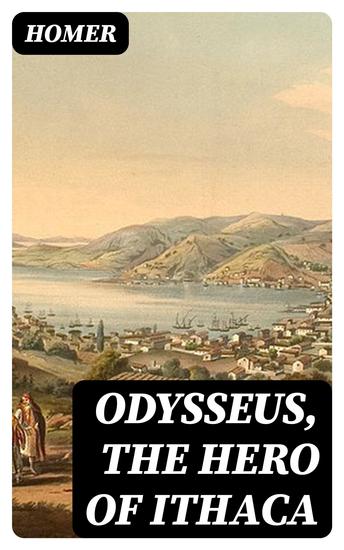
Odysseus the Hero of Ithaca - Adapted from the Third Book of the Primary Schools of Athens Greece - cover

Odysseus the Hero of Ithaca - Adapted from the Third Book of the Primary Schools of Athens Greece

Homer Homer

Traductor Zénaïde A. Ragozin

Editorial: DigiCat

  • 0
  • 0
  • 0

Sinopsis

Homer's "Odysseus, the Hero of Ithaca" is a monumental epic that chronicles the arduous journey of its titular protagonist, Odysseus, as he navigates the intertwining realms of adventure, temptation, and the quest for home. Written in dactylic hexameter, the poem employs a rich tapestry of metaphors, similes, and vivid imagery, while exploring themes of resilience, identity, and the multifaceted nature of heroism. Set against the backdrop of ancient Greek mythology, this epic not only signifies a return to Ithaca but also serves as an exploration of human experience and moral dilemmas faced by a hero torn between duty and desire. Homer, an enigmatic figure whose very existence blurs the lines of historical discourse, is believed to have been a master storyteller from ancient Greece. His profound understanding of human nature and societal constructs is reflected in his works, which were likely influenced by the oral tradition and the rich cultural milieu of his time. Living in a society emerging out of the shadow of war and navigating the complexities of honor and loyalty, Homer imbues his characters with a depth that resonates with audiences across millennia. Readers are encouraged to immerse themselves in "Odysseus, the Hero of Ithaca," as it offers not only an enthralling narrative of adventure and perseverance, but also an enduring contemplation of what it means to be a hero. This timeless epic remains a cornerstone of Western literature, inviting exploration into its language, characterizations, and moral inquiries and providing endless insights into our own journeys in life.
Disponible desde: 15/09/2022.
Longitud de impresión: 117 páginas.
Otros libros que te pueden interesar

  • Persuasion - cover

    Persuasion

    Jane Austen

    • 0
    • 0
    • 0
    Persuasion is Jane Austen's final novel, written soon after she finished "Emma" and completed in August 1816. Sadly, she passed away in 1817 and the novel was published in December of that year, dated 1818. Persuasion is related to "Northanger Abbey" due to both being set in Bath and originally published together. The novel tackles the theme of persuasion and also highlights the Royal Navy, as two of Austen's brothers were admirals. Bath's superficial social life, which Austen was familiar with, is also portrayed. Persuasion departs from Austen's earlier works with its biting satire and regretful outlook, but ultimately emphasizes a more fulfilling life symbolized by the Navy. The protagonist Anne Elliot ultimately embraces this worldview by the end of the book. 
     
    Chapter Start Times: 
     
     1-0:00, 2-15:10, 3-26:04, 4-40:53, 5-51:30, 6-1:08:52, 7-1:27:56 
    8-1:44:27, 9-2:01:14, 10-2:15:50, 11-2:35:52, 12-2:51:53, 13-3:19:45, 14-3:33:33,  
    15-3:46:01, 16-4:00:51, 17-4:13:47, 18-4:31:50, 19-4:51:33, 20-5:03:58, 21-5:22:17 
    22-5:56:28, 23-6:25:48, 24-7:00:06
    Ver libro
  • Silas Marner - cover

    Silas Marner

    George Eliot

    • 0
    • 0
    • 0
    In the town of Reveloe, there lives a man called Silas Marner. A strange little man, a weaver by trade, and seen with suspicion by the other villagers. He's been beset by bad luck all his life. Cast out of his simple religious life in Lantern Yard, and then returns home to find his money stolen. But then, on new years day, his luck changes when he finds a small child sitting before his hearth...  
    Published in 1861, this was the third novel by George Elliot, and delves into the topics of religion, industrialisation and community, and was praised at the time for its realism.  
    Narrated by Michael Ward.
    Ver libro
  • Top 10 Short Stories The - European 19th - The top ten short stories written in the 19th Century by European authors - cover

    Top 10 Short Stories The -...

    Victor Hugo, Robert Louis...

    • 0
    • 0
    • 0
    The Top 10 – The European 19th Century – an Introduction 
     
    A century of change.  Some catastrophic, some fantastical.  Europe reaches out its national tentacles in a global grab for Empire.  At home, revolutions erupt and decay.  Literature gains a widespread audience through advancing technology.  Here, in this volume, authors absorb and then reveal their wondrous stories. 
     
    Short stories have always been a sort of instant access into an author’s brain, their soul and heart.  A few pages can lift our lives into locations, people and experiences with a sweep of landscape, narration, feelings and emotions that is difficult to achieve elsewhere. 
     
    In this series we try to offer up tried and trusted ‘Top Tens’ across many different themes and authors. But any anthology will immediately throw up the questions – Why that story? Why that author?  
     
    The theme itself will form the boundaries for our stories which range from well-known classics, newly told, to stories that modern times have overlooked but perfectly exemplify the theme.  Throughout the volume our authors whether of instant recognition or new to you are all leviathans of literature. 
     
    1 - Top 10 - The European 19th Century 
    2 - The Body Snatcher by Robert Louis Stevenson 
    3 - The Lady with the Dog by Anton Chekhov 
    4 - The Cloak by Nikolai Gogol also known as 'The Overcoat' 
    5 - The Necklace by Guy de Maupassant 
    6 - The Story of B24 by Arthur Conan Doyle 
    7 - The District Doctor by Ivan Turgenev 
    8 - A Fight with a Cannon by Victor Hugo 
    9 - A Legend of Old Egypt by Boleslaw Prus 
    10 - A Passion in the Desert by Honoré de Balzac 
    11 - The Bundle of Letters by Moritz Jokai 
     
    1 - Top 10 - The European 19th Century 
    2 - The Body Snatcher by Robert Louis Stevenson 
    3 - The Lady with the Dog by Anton Chekhov 
    4 - The Cloak by Nikolai Gogol also known as 'The Overcoat' 
    5 - The Necklace by Guy de Maupassant 
    6 - The Story of B24 by Arthur Conan Doyle 
    7 - The District Doctor by Ivan Turgenev 
    8 - A Fight with a Cannon by Victor Hugo 
    9 - A Legend of Old Egypt by Boleslaw Prus 
    10 - A Passion in the Desert by Honoré de Balzac 
    11 - The Bundle of Letters by Moritz Jokai
    Ver libro
  • To the Lighthouse - cover

    To the Lighthouse

    Virginia Woolf

    • 0
    • 0
    • 0
    This landmark work of modernist literature explores the inner lives of a typical English family while vividly exploring the nature of loss and memory. Following her celebrated masterpiece Mrs. Dalloway, Virginia Woolf continues to develop her groundbreaking stream-of-consciousness technique in To the Lighthouse. Every summer, the Ramsey family returns to the Isle of Skye for a tranquil holiday, where the imposing lighthouse seems to promise everlasting constancy. But as their idyllic holiday confronts the realities of World War I, the Ramseys must also face the inescapable nature of change.  A profound evocation of marriage, parenthood, aging, and grief, To the Lighthouse is regarded as one of the greatest novels of the twentieth century.
    Ver libro
  • Through the Looking Glass - cover

    Through the Looking Glass

    Lewis Carroll

    • 0
    • 0
    • 0
    Venture through the looking-glass with this mesmerising new recording of Lewis Carroll's sequel to Alice in Wonderland, narrated by the captivating voice of Jake Urry. In Through the Looking-Glass, Alice steps into a mirror and finds herself in a world where everything is reversed, and the fantastical becomes reality. 
    Jake Urry's engaging narration brings to life a host of unforgettable characters, from the enigmatic White Queen and the formidable Red Queen to the mischievous Tweedledee and Tweedledum. Each chapter unfolds like a dream, guiding you through the whimsical landscapes of this topsy-turvy realm. 
    Perfect for listeners of all ages, this audiobook transforms Carroll's enchanting tale into an auditory feast, filled with wonder, wit, and whimsy. Whether you're reliving this classic story or discovering it anew, Jake Urry's rendition of Through the Looking-Glass offers an immersive experience that will transport you into the heart of a magical world. Step through the looking-glass and let the adventure begin!
    Ver libro
  • Wireless - A rare Kipling venture into sci fi about a technological leap - cover

    Wireless - A rare Kipling...

    Rudyard Kipling

    • 0
    • 0
    • 0
    Joseph Rudyard Kipling was born in Mumbai, India on 30th December 1865.   
     
    As was the custom in those days, he and his sister were sent back to England when he was 5.  The ill-treatment and cruelty by the Portsmouth couple they boarded with Kipling said contributed to the onset of his literary life.  
     
    At 16 he returned to India to work on a local paper where he was soon contributing and writing.  It also exposed him to the issues of identity and national allegiance which pervade much of his work.  
     
    In 1886, his ‘Departmental Ditties’, collection of verse appeared in print followed by 39 short stories for his newspaper over only 8 months.  These were then published as ‘Plain Tales from the Hills’, shortly after his 22nd birthday.  
     
    He continued his prolific pace of writing before being dismissed in a dispute and, taking his pay-off and the profits from the sale of some publishing rights, decided to return to London, travelling via Rangoon, Hong Kong, Japan and the United States, all the while writing articles, and arriving at Liverpool in October 1889. 
     
    Over the next two years he saw further works published as books and in magazines, as well as a nervous breakdown for which he was prescribed a sea voyage, to South Africa, Australia, New Zealand and India.  
     
    Happier times came with marriage to Caroline Starr Balestier in January 1892.  The honeymoon began in Vermont and ended in Yokahama where they heard their bank had failed.  They returned to Vermont and settled.  Caroline was now pregnant and he was planning the ‘Jungle Books’.  
     
    A failed arbitration between the US and England resulted in an argument between Caroline’s brother and Kipling, and then his arrest.  At the hearing he was mortified by the exposure of his private life and after settling the matter they returned to England and life in Torquay.  ‘Kim’ was published in 1902, and ‘Just So Stories for Little Children’, a year later.  
     
    In 1907 he was awarded the Nobel Prize for Literature with the citation “in consideration of the power of observation, originality of imagination, virility of ideas and remarkable talent for narration which characterise the creations of this world-famous author”.   
     
    When the Great War erupted, he scorned those who refused conscription.  His son enlisted and was killed at the Battle of Loos in September 1915, at 18, an exploding shell had ripped his face apart.  This death inspired Kipling’s writing thereafter, but the tragedy broke his life and by 1930 his prolific pen had almost ceased. 
     
    Rudyard Kipling died on 18th January 1936 from a perforated duodenal ulcer.  He was 70.  His ashes are buried at Poets’ Corner in Westminster Abbey.
    Ver libro