¡Acompáñanos a viajar por el mundo de los libros!
Añadir este libro a la estantería
Grey
Escribe un nuevo comentario Default profile 50px
Grey
Suscríbete para leer el libro completo o lee las primeras páginas gratis.
All characters reduced
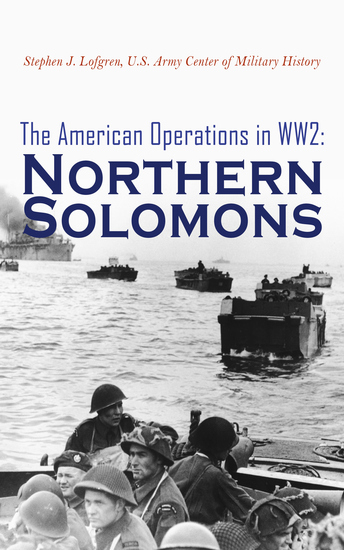
The American Operations in WW2: Northern Solomons - cover

The American Operations in WW2: Northern Solomons

History U.S. Army Center of Military, Stephen J. Lofgren

Editorial: Madison & Adams Press

  • 0
  • 0
  • 0

Sinopsis

World War II was the largest and most violent armed conflict in the history of mankind. Highly relevant today, World War II has much to teach us, not only about the profession of arms, but also about military preparedness, global strategy, and combined operations in the coalition war against fascism. This book follows military operations of the US Army in the Pacific from 22 February 1943 to 21 November 1944. 
From the Allied vantage point early in the spring of 1943, progress clearly had been made in the wars against Germany and Italy in Europe and the Mediterranean and Japan in the Pacific. During the winter an entire German army had been killed or captured deep within the Soviet Union at Stalingrad. In Africa, once-invincible Axis forces were in full-scale retreat, eventually to surrender in mid-May. The specter of continued Axis expansion in Europe was no longer the threat it had been a year before.
Halfway around the world, the Japanese offensive in the Pacific also had crested. The May 1942 Battle of the Coral Sea, followed quickly by the great American victory at Midway, had cost Japan the strategic initiative. By February 1943 American and Australian troops had thwarted a Japanese pincer movement in Papua New Guinea, defeating an overland drive on Port Moresby, evicting the Japanese from Buna, and beating back an attack against Wau. That same month, hundreds of miles to the east in the Solomon Islands, American troops had wrested Guadalcanal from the Japanese. Victory required seven months of torturous fighting, but it secured the Allied line of communications to Australia. The Allied High Command now could take advantage of its improved strategic position...
Disponible desde: 05/09/2023.
Longitud de impresión: 31 páginas.

Otros libros que te pueden interesar

  • Wild in Seattle - Stories at the Crossroads of People and Nature - cover

    Wild in Seattle - Stories at the...

    David Williams

    • 0
    • 0
    • 0
    For award-winning natural history writer David B. Williams, to be connected to a place you need to pause and look deeply at it. Wild in Seattle is Williams's delightful journey of discovery in this city where not only is nature all around, it's also written in the stones of the urban landscape. Explore the geologic history of glaciers, tsunamis, earthquakes, and volcanoes as well as the ways humans shape the Seattle topography. From backyards to downtown, watch for coyotes, crows, seals, otters, owls, and so much more wildlife who also call the region home. Look up at the buildings to find terra cotta eagles, stone that traveled over millions of years from Asia to the San Juan Islands, and clues to the horses who used to power the city's transportation network. Wrap your arms around a giant Douglas-fir, appreciate the unsung yet remarkable skunk cabbage, stop and listen to the spring chorus of frogs. 


    Williams's lively essays will fire up the curiosity of both residents and visitors alike, inspiring all to take a fresh look at the Emerald City.
    Ver libro
  • The Picnic - A Dream of Freedom and the Collapse of the Iron Curtain - cover

    The Picnic - A Dream of Freedom...

    Matthew Longo

    • 0
    • 0
    • 0
    In August 1989, a group of Hungarian activists organized a picnic on the border of Hungary and Austria. But this was not an ordinary picnic—it was located on the dangerous militarized frontier known as the Iron Curtain. Tacit permission from the highest state authorities could be revoked at any moment. On wisps of rumor, thousands of East German "vacationers" packed Hungarian campgrounds, awaiting an opportunity, fearing prison, surveilled by lurking Stasi agents. The Pan-European Picnic set the stage for the greatest border breach in Cold War history: hundreds crossed from the Communist East to the longed-for freedom of the West. 


    Drawing on dozens of original interviews, Matthew Longo tells a gripping and revelatory tale of the unraveling of the Iron Curtain and the birth of a new world order. Just a few months after the Picnic, the Berlin Wall fell, and the freedom for which the activists and refugees had risked imprisonment was suddenly available to everyone. But were they really free? And why, three decades since the Iron Curtain was torn down, have so many sought once again to build walls? 


    Cinematically told, The Picnic recovers a time when it seemed possible for the world to change. With insight and panache, Longo explores the opportunities taken—and the opportunities we failed to take—in that pivotal moment.
    Ver libro
  • A Concise History of Florida - cover

    A Concise History of Florida

    James C. Clark

    • 0
    • 0
    • 0
    A quick overview of the Sunshine State's fascinating past. 


    In 1513, Spanish explorer Juan Ponce de León first set foot on Florida's east coast. The land he discovered was a geographic anomaly so distinctive that one day, centuries later, astronaut Neil Armstrong would say that Florida was the first shape on earth he recognized on his return from a visit to the moon. 


    This unique state has witnessed such momentous events as the 1959 arrival of the first Cuban exiles under Fidel Castro and the 1981 launch of the Columbia—the first space shuttle. Join historian James C. Clark as he chronicles the surprising history of the Sunshine State in this concise and captivating book.
    Ver libro
  • How to Deal with a Karen 101 - The No-Nonsense Guide to Handling Narcissists Toxic and Difficult People - cover

    How to Deal with a Karen 101 -...

    Jen E. Candy

    • 0
    • 0
    • 0
    Master the Art of Navigating Difficult Interactions 
    Have you ever found yourself at the receiving end of a complaint-laden tirade, wondering how to defuse the situation without losing your cool? "How to Deal with a Karen 101: The No-Nonsense Guide to Handling Narcissists, Toxic and Difficult People" is your comprehensive playbook for understanding and managing the challenging personalities you encounter in daily life. 
    Embark on a journey of understanding the Karen Phenomenon, a term that has come to symbolize the complexities of dealing with entitled, difficult, and often toxic individuals. This guide peels back the layers of narcissistic behavior, providing insightful analysis into the psychology and societal influences that shape these characters. 
    Recognizing a Karen is only the first step; this book offers actionable advice on engaging with and diffusing tense situations in various settings - from the workplace drama to the online battleground, and even those awkward social gatherings. Discover proven strategies for setting boundaries, managing conflicts, and protecting your peace without compromising on civility or kindness. 
    But it’s not all about them; your well-being is paramount. Delve into chapters dedicated to self-care and recovery, equipping you with tools to navigate the emotional aftermath of difficult interactions and build resilience. 
    Whether you’re facing a workplace Karen, dealing with digital drama, or simply seeking to improve your interpersonal skills, this guide is an indispensable resource. Prepare to navigate the complexities of human behavior with grace, wisdom, and a renewed sense of confidence. Your journey toward mastering the art of dealing with difficult people starts here.
    Ver libro
  • Breaking the Sound Barrier - N A - cover

    Breaking the Sound Barrier - N A

    Alice Horwill-Leech

    • 0
    • 0
    • 0
    Breaking the Sound Barrier is easy to read. It's a step-by-step instructional manual for parents and caregivers who wish to promote pre-literacy skills in pre- and beginning readers and help establish and consolidate reading, writing, and spelling proficiency in early readers. Furthermore, Breaking the Sound Barrier is an invaluable resource for established readers who do not have an understanding of the relationship between the letter and sound principle of phonemic awareness, usually illustrated by poorer spelling competency.
    Ver libro
  • Plowshares into Swords - Weaponized Knowledge Liberal Order and the League of Nations - cover

    Plowshares into Swords -...

    David Ekbladh

    • 0
    • 0
    • 0
    An in-depth look at how the ideas formulated by the interwar League of Nations shaped American thinking on the modern global order. 
    Plowshares into Swords recaptures the power of knowledge and information developed between World War I and World War II by an international society of institutions and individuals committed to liberal international order and given focus by the League of Nations in Geneva. That information and analysis revolutionized critical debates in a world in crisis. In doing so, David Ekbladh transforms conventional understandings of the United States’ postwar hegemony, showing that important elements of it were profoundly influenced by ideas that emerged from international exchanges. The League’s work was one part of a larger transnational movement that included the United States and which saw the emergence of concepts like national income, gross domestic product, and other attempts to define and improve the standards of living, as well as new approaches to old questions about the role of government. Forged as tools for peace these ideas were beaten into weapons as World War II threatened. Ekbladh recounts how, though the US had never been a member of the organization, vital parts of the League were rescued after the fall of France in 1940 and given asylum at the Institute for Advanced Study in Princeton. However, this presence in the US is just one reason its already well-regarded economic analyses and example were readily mobilized by influential American and international figures for an Allied “war of ideas,” plans for a postwar world, and even blueprints for the new United Nations. How did this body of information become so valuable? As Ekbladh makes clear, the answer is that information and analysis themselves became crucial currencies in global affairs: to sustain a modern, liberal global order, a steady stream of information about economics, politics, and society was, and remains, indispensable.
    Ver libro