Junte-se a nós em uma viagem ao mundo dos livros!
Adicionar este livro à prateleira
Grey
Deixe um novo comentário Default profile 50px
Grey
Assine para ler o livro completo ou leia as primeiras páginas de graça!
All characters reduced
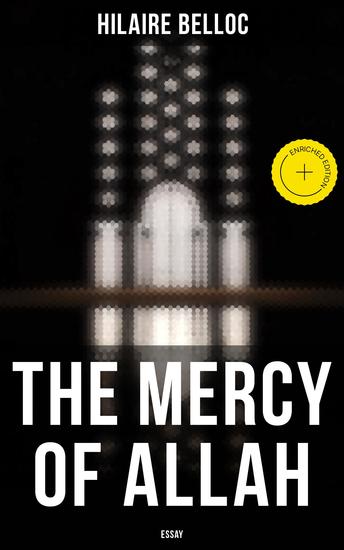
The Mercy of Allah: Essay - Enriched edition - cover
LER

The Mercy of Allah: Essay - Enriched edition

Hilaire Belloc

Editora: Musaicum Books

  • 0
  • 0
  • 0

Sinopse

In 'The Mercy of Allah: Essay', Hilaire Belloc explores the divine concept of mercy in Islam through a series of thought-provoking essays. Belloc's literary style is eloquent and insightful, drawing on his deep understanding of Islamic theology and history. The book delves into the complexities of the concept of mercy in relation to the fundamental beliefs of Islam, providing a unique perspective on the topic within a literary context. Belloc's critical analysis and scholarly approach make this book a compelling read for anyone interested in exploring the intersection of religion and mercy. Hilaire Belloc, a renowned poet and essayist, brings his wealth of knowledge and experience to 'The Mercy of Allah: Essay'. His passion for exploring different religious traditions and his commitment to intellectual rigor shine through in this work. Belloc's personal journey of spiritual exploration and his dedication to promoting understanding between cultures are evident in his writing. I highly recommend 'The Mercy of Allah: Essay' to readers looking for a thoughtful and nuanced exploration of the concept of mercy in Islam. Belloc's profound insights and engaging prose make this book a valuable addition to any reader's collection, offering a fresh perspective on a fundamental aspect of Islamic faith.

In this enriched edition, we have carefully created added value for your reading experience:
- A succinct Introduction situates the work's timeless appeal and themes.
- The Synopsis outlines the central plot, highlighting key developments without spoiling critical twists.
- A detailed Historical Context immerses you in the era's events and influences that shaped the writing.
- A thorough Analysis dissects symbols, motifs, and character arcs to unearth underlying meanings.
- Reflection questions prompt you to engage personally with the work's messages, connecting them to modern life.
- Hand‐picked Memorable Quotes shine a spotlight on moments of literary brilliance.
- Interactive footnotes clarify unusual references, historical allusions, and archaic phrases for an effortless, more informed read.
Disponível desde: 17/12/2020.
Comprimento de impressão: 221 páginas.

Outros livros que poderiam interessá-lo

  • The Secret History of Food - Strange but True Stories About the Origins of Everything We Eat - cover

    The Secret History of Food -...

    Anônimo

    • 0
    • 0
    • 0
    An irreverent, surprising, and entirely entertaining look at the little-known history surrounding the foods we know and love 
     
    Is Italian olive oil really Italian, or are we dipping our bread in lamp oil? Why are we masochistically drawn to foods that can hurt us, like hot peppers? Far from being a classic American dish, is apple pie actually . . . English? 
    “As a species, we’re hardwired to obsess over food,” Matt Siegel explains as he sets out “to uncover the hidden side of everything we put in our mouths.” Siegel also probes subjects ranging from the myths—and realities—of food as aphrodisiac, to how one of the rarest and most exotic spices in all the world (vanilla) became a synonym for uninspired sexual proclivities, to the role of food in fairy- and morality tales. He even makes a well-argued case for how ice cream helped defeat the Nazis. 
    The Secret History of Food is a rich and satisfying exploration of the historical, cultural, scientific, sexual, and, yes, culinary subcultures of this most essential realm. Siegel is an armchair Anthony Bourdain, armed not with a chef’s knife but with knowledge derived from medieval food-related manuscripts, ancient Chinese scrolls, and obscure culinary journals. Funny and fascinating, The Secret History of Food is essential reading for all foodies. 
    Supplemental enhancement PDF accompanies the audiobook.
    Ver livro
  • Woman Up - 'One of the most prolific writers about women's football in the UK' Evening Standard - cover

    Woman Up - 'One of the most...

    Carrie Dunn

    • 0
    • 0
    • 0
    With the triumph of England’s Lionesses at Euro 2022, the women’s game has been in the spotlight like never before, enjoying unprecedented media attention.
    Ver livro
  • Not in It to Win It - Why Choosing Sides Sidelines The Church - cover

    Not in It to Win It - Why...

    Andy Stanley

    • 0
    • 0
    • 0
    Read by the author. 
    Is it possible to disagree politically and love unconditionally? The reaction of evangelicals to political and cultural shifts in recent years revealed what they value most. Lurking beneath our Bible-laced rhetoric, faith claims, books, and sermons is a relentless drive to WIN! 
    But the church is not here to win. By every human measure, our Savior lost. On purpose. With a purpose. And we are his body. We are not in it to win anything. We are in it for something else entirely. That something else is what this book is about. 
    You'll discover:How to take a stand the right way. You'll learn how to make your case with a posture of humility and understanding, rather than being fueled by the fear of losing something.How to view politics through the lens of faith. Learn curiously, listen intentionally, and love unconditionally.How the life of Jesus and his teaching applies to modern-day challenges in a fresh way. The "biblical" stand may not be what we've been taught. 
    Jesus never asked his followers to agree on everything. But he did call his followers to obey a new command: to love others in the same way he has loved us. Instead of asserting our rights or fighting for power, we need to begin asking ourselves: what does love require of me?
    Ver livro
  • The Unfortunate Beginning of Happiness - cover

    The Unfortunate Beginning of...

    Emily Natsu

    • 0
    • 0
    • 0
    "The Unfortunate Beginning of Happiness" is an unconventional guide that challenges readers to confront the paradoxes of happiness. This book dives into the messy, often uncomfortable truths about joy, offering a refreshing perspective on the pursuit of contentment. With a blend of sardonic wit and profound insights, it explores why the quest for happiness can sometimes lead us astray. 
    Through a series of thought-provoking exercises and counter-intuitive concepts, this guide addresses the pitfalls of conventional happiness advice. It provides tools to help readers navigate the complexities of human emotions, embracing both the light and dark aspects of the human experience. "The Unfortunate Beginning of Happiness" combines psychological research with a healthy dose of skepticism, making the journey of self-discovery both enlightening and entertainingly uncomfortable. 
    This guide aims to transform your perspective on happiness, encouraging an approach to well-being that acknowledges life's inherent contradictions and finds happiness in the journey, not just the destination. It challenges societal norms about happiness, explores the value of negative emotions, and offers a more nuanced understanding of what it means to live a fulfilling life. Be warned, dear reader, for once you start "The Unfortunate Beginning of Happiness", your view of happiness may never be the same. Prepare to have your preconceptions challenged and your comfort zone delightfully disturbed.
    Ver livro
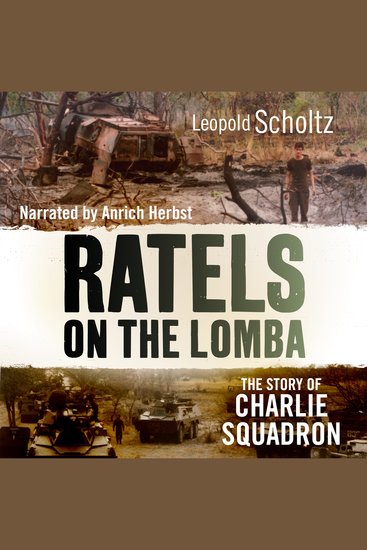
  • Ratels on the Lomba - The Story of Charlie Squadron - cover

    Ratels on the Lomba - The Story...

    Leopold Scholtz

    • 0
    • 0
    • 0
    “We destroyed a whole enemy brigade (47 Brigade) on the Lomba. History will prove it to be one of the most glorious and successful actions that South African forces ever took part in.” – General Jannie Geldenhuys, as quoted in Cuito Cuanavale 
     
    On 3 October 1987 Charlie Squadron – the iron fist of 61 Mechanised Battalion Group – led the way in a decisive battle on the Lomba River in southern Angola, as part of the South African Defence Force’s Operation Moduler.  
    Although SADF tactical doctrine dictated that the tanks of the Angolan 47 Brigade be countered with tanks, the young conscripts of Charlie Squadron were forced to face their enemy in vastly inferior Ratels, significantly handicapped by the vehicles’ thin armour and low-velocity guns. Not only were they facing a force far superior in terms of weaponry, but they were also hugely outnumbered and had to deal with terrain so dense that their sight was severely impaired and their movement restricted. 
    Through interviews with veterans of the battle and diary entries from the time, Leopold Scholtz recreates the drama of this David vs Goliath battle, taking the reader straight to the heart of the action. A deeply human story, Ratels on the Lomba tells of how individuals react in the face of death, and reveals how the war never left these men, not even when they returned home.
    Ver livro
  • Montenegro in the Late Middle Ages: The History of the Different States and Dynasties that Controlled the Area - cover

    Montenegro in the Late Middle...

    Editors Charles River

    • 0
    • 0
    • 0
    Much has been written about Western intervention during the breakup of Yugoslavia, and whether it made matters worse, prevented worse atrocities, or was simply ineffective. In early 1992, however, what was clear was that Europe was hopelessly divided over the best course of action to take towards Yugoslavia, and after several years of fighting, the Bosnian War was one of the most violent conflagrations in Europe since the end of World War II. 
    That war had been the byproduct of centuries of tensions in the Balkans, and an attempt in the wake of World War I to redraw the political boundaries of Europe and the Middle East. That included forming the Kingdom of Yugoslavia, initially known as the Kingdom of Serbs, Croats and Slovenes, a particularly fragile enterprise, and there was almost constant tension between the majority Serbs and the other Yugoslav nationalities, especially the Croats. As a result, the Kingdom was a land of political assassinations, underground terrorist organizations, and ethnic animosities. In 1929, King Alexander I suspended democracy and ruled as a dictator until he himself was assassinated in 1934. 
    Depending on the source, many authors have focused on different catalysts for Yugoslavia’s demise, but Vesna Drapac may have succinctly summed the situation up when he wrote that by the end, the state “lacked a reason to exist.” There is certainly something in this sentiment, but the disintegration came at an enormous cost. Given what happened in Yugoslavia, it should be little surprise the area that eventually became the modern nation of Montenegro has had a turbulent history for millennia, with shifting borders, different degrees of autonomy, and various conflicts occurring within it.
    Ver livro