¡Acompáñanos a viajar por el mundo de los libros!
Añadir este libro a la estantería
Grey
Escribe un nuevo comentario Default profile 50px
Grey
Suscríbete para leer el libro completo o lee las primeras páginas gratis.
All characters reduced
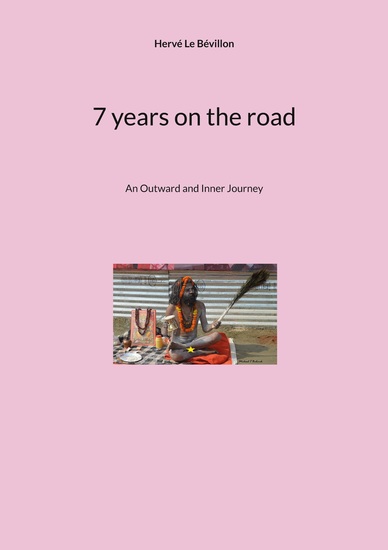
7 years on the road - An Outward and Inner Journey - cover

Lo sentimos, pero por derechos de la editorial este libro no puede leerse desde el país desde el que te conectas.

7 years on the road - An Outward and Inner Journey

Hervé Le Bévillon

Editorial: BoD - Books on Demand

  • 0
  • 0
  • 0

Sinopsis

From September 1967 to December 1974, I traveled across Europe, Africa, and India, mostly penniless, hitchhiking. Through my travels, both internal and external, I discovered peoples and cultures completely different from what we know in Europe, and I loved it.
Fifty years later, I finished translating the Rig Veda into French and English. It's the logical conclusion of this experience.
Disponible desde: 13/05/2025.
Longitud de impresión: 194 páginas.

Otros libros que te pueden interesar

  • A Geography of Wonder - cover

    A Geography of Wonder

    Reece Davis

    • 0
    • 0
    • 0
    What does it mean to feel awe in an age when every corner of the planet can be seen from a screen? 
    In A Geography of Wonder, celebrated travel writer Reece Davis sets out on a deeply personal quest — to rediscover the feeling that first drew him to the road: wonder. From Iceland’s volcanic deserts to the emerald jungles of Borneo, from silent Arctic nights to crowded city streets, Davis seeks out places and moments that still have the power to humble and astonish. 
    Along the way, he reflects on how wonder shapes our understanding of the world — and why, in a time of speed and certainty, slowing down to feel awe might be the greatest act of exploration left. 
    Blending rich travel narrative with philosophy and poetic insight, A Geography of Wonder is a celebration of curiosity, reverence, and the untamed beauty that still beats within the human spirit.
    Ver libro
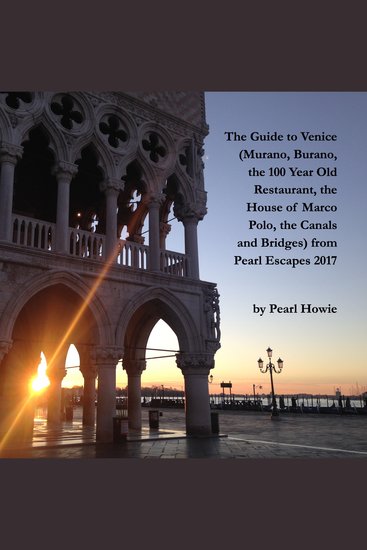
  • The Guide to Venice (Murano Burano 100 Year Old Restaurant House of Marco Polo Canals and Bridges) from Pearl Escapes 2017 - cover

    The Guide to Venice (Murano...

    Pearl Howie

    • 0
    • 0
    • 0
    I used to get extremely burnt out and couldn’t even handle booking a hotel or flight when I did have time off. I thought “Wouldn’t it be awesome if someone would write a guide that gave you one perfect escape; the hotel, sight, flight and restaurant.” So that’s what I did. (Although this one doesn't have a spa!)My new series of mini-guides, although part of a much longer journey, is specifically designed to give you the precise information, the recipe you need to have the adventure – without getting bogged down with too many choices or details.Venice waits for you. It is the home of the artist, the writer, adventurer or madman (depending on how you look at it) for thousands of years. Their spirit abides, Marco Polo, Da Vinci, Shakespeare, Christie… haunting the canals, which demand exploration and defy explorers."You will come away feeling as if she was sharing with you personally and will want to read more of her life adventures.”"I finally feel like I'm really living, not just surviving."“I’ve just booked my first holiday in 13 years!”From the Amazon Best Selling author of "Japan Is Very Wonderful," the "Camino de la Luna" series and the Pearl Escapes mini-guides.
    Ver libro
  • My Half Orange - A Story of Love and Language in Seville - cover

    My Half Orange - A Story of Love...

    John Julius Reel

    • 0
    • 0
    • 0
    In his late thirties, John Julius Reel left his native New York for Seville, hoping to reinvent himself, find his voice as a writer, and cast off the shadow of his famous father. When his girlfriend dumped him after a month-long visit, the last tie was cut and he had to face his future from his stark, mosquito-infested rented room. 
    Alone in a foreign land, struggling with the language, and longing to find his place and purpose in the world, he began to rebuild his life. 
    What follows is a tender, comical, and illuminating story about what it means to learn to speak and think in a new way, and to spend so much time away from home that the foreign becomes familiar. This heartwarming chronicle filled with Sevillian delicias (soccer, Iberian ham, creative cursing, and one extraordinary woman) reveals how love, language, and culture can transform one’s life forever.
    Ver libro
  • Moche Civilization - Warriors Pottery and the Pyramid Builders of Northern Peru - cover

    Moche Civilization - Warriors...

    Rolf Hedger

    • 0
    • 0
    • 0
    The Moche civilization emerged along the northern coast of present-day Peru, flourishing between approximately 100 and 750 CE. This society developed in a region marked by arid deserts, fertile river valleys, and proximity to the Pacific Ocean, which shaped its economy, culture, and political structure. The Moche were not a singular unified state but rather a collection of regional polities connected through shared traditions, artistic styles, and religious beliefs. Their rise was influenced by earlier Andean cultures, particularly the Cupisnique and Chavín, which had already laid the foundations for complex societies in the region. 
    The origins of the Moche civilization can be traced to the early centuries of the Common Era when small communities along the coast began to expand due to agricultural advancements and increasing social stratification. The region's rivers, fed by Andean runoff, allowed for irrigation-based farming that supported large populations. Over time, leaders emerged who controlled land, labor, and water resources, leading to the development of hierarchical societies. These early rulers likely solidified their power through religious authority, military strength, and their ability to organize large-scale construction projects. 
    One of the defining aspects of Moche civilization was its adaptation to the harsh environment. The coastal deserts of northern Peru posed challenges for sustaining large populations, yet the Moche mastered irrigation technology, channeling river water to expand arable land. This agricultural innovation provided surplus food, which in turn fueled urban growth, specialization of labor, and the rise of elite classes. Moche settlements grew into centers of political and religious activity, with monumental architecture such as pyramids and temples becoming focal points of their cities.
    Ver libro
  • Urban Legends - Exploring the Myths Behind the City’s Strange Tales (2 in 1) - cover

    Urban Legends - Exploring the...

    John Harpoon

    • 0
    • 0
    • 0
    This book contains the following titles: 
    - A City Within One Building: The origins of this vision can be traced to the pressures of urbanization and the relentless march of technological innovation. As cities expanded horizontally, they encountered spatial limitations, environmental challenges, and infrastructural strain. The solution lay not outward, but upward. Vertical urbanism emerged as a response to these challenges, combining architectural ingenuity with a commitment to sustainability. The result is a new typology of buildings that integrate residential, commercial, recreational, and even cultural spaces into a cohesive, self-contained ecosystem. 
    - Culinary Jailbreak: In the depths of confinement, where the walls are more than just bricks and mortar but a constant reminder of lost opportunities, an unexpected force emerged: food. This story is not just about escape in the traditional sense, but about breaking free from the psychological and emotional prisons that can often be more suffocating than physical ones. It is a testament to the unyielding human spirit, its capacity for creativity and resilience even in the most stifling of conditions. 
    Incarceration is a test of endurance. Every day is marked by repetition, isolation, and the stripping away of autonomy. It’s easy to feel like hope is a distant dream, slipping further away with each passing hour. But in the midst of despair, something remarkable happened—a plan was forged in the most unlikely of places: the prison kitchen. It was here, in a space designed to merely nourish the body, that a group of individuals came to realize the power of food as a vehicle for something greater: freedom.
    Ver libro
  • The Long Way Home - cover

    The Long Way Home

    Reece Davis

    • 0
    • 0
    • 0
    After years spent chasing distant horizons, what happens when the road finally leads you back? 
    In The Long Way Home, acclaimed travel writer Reece Davis turns his compass inward, exploring the idea of home through the lens of a lifetime spent in motion. From the quiet streets of his childhood to the far corners of the world where he’s found pieces of himself, Davis weaves a tapestry of memory, movement, and meaning. 
    With the lyrical grace of a memoir and the keen observation of a traveler, he asks what it means to belong in a world without fixed borders — and whether returning home is ever the same as staying. 
    Poignant, introspective, and deeply human, The Long Way Home is a meditation on distance, identity, and the timeless journey between leaving and arriving.
    Ver libro