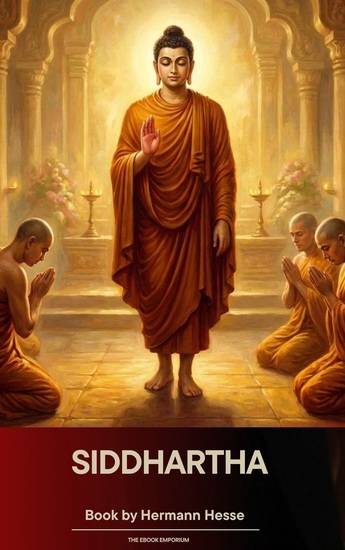
Siddhartha
Hermann Hesse
Editorial: The Ebook Emporium
Sinopsis
"Wisdom is not communicable. The wisdom which a wise man tries to communicate always sounds foolish."

Set in Ancient India during the time of the Buddha, Siddhartha tells the story of a young Brahmin who leaves his home, his family, and his privileged life to find the meaning of existence. His journey is not a straight line; it takes him from the asceticism of the forest-dwelling Samanas to the sensual temptations of the city, and from the heights of worldly wealth to the quiet humility of a ferryman's hut. Siddhartha learns that truth cannot be taught by a master—not even by the enlightened Gotama himself—but must be experienced through the "river" of life. Hesse's novel is a beautiful, meditative exploration of the unity of all things and the courage it takes to listen to one's own soul.

The Symbolism of the River: The most enduring image of the novel is the river, which Siddhartha eventually learns to "listen" to. It represents the eternal cycle of life—the idea that time is an illusion and that every moment contains the past, present, and future simultaneously. The river is both the path and the destination.

A Personal Path to Truth: The novel's power lies in its celebration of the individual. Siddhartha's ultimate realization is that "knowledge" can be passed on, but "wisdom" must be lived. This message has made the book a foundational text for seekers, students, and dreamers for over a hundred years.

Why It Is a Global Classic: Siddhartha is a short book with a massive heart. It addresses the universal human hunger for purpose and peace without being preachy or dogmatic. Whether you are at a crossroads in your life or simply love beautiful storytelling, Siddhartha offers a sanctuary of calm and a map for the soul.

Find your own river. Purchase "Siddhartha" today.
Disponible desde: 19/01/2026.
Longitud de impresión: 102 páginas.