Siddhartha - An Indian Tale
Hermann Hesse
Übersetzer Anke Dreher Gunther Olesch
Verlag: Glomarble
Beschreibung
Siddhartha is a religious novel published in 1922 by Herman Hesse, who was deeply interested in Eastern thought.
Übersetzer Anke Dreher Gunther Olesch
Verlag: Glomarble
Siddhartha is a religious novel published in 1922 by Herman Hesse, who was deeply interested in Eastern thought.
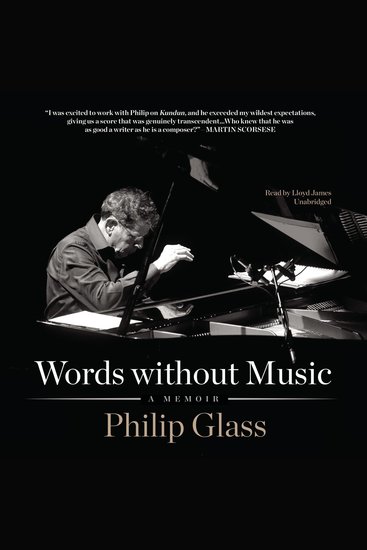
World-renowned composer of symphonies, operas, and film scores, Philip Glass has almost single-handedly crafted the dominant sound of late twentieth-century classical music. In Words without Music, he creates an entirely new and unexpected voice: that of a born storyteller and insightful chronicler, whose behind-the-scenes recollections allow one to experience the moments of creative fusion when life magically merges with art. The transformation of a young man from budding musical prodigy to world-renowned composer is the story of this commanding memoir. From his childhood in post–World War II Baltimore to his student days in Chicago, at Juilliard, and his first journey to Paris, where he studied under the formidable Nadia Boulanger, Glass recalls his early mentors, while reconstructing the places that shaped his artistic consciousness. From a life-changing trip to India, where he met with gurus, to the gritty streets of New York in the 1970s, where he worked day jobs as a furniture mover, cabbie, and unlicensed plumber, Glass leads the life of a Parisian bohemian artist transported to twentieth-century America. Even after Glass' talent was first widely recognized with the sensational premiere of Einstein on the Beach in 1976, he never abandoned his ideals throughout his collaborations with such artists as Allen Ginsberg, Ravi Shankar, Robert Wilson, Doris Lessing, and Martin Scorsese. And in this loving and slyly humorous autobiography, Philip Glass re-creates in words the thrill that results from artistic creation, ultimately affirming the power of music to change the world. BONUS FEATURE: Includes "Etude No. 2," written and performed by Philip GlassZum Buch
Audiobook narrated by author. “Madia’s adventurous tales transcend their rugged terrain, telling, at the crux of it all, very human stories”—The Source New York Times bestselling author of Nowhere for Very Long and Never Leave the Dogs Behind Brianna Madia considers putting down roots—but on her own terms—in this intimate and inspiring memoir addressing life's big questions, such as where and how to live, how to commit to a relationship and whether to become a mother. Brianna Madia is beloved for her honest and enthralling accounts of life in the wilderness, finding her own way by rejecting society’s expectations, so what happens when she falls in love and has to reset the boundaries of her fierce independence? Homesick Nomad finds Bri splitting her time between her beloved wild desert in Utah and her boyfriend’s cozy suburban home in the Pacific Northwest, reckoning with: a new urge to soften into the embrace of the comforts of homedefining her purpose and direction in life, including the big decision facing women, the question of motherhood, andthe fear that committing to others means sacrificing independence. She’s not only defying convention to prove something to herself or to others—a simpler way of life out in the desert actually brings her peace, as she realizes when resisting “upgrades” to her trailer like running water. Balancing the liberation of the wilderness with the natural compromises of love, Bri navigates these familiar tensions by embracing her life in its wholeness, richer for both the stability of home and the profundity of wide open spaces.Zum Buch
Lord Dunsany was the most influential writer in the genre that came to be known as fantasy, of which his stories set trends for that continue to this day.He was an influence on Tolkien, Lovecraft, Gaiman, Borges, Clarke, Moorcock, Yeats, Le Guin and many more besides. Worlds of monsters and magic, of strange names and stranger tales, were all born in Dunsany’s work. Before him, the closest thing to fantasy that existed was folktales; after him, people built worlds beyond imagining and epic stories in the lands he first explored.Zum Buch
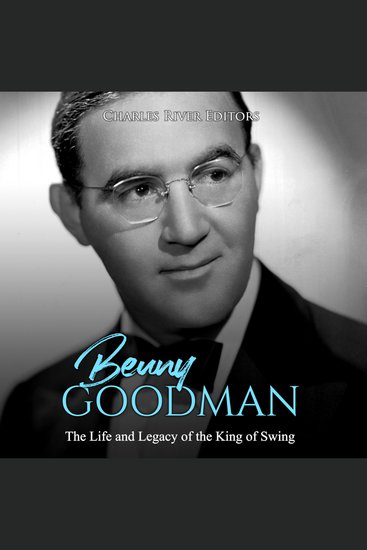
“After you've done all the work and prepared as much as you can, what the hell, you might as well go out and have a good time.” – Benny Goodman Sprightly swing music spills across the dimly lit club. The grayish curtains of cigarette smoke part every once in a while to reveal a sparkling stage and tables upon tables of patrons, some incurably inebriated and others high on the fast-paced nightlife. Fabulous flappers in shimmery cocktail dresses and stylish feather headbands throw their hands up and stomp their feet to the addictive beat on the dance floor. Smartly dressed men, their hair neatly parted and slicked back, toss fistfuls of dice onto the plush green baize of the craps tables. Some hover over roulette wheels, staring intently at the spinning flashes of silver, while others finger their playing cards as they sip on tumblers of whiskey, eyeing both the river and the tower of tokens next to them. Frisky tunes, chic fashion, and American gambling are nostalgic, rose-tinted images most choose to project when visualizing the Roaring Twenties, but the other side of the coin brought an uninviting, much harsher reality that most would prefer to sweep under the rug. The first real estate bubble was on the brink of bursting, and progress was evident, but painfully slow, which gave way to yet another era of violent riots, lynchings, and other forms of oppression imposed on minorities. When the phrase “the King” is used in the context of American music, most people think of Elvis Presley, but Presley was just a baby when the title was first conferred upon Benny Goodman as the King of Swing in 1935. The Swing Era was a magical period in American history between the hedonism of the Roaring Twenties and the rebelliousness sparked by rock music beginning in the 1950s. Swing music was rooted in ragtime, blues, and jazz music that had long been popular in African American enclaves in Chicago, St. Louis, Kansas City, and New Orleans. Swing took the entire nation by storm thanks in large part to Benny Goodman and his bands, earning Goodman the nearly undisputed title of the King of Swing. Goodman's life was a genuine rags-to-riches story. The son of nearly destitute Jewish immigrants from Eastern Europe, Goodman was a musical prodigy who began playing professionally at the tender age of 13, and he was also among the first mainstream bandleaders to hire black musicians. Referring to music as “a great escape for me from the poverty," Goodman’s lifelong focus was on good music, no matter who it came from. As he put it, “If a guy's got it, let him give it. I'm selling music, not prejudice.” Goodman’s popularity was so instrumental that Lionel Hampton went so far as to claim, "As far as I'm concerned, what he did in those days—and they were hard days, in 1937—made it possible for Negroes to have their chance in baseball and other fields." Apart from a few hiatuses to tend his health and his growing family, Goodman remained a consistently active musician literally right up until his death in 1986 at the age of 77. Somewhat fittingly, he died in his study with his clarinet next to him and a Brahms sonata on a music stand nearby. Benny Goodman: The Life and Legacy of the King of Swing profiles how Goodman rose from obscure beginnings to become one of 20th century music’s most influential figures. Along with pictures of important people, places, and events, you will learn about the King of Swing like never before.Zum Buch
What does it mean to live a life of faith and courage in the face of adversity? How can devotion to God inspire extraordinary acts of resilience and transformation? The Acts of Paul and Thecla is one of the most inspiring stories from early Christian literature. Written in the 2nd century CE, this powerful text tells the story of Thecla—a noblewoman who abandons her privileged life to follow the teachings of Paul. Facing persecution, defying expectations, and surviving miraculous trials, Thecla becomes a symbol of unwavering faith and spiritual courage. Now presented in a clear, modern translation, this edition brings her remarkable journey to life for today’s listener. What you'll discover inside: • A Story of Unwavering Faith – Thecla’s devotion leads her through trials, transformation, and triumph • Lessons on Courage and Resilience – Overcoming fear, social norms, and adversity through inner strength and belief • Divine Intervention and Miracles – Miraculous events that reflect God’s grace and protection • A Glimpse into Early Christianity – Insights into the values, struggles, and hope of the early Church Whether you’re seeking spiritual inspiration or a powerful narrative of transformation, The Acts of Paul and Thecla offers a timeless tale of faith, courage, and divine grace. Begin your journey today—and be inspired by a story that continues to resonate across the centuries.Zum Buch
CIRCUMCISION CUTS THROUGH US ALL. In her eye-opening memoir, Georganne Chapin exposes the business of medical circumcision. This unnecessary and most common pediatric surgery in the United States permanently reduces the size and alters the function of a boy’s penis for the rest of his life. Every year, nearly 1.5 million baby boys are assaulted in American hospitals and doctors’ offices, subjecting them to pain, functional and psychological damage, and a forever-altered sexual experience. Chapin traces circumcision’s U.S. roots from 19th Century fears of masturbation to stereotypes about race, class, religion, and male sexuality. She describes how what started as a way to keep men and women from enjoying sex morphed into a for-profit medical practice-one that is rare or unknown in Europe, non-Muslim Asia, Latin America and the Caribbean. Finally, she shows how physician organizations, especially the American Academy of Pediatrics (AAP), have worked for decades to fraudulently promote circumcision’s supposed benefits and suppress facts about circumcision harm and deaths, and how they refuse to acknowledge the procedure as a gross violation of basic medical ethics. Indeed, the AAP now characterizes male genital mutilation as a matter of “culture” and “parental preference”—a position that, conveniently, shields trade associations and their physician members from legal and financial liability. This book is a punch-in-the-gut wake-up call that will enrage and empower anyone impacted by the multi-billion-dollar penis business.Zum Buch