Junte-se a nós em uma viagem ao mundo dos livros!
Adicionar este livro à prateleira
Grey
Deixe um novo comentário Default profile 50px
Grey
Assine para ler o livro completo ou leia as primeiras páginas de graça!
All characters reduced
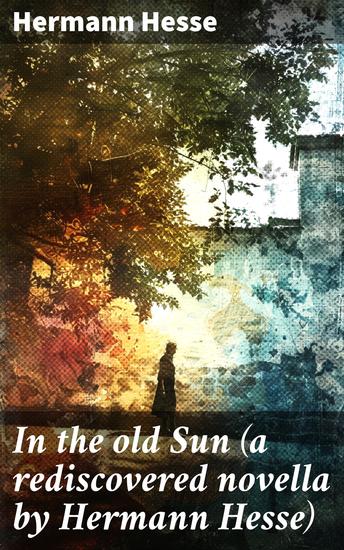
In the old Sun (a rediscovered novella by Hermann Hesse) - Journey of Self-Discovery and Spiritual Enlightenment - cover
LER

In the old Sun (a rediscovered novella by Hermann Hesse) - Journey of Self-Discovery and Spiritual Enlightenment

Herman Hesse

Editora: Good Press

  • 0
  • 0
  • 0

Sinopse

In his rediscovered novella, "In the Old Sun," Hermann Hesse artfully weaves a narrative that explores the intersection of nature, spirituality, and the human condition. Written in Hesse'Äôs signature poetic and lyrical prose, the novella delves into themes of existential longing and the quest for inner peace. Set against the backdrop of a pastoral landscape, the protagonist embarks on a journey of self-discovery that resonates deeply within the broader literary tradition of early 20th-century existentialism, reminiscent of Hesse'Äôs celebrated works such as "Siddhartha" and "Steppenwolf." Hermann Hesse, a Nobel laureate in literature, was profoundly influenced by his own experiences with spirituality and the conflict between societal expectations and personal fulfillment. His life was marked by a series of existential inquiries, shaped by his tumultuous upbringing and the climate of change in early modern Europe. These experiences inform the reflective nature of "In the Old Sun," a work that, despite its rediscovery, feels timely and relevant today. This novella is an essential read for those interested in exploring the complexities of the human psyche and the pursuit of enlightenment. Hesse'Äôs evocative language and profound insights make "In the Old Sun" a compelling addition to both his oeuvre and the broader literary canon.
Disponível desde: 05/12/2023.
Comprimento de impressão: 100 páginas.

Outros livros que poderiam interessá-lo

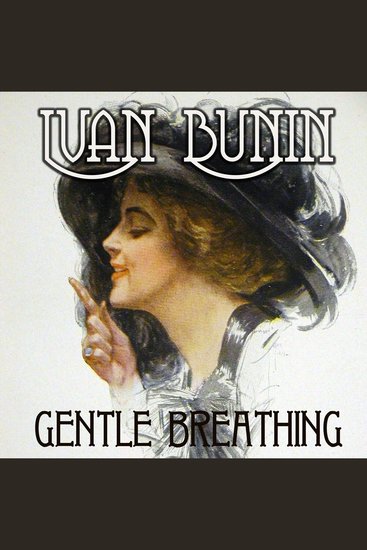
  • Gentle Breathing Nobel Prize 1933 - cover

    Gentle Breathing Nobel Prize 1933

    Ivan Bunin

    • 0
    • 0
    • 0
    Ivan Bunin received the 1933 Nobel Prize in Literature "for the strict artistry with which he has carried on the classical Russian traditions in prose writing." Aristocrat to the core, Bunin somehow remained connected to the land and people and keenly felt their pulse of life. His acute observations resulted in the accurate and unforgettable characters who populated his writing. His love for punctuation and punctilious choice of words is legendary. Reading Bunin's stories is one of the best ways to understand the mysterious Russian soul and begin to understand one of Russia's greatest periods of literature.
    Ver livro
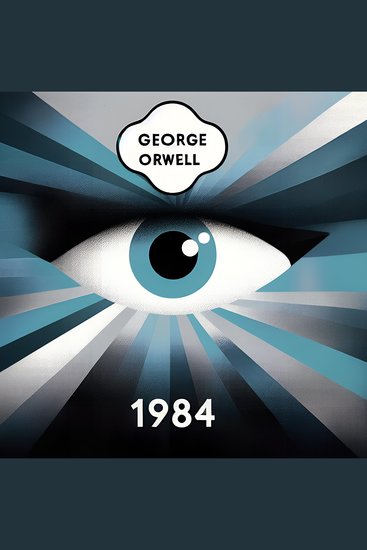
  • 1984 - cover

    1984

    George Orwell

    • 0
    • 0
    • 0
    "1984" is a dystopian novel that was published in 1949. The story is set in Airstrip One (formerly known as Great Britain), a province of the superstate Oceania in a world of perpetual war, government surveillance, and manipulation of truth. The novel follows the life of Winston Smith, a low-ranking member of the Party who becomes disillusioned with the oppressive regime led by the enigmatic figure known as Big Brother.
    Ver livro
  • La Constantin - cover

    La Constantin

    Alexandre Dumas

    • 0
    • 0
    • 0
    "La Constantin" by Alexandre Dumas is a tale of intrigue, ambition, and betrayal set in the vibrant world of 19th-century theater. The story follows La Constantin, a talented and ambitious actress whose rise to fame is fraught with personal and professional challenges. As she navigates the complexities of love, rivalry, and societal expectations, her journey becomes a battleground for identity and independence. Dumas masterfully explores themes of art, passion, and the sacrifices demanded by success, painting a vivid picture of the theatrical world and its larger-than-life personalities. A blend of drama and emotion, the novel delves into the tension between authenticity and ambition, celebrating the resilience of those who dare to pursue their dreams against all odds.
    Ver livro
  • Music of Erich Zann The (Unabridged) - cover

    Music of Erich Zann The...

    H. P. Lovecraft

    • 0
    • 0
    • 0
    Due to lack of funds, a student studying metaphysics abroad is forced to take up lodging in a cheap apartment building on a street named the "Rue d'Auseil". The street is not far from his university and is bordered by a river, dark warehouses and a large wall, giving the street an appearance of being on a cliff. The student cannot see what lies on the other side of the wall, as only a single window on the top floor of his building looks over it. Along with the building's disabled landlord, Blandot, one of the few other tenants is an old German man named Erich Zann. The old man is mute and plays the viol[a] with a local theater orchestra. He lives alone on the top floor and at night he plays strange melodies the student has never heard before. Despite Zann's reclusiveness, Blandot reveals his identity to the student, who approaches him in the hallway one evening and asks if he can listen to Zann's music. Zann relents and allows the student to enter his room. He plays for the student some of his unique melodies but not the same as the student had previously heard. The student asks him if he could play his music from the previous nights, awkwardly humming and whistling the notes he remembered. Zann is taken aback by the request and nervously glances at the window in his room, covered by curtains. The student recognizes the window as the only one that can oversee the wall at the end of the mysterious street. He approaches it to look outside but Zann angrily pulls him back. The student is fed up with Zann's eccentricities but Zann explains through writing that he is simply a lonely old man, and suffers from numerous phobias and nervous disorders. He is pleased that the student likes his music, but refuses to play the particular tunes that the student asked for. He persuades the student to move to a lower floor in the apartment as he would prefer the student not listen to them. The student sympathizes with Zann and agrees to move. Zann promises that he will invite the student to his room to hear his other music. After the student moves, however, Zann returns to his antisocial behavior and his health deteriorates, eventually not letting the student listen at all. The student's curiosity to hear the secret music and look out the window grows, and he begins eavesdropping on Zann while he plays at night. His melodies have an unearthly sound, and the student praises Zann as a musical genius. One night while secretly listening outside Zann's room, the student hears a commotion and the old man scream inside. When the student bangs at the door, Zann lets him in and asks him to wait while he writes, promising to explain everything. More than an hour into writing, Zann is startled by a distant sound in the form of a low note, interrupts his writing and starts furiously playing his viol with a crescent terror. The music is horrific and the student surmises that Zann is playing wildly to drown out or keep something out of the room. Zann seemingly enters a stupor, doing nothing but playing his music. Another sound from outside the room, which the student perceives to be mocking them, is heard and a gust shatters the window. The unnatural wind sweeps through the room, blowing Zann's unread papers out the window, despite the student's attempts at catching them. The student remembers his curiosity and finally looks out the window. Instead of seeing the city lights, he only sees a terrible black void, an infinite abyss of chaos. The howling winds and cacophony of elements snuff out the candles in the room, leaving the student and Zann in complete darkness. He blindly moves through the dark with desperation, beginning to feel "chilling things" brush up against him. Determined to save Zann, the student reaches the musician and screams at him to run, but Zann only continues to play his music. Upon attempting to physically carry him to safety, he discovers Zann is dead, although his body is still playing. With this re
    Ver livro

  • Stories To Make You Cry - Sometimes you need a good cry - cover

    Stories To Make You Cry -...

    Anton Chekhov, Stephen Crane,...

    • 0
    • 0
    • 0
    When we read or listen, words can have a transforming effect.  Our mood can alter in the space of a few sentences from joy to sadness.  And not just our mood.  These words can affect us physically, they can engage our emotions and even in their sadness bring a lump to our throat and tears to our eyes.  Sometimes the relief can be palpable. 
     
    Our authors, from Anton Chekhov, Stephen Crane, Willa Cather, Katherine Mansfield and a wealth of others are well aware of what their talents will evoke.   Genius has many names.   
     
    1 - Short Stories To Make You Cry  - An Introduction 
    2 - Vanka by Anton Chekhov 
    3 - A Dark Brown Dog by Stephen Crane 
    4 - Suicides by Guy de Maupassant 
    5 - The Life of Ma Parker by Katherine Mansfield 
    6 - The District Doctor by Ivan Turgenev 
    7 - Paul's Case by Willa Cather 
    8 - Hands by Sherwood Anderson 
    9 - Silence by Leonid Andreyev 
    10 - The Stones of the Village by Alice Dunbar Nelson 
    11 - Hide And Seek or Pliatki by Fyodor Sologub
    Ver livro
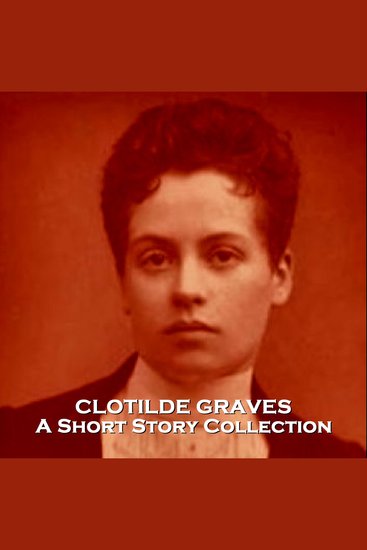
  • Clotilde Graves - A Short Story Collection - Brilliant Irish author that wrote under a male pen name to help get published - cover

    Clotilde Graves - A Short Story...

    Clothilde Graves

    • 0
    • 0
    • 0
    Clotilde Augusta Inez Mary Graves was born on the 3rd June 1863 at Buttevant Castle, Co. Cork, to parents with military backgrounds. 
     
    At age nine, the family moved to Southsea in England for yet another military posting.  Her father’s postings gave her valuable experiences that would be put to good use in later years in some of her literary works. 
     
    She was educated at a Catholic convent in Lourdes before returning to London in 1884 to study art in Bloomsbury.  She worked part-time at the British Museum and the Royal Female School of Art and generated further income by drawing little pen-and-ink grotesques for the comic papers.  
     
    A few years later a chance meeting found her writing extra lyrics for a pantomime version of Puss in Boots.  She followed up with several financially successful plays, both in London and New York, and gained a measure of notoriety in one with the comparison of marriage and prostitution.   
     
    Despite her dramatic success she published her first novel in 1911 under the pseudonym of Richard Dehan which she continued to use for later works.  As well as novels and plays she published collections of short stories which glow with talent and invention. 
     
    She was an unusual figure in London society, wearing her hair short, taking on a masculine manner and cut of clothing, and smoking cigarettes in public when such traits were considered eccentric at best.  Add to this her admired collection of Chinese and Japanese trophies, her enthusiasm for fly-fishing and her riding of a tricycle and you have a perfect image of this fascinating writer. 
     
    Clotilde Graves died at the convent of Our Lady of Lourdes at Hatch End in Middlesex, on the 3rd December 1932.  She was 69. 
     
    1 - Clotilde Graves - A Short Story Collection - An Introduction 
    2 - Under The Electrics by Clotilde Graves writing as Richard Dehan 
    3 - The Lost Room by Clotilde Graves writing as Richard Dehan 
    4 - A Spirit Elopement by Clotilde Graves 
    5 - In The Fourth Dimension by Clotilde Graves writing as Richard Dehan 
    6 - A Nocturne by Clotilde Graves writing as by Richard Dehan
    Ver livro