¡Acompáñanos a viajar por el mundo de los libros!
Añadir este libro a la estantería
Grey
Escribe un nuevo comentario Default profile 50px
Grey
Suscríbete para leer el libro completo o lee las primeras páginas gratis.
All characters reduced
The Right to ignore the State - cover

The Right to ignore the State

Herbert Spencer

Editorial: Edizioni Aurora Boreale

  • 0
  • 0
  • 0

Sinopsis

Herbert Spencer (1820-1903) was an English philosopher, psychologist, biologist, sociologist, and anthropologist.
Spencer developed an all-embracing conception of evolution as the progressive development of the physical world, biological organisms, the human mind, and human culture and societies. As a polymath, he contributed to a wide range of subjects, including ethics, religion, anthropology, economics, political theory, philosophy, literature, astronomy, biology, sociology, and psychology.
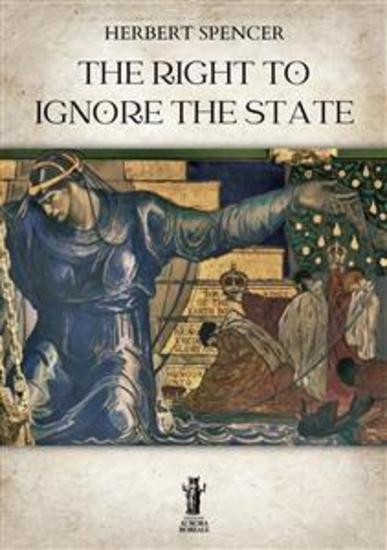
Herbert Spencer’s short essay The Right To Ignore The State was originally born as one of the chapters of the original edition of Social Statics, a work written and published by the English philosopher in 1850. It was then omitted by the author from the revised edition, published in 1892. It was then republished separately, as a pamphlet, in London in 1913.
We can legitimately deduce that this omission indicates a change of opinion. But repudiation is not response, and Spencer never responded to his arguments for the right to ignore the state. Even many anarchists believe these arguments are unanswerable.
Disponible desde: 15/04/2024.

Otros libros que te pueden interesar

  • Principles of Economics Book 3: On Wants and Their Satisfaction - cover

    Principles of Economics Book 3:...

    ALFRED MARSHALL

    • 0
    • 0
    • 0
    Principles of Economics was a leading economics textbook of Alfred Marshall (1842-1924), first published in 1890. Marshall began writing the book in 1881, and he spent much of the next decade at work on it.His plan for the work gradually extended to a two-volume compilation on the whole of economic thought; the first volume was published in 1890 to worldwide acclaim that established him as one of the leading economists of his time. It brought the ideas of supply and demand, of marginal utility and of the costs of production into a coherent whole, and became the dominant economic textbook in England for a long period. The second volume, which was to address foreign trade, money, trade fluctuations, taxation, and collectivism, was never published at all. (Summary from Wikipedia)This reading is based on the eighth edition, published in 1920.
    Ver libro
  • How to Recognize Toxic Thought Patterns - cover

    How to Recognize Toxic Thought...

    Olivia Werner

    • 0
    • 0
    • 0
    [How to Recognize Toxic Thought Patterns] delves deep into the intricate landscape of human consciousness, offering a lyrical and unflinching exploration of the ways our minds create and sustain patterns that both protect and constrain us. Through prose that mirrors the fluid, cyclical nature of thought itself, this illuminating work examines how toxic patterns disguise themselves as rationality, presenting as logical conclusions while quietly undermining our sense of self. Like a skilled cartographer mapping uncharted territory, the book traces the subtle ways these thought patterns weave themselves into the fabric of our daily existence, emerging in the spaces between breaths, in the gaps between messages, in the quiet moments before sleep. With its innovative approach to mental awareness, the work stands apart in its ability to capture the poetry of psychological experience while offering practical insights into the nature of toxic thinking, making the invisible visible through carefully crafted metaphors and precise psychological observation.
    Ver libro
  • Dark Psychology - How Blackmail Manipulation and Deception Rule Our Society - cover

    Dark Psychology - How Blackmail...

    Amanda Grapes

    • 0
    • 0
    • 0
    In this special book combo, you can find three separate titles, all related to the topic of “dark psychology.” The titles are these: 
    Book 1: What is emotional intelligence? Does it help us make better, more rational decisions? 
    Can we resist sales tactics and do the math, or do we jump in on emotional trends? 
    Those are some of the things we will discuss here. Other things that will rise to the surface are things like the mind of a psychopath, sinister tactics governments use to spread propaganda through the news, and how we can detect lies and manipulation faster. 
    If any of these things sound interesting to you, then I encourage you to start reading or listening to this book. 
    Book 2: People lie every day. Not everyone, but sadly, many people lie daily. But why? And how do you see what is true and what is not true? 
    This is where this book can help you. This book goes over the context of deception, the lies you can easily spot, and some interesting facts about people’s personality that will shock you. How a personality adds to the things they say, is, of course, significant. Therefore, we will explore that connection. 
    Book 3: We don’t always talk about some of the darker sides of human psychology, but they are out there. The simple truth is that just because you don’t focus on something, doesn’t mean it’s not real. 
    On that note, this book discussed topics such as blackmail, manipulation, and sadism. Some people have been hurt so much that all they want, is to see the world burn. They don’t care about others, and they just use them as tools to get what they want. 
    If you are tough enough to face that dark side, then come on over and start reading or listening to this guide.
    Ver libro
  • Fugitive Religion - The Ghost Dance and Indigenous Resistance After the US Civil War - cover

    Fugitive Religion - The Ghost...

    Tiffany M. Hale

    • 0
    • 0
    • 0
    A bird's-eye look at the Ghost Dance, the first instance of modern, collective racial self-consciousness for Native peoples in the United States 
     
    From the Sand Creek Massacre (1864) to the Massacre at Wounded Knee (1890), Indigenous religious practices―legally banned after 1883―took on new meanings as acts of defiance against colonialism and white supremacy. By reexamining the familiar story of the Ghost Dance and Wounded Knee Massacre and placing it into the context of resistance by Black and Native peoples during Reconstruction and Redemption, historian Tiffany M. Hale explains the Ghost Dance not just as a religious movement but also as a complex social phenomenon that enabled Indigenous people to maintain their identities and communities despite the pervasive force of colonialism and the challenges of modernity. 
     
    Chronicling how individual Native people, their families, and communities navigated the fraught post–Civil War conditions of the United States, Hale suggests that Ghost Dances hold something in common with blues traditions of working-class African Americans. By giving Ghost Dance participants a chance to reflect on their lived experiences of warfare, deracination, and diplomacy, "fugitive religion" helped create modern racial self-consciousness in the United States.
    Ver libro
  • Secret Empires - How the American Political Class Hides Corruption and Enriches Family and Friends - cover

    Secret Empires - How the...

    Peter Schweizer

    • 0
    • 0
    • 0
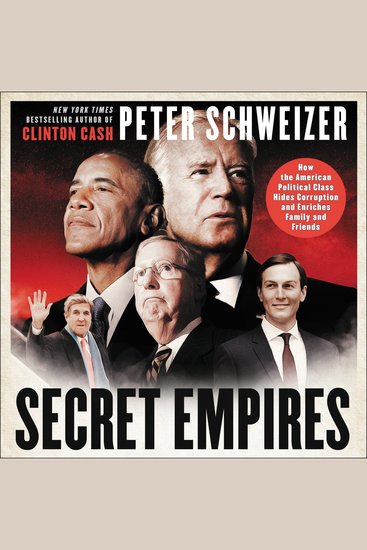
    #1 New York Times Bestseller! 
    America's top politicians have discovered the scam to end all scams.  
    Peter Schweizer has been fighting corruption—and winning—for years. In Throw Them All Out, he exposed insider trading by members of Congress, leading to the passage of the STOCK Act. In Extortion, he uncovered how politicians use mafia-like tactics to enrich themselves. And in Clinton Cash, he revealed the Clintons’ massive money machine and sparked an FBI investigation. 
    Now he explains how a new corruption has taken hold, involving larger sums of money than ever before. Stuffing tens of thousands of dollars into a freezer has morphed into multibillion-dollar equity deals done in the dark corners of the world. 
    An American bank opening in China would be prohibited by US law from hiring a slew of family members of top Chinese politicians. However, a Chinese bank opening in America can hire anyone it wants. It can even invite the friends and families of American politicians to invest in can’t-lose deals. 
    President Donald Trump’s children have made front pages across the world for their dicey transactions. However, the media has barely looked into questionable deals made by those close to Barack Obama, Joe Biden, John Kerry, Mitch McConnell, and lesser-known politicians who have been in the game longer. 
    In many parts of the world, the children of powerful political figures go into business and profit handsomely, not necessarily because they are good at it, but because people want to curry favor with their influential parents. This is a relatively new phenomenon in the United States. But for relatives of some prominent political families, we may already be talking about hundreds of millions of dollars. 
    Deeply researched and packed with shocking revelations, Secret Empires identifies public servants who cannot be trusted and provides a path toward a more accountable government.
    Ver libro
  • Hitler and Poland - How the Independence of one Country led the World to War in 1939 - cover

    Hitler and Poland - How the...

    Norman Ridley

    • 0
    • 0
    • 0
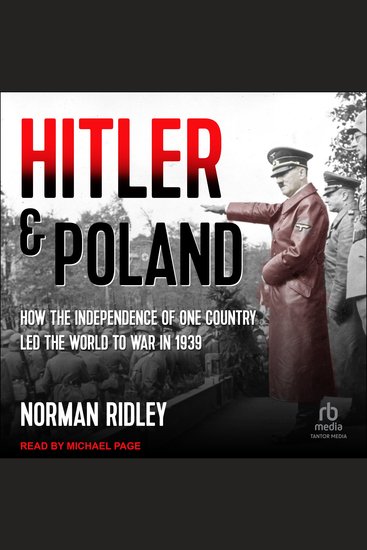
    Following the end of the First World War, Poland was wedged uncomfortably between the two dominant nations of Germany and the Soviet Union. Poland was obliged to plot and negotiate to try and prevent them from realizing their ambitions to eviscerate the country. 


    As well as bitter ethnic battles between Germany and Poland for the political control of Upper Silesia, there were also the burning ambitions of Weimar Germany, and later Nazi Germany, to reclaim lands incorporated into the new state of Poland at Versailles. 


    Despite America's initial support, the US thereafter showed little interest in Poland's predicament. While France was a traditional friend to the Polish peoples, its political influence over eastern European affairs weakened. 


    The emergence of Hitler and the Nazis in Germany did little to bring the countries together. This drove them further apart as the Führer ramped up his rhetorical assault on the perceived injustices of Versailles. 


    London and Paris found themselves in the disagreeable position of seeing no option but to throw their whole weight behind the integrity of the Polish state if they were ever going to make any sort of stand against Nazi aggression.
    Ver libro