Junte-se a nós em uma viagem ao mundo dos livros!
Adicionar este livro à prateleira
Grey
Deixe um novo comentário Default profile 50px
Grey
Assine para ler o livro completo ou leia as primeiras páginas de graça!
All characters reduced
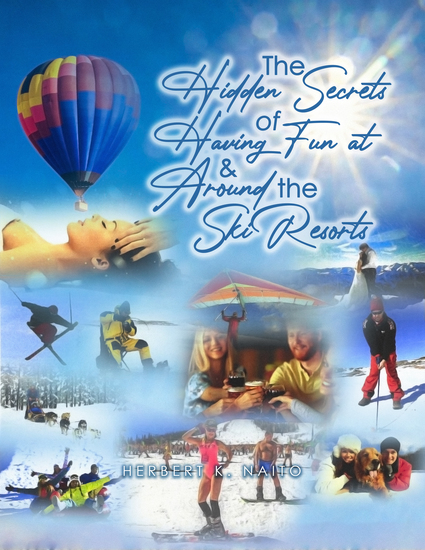
The Hidden Secrets and Treasures of Having Fun on and Around the Ski Resorts - cover
LER

The Hidden Secrets and Treasures of Having Fun on and Around the Ski Resorts

Herbert K. Naito

Editora: Proisle Publishing Services

  • 0
  • 0
  • 0

Sinopse

He spent 40 years in the medical profession. For fun, he coached skiing for over 20 years. He is a member of the Professional Ski Instructors of America, and is certified in Alpine Skiing, Level 2; Adaptive Specialist, Level 1; Children's Specialist, Level 2; Children's Trainer; and Senior Specialist, Level 2. Currently he is employed by Vail Resorts and is presently on the Vail Educational Staff. He was the former Director of the Children's Advanced Training Specialist, and the Express Pre-School Ski School Programs.
Disponível desde: 21/09/2022.
Comprimento de impressão: 46 páginas.

Outros livros que poderiam interessá-lo

  • Great Empires - History of the Mongols and the Huns - cover

    Great Empires - History of the...

    Kelly Mass

    • 0
    • 0
    • 0
    This book contains several titles, which are the following: 
    Genghis Khan - Genghis Khan was the Mongol emperor who has expanded his region to the biggest empire on the face of the earth ever. His empire stretched from East Asia all the way to various European countries, the Middle East, and beyond. 
    What made Genghis Khan so successful? 
    Was he a brute, rapist, and pillaging dictator, or did he have a tolerant side as well? 
    You will learn more about his early life, his relationships, marriage, families and children, his attacks, his unification of the Mongolian Federations, his death, succession, and the continuing of the Mongolian Empire after his death. 
    Mongolian Empire - The Mongolian Empire was not to be trifled with! Genghis Khan and his followers conquered a vast part of Asia, Europe, and beyond. There aren’t many people who haven’t heard of these conquerors and their achievement. Honor them or despise them, but at least acknowledge their existence. 
    How did the Mongol Empire grow so big? 
    What was it like before the expansion? 
    These questions and many others will be answered in this historical guide. Their dominance, their attitude, and their culture will be explained, as well as their practices of war and various other parts of their society. 
    Attila the Hun - You may have heard about him: Attila the Hun. Let's discover who this individual actually was and why he has such a bad track record of being a callous, aggressive conqueror in the first millennium after Christ. Attila the Hun was the ruler of the Huns from the year 434 till his death in the month of March in the year 453. Also, he was the leader of a tribal realm which consisted mainly of Huns, Ostrogoths, Alans and Bulgars, to name a few, in Central Europe and in Eastern Europe.
    Ver livro
  • Great Expectations - cover

    Great Expectations

    Charles Dickens

    • 0
    • 0
    • 0
    In this unflaggingly suspenseful story of aspirations and moral redemption, humble, orphaned Pip, a ward of his short-tempered older sister and her husband, Joe, is apprenticed to the dirty work of the forge but dares to dream of becoming a gentleman. And, indeed, it seems as though that dream is destined to come to pass — because one day, under sudden and enigmatic circumstances, he finds himself in possession of "great expectations." In telling Pip's story, Dickens traces a boy's path from a hardscrabble rural life to the teeming streets of 19th-century London, unfolding a gripping tale of crime and guilt, revenge and reward, and love and loss. Its compelling characters include Magwitch, the fearful and fearsome convict; Estella, whose beauty is excelled only by her haughtiness; and the embittered Miss Havisham, an eccentric jilted bride. 
    Great Expectations, written in Dickens' final decade of life, received widespread acclaim and worldwide admiration. It was his final great novel, and many critics consider it to be his best. Readers and critics alike commended it for its excellent plot, which rises above the melodrama of some of his earlier works, as well as its three-dimensional, psychologically realistic characters, which are far deeper and more engaging than the one-note caricatures of earlier novels. "In none of his other works," noted the reviewer in the 1861 Atlantic, "does he evince a shrewder insight into real life, and a cheaper perception and knowledge of what is called the world." 
     Swinburne thought the novel was the best in all of English fiction, with flaws "as nearly imperceptible as spots on the sun or shadows on a sunlit sea." Shaw considered it Dickens' "most completely perfect book." This low-cost edition encourages current readers to experience Dickens' timeless masterwork, which is brimming with colorful characters, unexpected narrative twists, and Dickens' vivid depiction of mid-Victorian England.
    Ver livro
  • Mansa Musa and The Empire of Mali - A True Story of Gold and Greatness from Africa - cover

    Mansa Musa and The Empire of...

    P. James Oliver

    • 0
    • 0
    • 0
    Oliver's well-researched biography of Mansa Musa echoes the style of an exotic tale of gold, glory, and adventure. During his long reign as Mali's emperor, Mansa Musa led his empire into its Golden Age; presided over a spectacular, 60,000 person, 9,000 mile pilgrimage; founded a university in Timbuktu; and helped revolutionize architecture across the Sudan.Many of the African ancestors of today's African-Americans came from West Africa. From 700 -- 1600 A. D., one after the other, three great, black, commercial empires dominated West Africa. They were powerful, prosperous, complex, stable -- and large. At its height, the Empire of Mali was the size of all of Western Europe.Well-crafted and fast paced, Oliver's book did not only clearly portray Mansa Musa's triumphs and dilemmas, but also the lives of the people of medieval Mali.
    Ver livro
  • Ancient Origins of the Egyptian Empire - How the Greatest Monuments on Earth were Built under Mysterious Circumstances - cover

    Ancient Origins of the Egyptian...

    EZRA IVANOV

    • 0
    • 0
    • 0
    It is nearly impossible to imagine Giza any different today with its desert backdrop and its majestic, sentinel-like pyramids that can't help but exude a sense of permanence. 
    Edfu's account, compiled from a series of now lost books attributed to the moon-god Thoth, allows us to reconstruct how the Giza plateau may have looked over 11,000 years ago. 
    Giza was built around a shallow lake, fed directly from the Nile if the texts were believed. This ecosystem is similar to what one might see today in equatorial Africa. If we find a time machine and travel back to this distant era, we would find a hot, humid atmosphere alive with lush green vegetation. 
    This hypothesis is not mere speculation, for it is known that the river used to flow closer to the plateau's edge in the past. In addition, evidence of a lake and dock dating back to Old Kingdom times has also been found beyond the plateau's western limits. 
    In the eyes of the Shining Ones, this would represent the primordial sea of chaos from which the first land appeared at the beginning of Time.
    Ver livro
  • History of France - Significant Events and Prominent Individuals in France’s History (4 in 1) - cover

    History of France - Significant...

    Kelly Mass

    • 0
    • 0
    • 0
    This book consists of four titles, which are: 
    Franco-Prussian War - The Franco-Prussian War, also known as the Franco-German War or, in France, the War of 1870, was a pivotal conflict between the Second French Empire and the North German Confederation, which was led by the Kingdom of Prussia. This war lasted from 19 July 1870 to 28 January 1871, and its consequences would shape European geopolitics for decades. The primary cause of the war stemmed from France's desire to reaffirm its dominance in continental Europe, which had been seriously challenged after Prussia's decisive victory over Austria in the Austro-Prussian War of 1866. This defeat shifted the balance of power in Europe, making France anxious about its standing. 
    Jean-Jacques Rousseau - Jean-Jacques Rousseau, born in 1712 in Geneva, Switzerland, was a philosopher, author, and composer whose work had a profound impact on the intellectual and political landscape of the 18th century. He is best known for his political philosophy, which laid the groundwork for many of the principles that influenced the Enlightenment and later shaped the French Revolution.  
    The Basques - The Basques are an ethnic group indigenous to Southwestern Europe, distinguished by their unique genetic heritage, ancient language (Euskara), and distinct cultural practices. Their homeland, known as the Basque Country (Euskal Herria), spans both sides of the Pyrenees, covering areas in north-central Spain and southwestern France, and lies along the Bay of Biscay. 
    The Seven Years' War - The Seven Years' War (1756–1763) marked a global struggle for supremacy between two major powers of the time: Great Britain and France. This conflict unfolded across continents and influenced various colonial and European theaters, laying the groundwork for modern geopolitics.
    Ver livro
  • World’s Deadliest Destinations - A Guide to the Most Dangerous Places on Earth - cover

    World’s Deadliest Destinations -...

    John Harpoon

    • 0
    • 0
    • 0
    The world is full of places that, for various reasons, have earned a reputation as deadly destinations. From war zones to natural disasters, some locations are marked by extreme danger, making them almost inhospitable for those who venture too close. This chapter aims to explore the factors that contribute to these perilous places, offering a broader understanding of what makes a destination deadly. 
      
    At the core of every dangerous place is a unique combination of environmental, political, and social factors that amplify the risks for those who live or travel there. Conflict zones, for instance, are often marked by violence, political instability, and lawlessness, creating environments where human life is under constant threat. In these regions, wars, civil unrest, and insurgent groups create an atmosphere of chaos where survival can be a daily struggle. 
      
    Natural disasters also play a significant role in shaping the deadliest destinations. Earthquakes, tsunamis, and volcanic eruptions are just a few of the catastrophic events that turn once-thriving areas into desolate wastelands. These natural phenomena strike without warning, leaving little time for escape and often causing widespread devastation. 
      
    But the threats are not always as immediate or obvious as bombs or floods. Some of the deadliest destinations are places where hidden dangers lurk beneath the surface. Toxic landscapes, such as the irradiated zones of Chernobyl, remain dangerous long after the initial disaster has passed. Similarly, remote wilderness areas, such as the jungles of the Amazon or the frozen tundra of Antarctica, may seem tranquil on the surface, but they can be life-threatening to those who are ill-prepared for the extreme conditions. 
     
    Ver livro