¡Acompáñanos a viajar por el mundo de los libros!
Añadir este libro a la estantería
Grey
Escribe un nuevo comentario Default profile 50px
Grey
Suscríbete para leer el libro completo o lee las primeras páginas gratis.
All characters reduced
Fire in the Steppe - cover

Fire in the Steppe

Henryk Sienkiewicz

Editorial: Classica Libris

  • 0
  • 0
  • 0

Sinopsis

Close on the heels of the magnificent With Fire and Sword and The Deluge, comes this impassioned tale of love, war, heroism, treason and betrayal, with which the great classic Trilogy of Poland’s most popular 19th century writer is brought to an end. Fire in the Steppe is the final book of Sienkiewicz’s literary masterpiece which grips and enthralls just as powerfully today as it did when it was first published in Polish in 1883-1889. It is an epic tale of love and adventure set in the savage wilderness of Poland’s eastern borderlands in the 17th century, and it is also the most realistic of Sienkiewicz’s novels. The Trilogy’s most memorable heroes, Pan Zagloba and Pan Volodyovski, are joined here by the unforgettable Basia, whose own adventures ring with strength, courage and determination against the bloody background of raids, border battles, and invasion by the awesome armies of the Turkish Empire in 1672. Told by a master storyteller who won the Nobel Prize for Literature in 1905, Fire in the Steppe concludes the stories of the Trilogy’s fabulous heroines and heroes who live, love and die in these pages of Poland’s most enduring epic. As in the first two books, it is a masterful blend of history and imagination in which the East and the West of their era confront each other in an all-out battle, and a handful of devoted men and women makes a heroic stand. Foremost among them is Pan Volodyovski, the Little Knight of The Deluge and With Fire and Sword, and the brave, loving Basia, who rides to war beside him and overcomes terrifying dangers of her own. The inimitable Pan Zagloba, one of literature’s most successfully drawn comic anti-heroes, lives, drinks, orates, and flourishes beside them along with a new cast of hard-riding border knights, ruthless villains, and devoted soldiers.
Disponible desde: 18/01/2019.


Otros libros que te pueden interesar

  • Let Us Begin - A tale of family ambition and finding one's true home - cover

    Let Us Begin - A tale of family...

    Julia Amante

    • 0
    • 0
    • 0
    Salvador arrives in the United States from Argentina with one big, unfocused goal: to become successful at something. He knows that America is the land of opportunity, and if he works hard, he will triumph. 
    Together with his childhood sweetheart, he settles in the Big Apple, where dreams come true. 
    But this ambitious young immigrant soon learns that it takes more than hard work and charisma to succeed and is changed by the harsh realities of living in New York. 
    Everyone has advice for Salvador as he moves from one dead-end job to another, attempting to reinvent himself. But the best advice comes from the loving letters he gets from his father. They keep him grounded and remind him of the man he wants to be until he loses this moral compass the day his father succumbs to diabetes. 
    As the 1960s roll into the 1970s and America and Salvador become less innocent, he finds himself in California, where he starts his own business, and it finally looks like the American Dream is within his grasp. 
    But things get complicated when Argentina is involved in a war in the early 1980s, and Salvador must decide where his allegiances lie. One wrong decision and bold act can bring his dreams crumbling down, and Salvador soon realizes that there are consequences for being impulsive and disloyal. 
    In the end, Salvador learns that there are boundaries men should not cross and that the love of family is the only worthwhile dream Americans should pursue. 
    Spanning decades, Let Us Begin is a moving story filled with joy and despair about a family searching for a home and a place to belong.
    Ver libro
  • Blind Love - cover

    Blind Love

    Walter Besant

    • 0
    • 0
    • 0
    Blind Love, also published under the titles Iris and The Lord Harry is Wilkie Collins' last novel, completed after his death by Walter Besant. The blind love in the title refers to the love of Iris, a woman of virtue, for the morally corrupt Henry Norland. She loves him despite all his faults, but she also does not realize the full extent of them. As in many of Wilkie Collins' novels, this book also tackles difficult social problems. In this case, the Irish Question and women's rights bring another layer to the narrative. - Summary by Carolin.
    Ver libro
  • The Belles of Waterloo - cover

    The Belles of Waterloo

    Alice Church

    • 0
    • 0
    • 0
    A romance inspired by real events... Maria, Georgy and Harriet navigate their first throes of passion, scandal, and love in the heady pre-war atmosphere of Brussels in 1815. Little do they know they will soon be waltzing their way to the battle of the century at a small village called Waterloo. As the fight for Europe rages outside the city walls, Maria seeks to find herself – will she also find a husband along the way?
    Ver libro
  • The Master of Blacktower - cover

    The Master of Blacktower

    Barbara Michaels

    • 0
    • 1
    • 0
    “[An] engrossing blend of romance and gothic mystery. The suspense is well done in a fine story line with plenty of unpredictable twists and turns.” —Midwest Book Review 
     
    Damaris Gordon shuddered at the thought of working for the cruel and bitter Master of Blacktower—but her father’s death left her no choice. Suddenly her fate—her life itself—was in the black silk-gloved hands of Gavin Hamilton, a man scarred and tortured by an unspoken past, whose mocking laughter echoes through his ancient Scottish estate. Damaris has heard the whispers that accuse Gavin Hamilton of his wife’s death and his young daughter’s crippling injury. But the pain and sadness barely hidden behind his blazing dark stare touch Damaris deeply—and a courageous heart is luring her to the estate’s topmost tower in search of his dangerous secrets. 
     
    Praise for New York Times–bestselling author Barbara Michaels 
     
    “Barbara Michaels is a consummate storyteller.” —Mary Higgins Clark, #1 New York Times–bestselling author 
     
    “This author never fails to entertain.” —Cleveland Plain Dealer 
     
    “No one can match Barbara Michaels.” —Phyllis A. Whitney, New York Times–bestselling author
    Ver libro
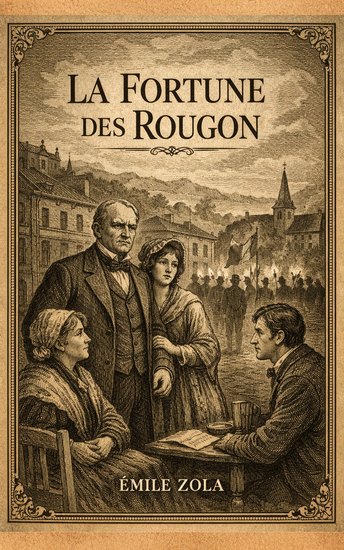
  • La Fortune des Rougon - cover

    La Fortune des Rougon

    Émile Zola

    • 0
    • 0
    • 0
    A powerful and unflinching portrait of ambition, power, and political upheaval, La Fortune des Rougon marks the compelling beginning of Émile Zola's monumental Rougon-Macquart series. Set against the turbulent backdrop of the 1851 coup d'état that brought Napoleon III to power, this masterful novel lays the foundation for one of literature's most ambitious explorations of family, society, and human nature.
    
    In the provincial town of Plassans in southern France, two branches of the same family rise from humble origins—one driven by ruthless ambition, the other marked by instability and misfortune. At the center of the story are Pierre Rougon and his calculating wife, Félicité, whose hunger for wealth and social advancement knows no bounds. Determined to secure their place among the town's elite, they seize the political chaos of the moment as an opportunity to elevate their status and fortune.
    
    In stark contrast stand the Macquarts, the illegitimate and disadvantaged side of the family, whose lives are shaped by poverty, passion, and rebellion. Through these opposing destinies, Zola introduces his groundbreaking vision of heredity and environment—how family traits, social conditions, and historical forces intertwine to shape individual lives.
    
    As political tensions rise and revolution brews in the countryside, Plassans becomes a microcosm of a nation in conflict. The Rougons maneuver carefully, aligning themselves with the forces of power, while others risk everything for ideals of justice and freedom. Love, betrayal, greed, and sacrifice unfold against a vivid historical landscape, revealing the moral compromises and personal costs of ambition.
    
    With rich detail and psychological depth, Zola crafts a sweeping narrative that examines the corrupting influence of power and the relentless drive for social mobility. La Fortune des Rougon is not merely a family saga—it is a bold social study, exposing the mechanisms of political opportunism and the stark realities of class struggle in 19th-century France.
    
    As the first novel in the Rougon-Macquart cycle, this work sets the stage for an epic exploration of a family under the Second Empire, tracing generations shaped by desire, inheritance, and destiny. Both intimate and expansive, it remains a cornerstone of naturalist literature and a gripping introduction to Zola's visionary literary project.
    Ver libro
  • The Pharaoh and the Priest - cover

    The Pharaoh and the Priest

    Boleslaw Prus

    • 0
    • 0
    • 0
    The Pharaoh and the Priest (Polish: Faraon) is the fourth and last major novel by the Polish writer Boleslaw Prus. It was the sole historical novel by an author who had earlier disapproved of historical novels on the ground that they inevitably distort history. Pharaoh has been described by Czeslaw Milosz as a "novel on mechanisms of state power and, as such, probably unique in world literature of the nineteenth century.... Prus, in selecting the reign of 'Pharaoh Ramses XIII' in the eleventh century BCE, sought a perspective that was detached from pressures of topicality and censorship. Pharaoh is set in the Egypt of 1087–85 BCE as that country experiences internal stresses and external threats that will culminate in the fall of its Twentieth Dynasty and New Kingdom. The young protagonist Ramses learns that those who would challenge the powers that be are vulnerable to co-option, seduction, subornation, defamation, intimidation and assassination. Perhaps the chief lesson, belatedly absorbed by Ramses as pharaoh, is the importance, to power, of knowledge. Prus' vision of the fall of an ancient civilization derives some of its power from the author's intimate awareness of the final demise of the Polish-Lithuanian Commonwealth in 1795, a century before the completion of the novel. (Summary by Wikipedia)
    Ver libro