¡Acompáñanos a viajar por el mundo de los libros!
Añadir este libro a la estantería
Grey
Escribe un nuevo comentario Default profile 50px
Grey
Suscríbete para leer el libro completo o lee las primeras páginas gratis.
All characters reduced
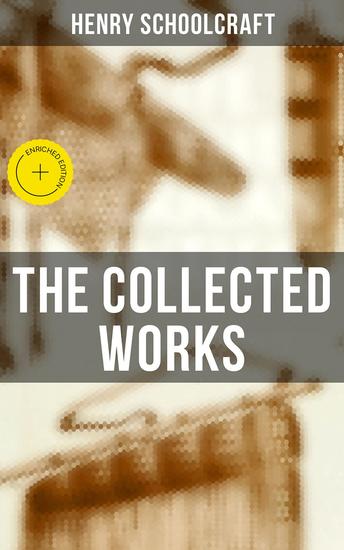
The Collected Works - Enriched edition A Life on the American Frontiers: Collected Works of Henry Schoolcraft - cover

The Collected Works - Enriched edition A Life on the American Frontiers: Collected Works of Henry Schoolcraft

Henry Schoolcraft

Editorial: Musaicum Books

  • 0
  • 0
  • 0

Sinopsis

In his seminal work 'The Collected Works', Henry Schoolcraft delves into the captivating world of Native American folklore and myths, providing readers with a comprehensive collection of tales that blend history, cultural insights, and imaginative storytelling. Schoolcraft's literary style is fluid and descriptive, allowing readers to immerse themselves in the rich tapestry of Native American traditions. This collection not only serves as a treasure trove of stories but also sheds light on the literary significance of Indigenous cultures in American literature. Schoolcraft's meticulous research and respect for Native American heritage make this book an essential read for those interested in folklore studies and cultural anthropology. As a pioneer in collecting and preserving Native American stories, Schoolcraft's 'The Collected Works' stands as a seminal contribution to American literature and indigenous studies, showcasing the enduring importance of these narratives in contemporary society. Readers seeking a deeper understanding of Native American cultures and their impact on literature will find this collection a captivating and enlightening read.

In this enriched edition, we have carefully created added value for your reading experience:
- A comprehensive Introduction outlines these selected works' unifying features, themes, or stylistic evolutions.
- A Historical Context section situates the works in their broader era—social currents, cultural trends, and key events that underpin their creation.
- A concise Synopsis (Selection) offers an accessible overview of the included texts, helping readers navigate plotlines and main ideas without revealing critical twists.
- A unified Analysis examines recurring motifs and stylistic hallmarks across the collection, tying the stories together while spotlighting the different work's strengths.
- Reflection questions inspire deeper contemplation of the author's overarching message, inviting readers to draw connections among different texts and relate them to modern contexts.
- Lastly, our hand‐picked Memorable Quotes distill pivotal lines and turning points, serving as touchstones for the collection's central themes.
Disponible desde: 04/01/2022.
Longitud de impresión: 2336 páginas.

Otros libros que te pueden interesar

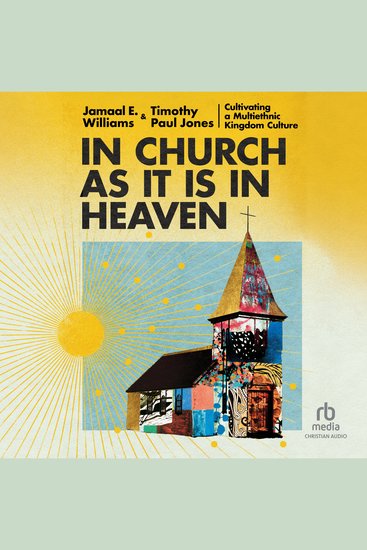
  • In Church as It Is In Heaven - Cultivating a Multiethnic Kingdom Culture - cover

    In Church as It Is In Heaven -...

    Timothy Paul Jones, Jamaal E....

    • 0
    • 0
    • 0
    Heaven is multiethnic. Are you ready for that? 


    The Bible tells us that the congregation gathered around God's heavenly throne will be "a vast multitude from every nation, tribe, people, and language," all singing the praises of the Lamb. God's intention has always been to delight for all eternity in a redeemed community of ethnic diversity. 


    But this diverse community shouldn't have to wait until eternity to begin! It can be a reality in our own local churches here and now. Patterned after a worship service, In Church as It Is in Heaven gives biblical warrant for such a community and shows how multiethnic churches provide a unique apologetic for the gospel. Along the way, the authors tell the story of their own church—a majority-white congregation which is being transformed into a family that reflects the diversity of heaven. 


    The multiethnic kingdom is not just a nice idea, or an abstract theory. It's a reality—one we can enter into today.
    Ver libro
  • Islamic Invasions of Europe The: The History of the Ottoman and Moorish Campaigns across the Continent - cover

    Islamic Invasions of Europe The:...

    Charles River Editors

    • 0
    • 0
    • 0
    The history of the Spanish Peninsula is closely bound to that of the Moors. The term “Spain” was not in wide use until the region was united by the monarchs of Aragon and Castile, and the Moors called the lands they ruled in the Iberian Peninsula Al-Andalus, traditionally thought to be an Arabic transliteration of Vandal, the Germanic tribe which briefly ruled the region in the early fifth century. The English name Andalusia derives from the Spanish Andalucia, which is still used by Spain to name its southern region. 
    	Not surprisingly, three religions attempting to coexist during medieval times resulted in nearly incessant conflicts, marked by high taxation, disparate societies, rigid cultural controls, and systemic violence. Despite the odds, these three religions managed to live in a state of quasi-acceptance and peace in most of the major cities in the Iberian Peninsula like Cordoba and Tolaydough, with sporadic warfare occurring on the borders between Al-Andalus and the Christian kingdoms near the Pyrenees Mountains. Muslims, Christians, and Jews would attempt to reorganize their societies several times over the centuries through warfare, always with Jews on the lower rungs and Christians and Muslims fighting it out above them.  
    	The end of the Byzantine Empire had a profound effect not only on the Middle East but Europe as well. Constantinople had played a crucial part in the Crusades, and the fall of the Byzantines meant that the Ottomans now shared a border with Europe. The Islamic empire was viewed as a threat by the predominantly Christian continent to their west, and it took little time for different European nations to start clashing with the powerful Turks. In fact, the Ottomans would clash with Russians, Austrians, Venetians, Polish, and more before collapsing as a result of World War I, when they were part of the Central Powers. 
    Ver libro
  • Vedic cosmology - Secrets Of The Universe - cover

    Vedic cosmology - Secrets Of The...

    Prana Govinda Das

    • 0
    • 0
    • 0
    Noted internationally known Self-help advocate and teacher of devotional yoga Prana Govinda Das was born in Liverpool, England in 1968 admittedly a pretty good year for all things bright and beautiful. He says, "From as early as I can remember I had an unquenchable thirst for knowledge, and a desire to understand the true nature of man and this world we live in. I was also always seeking out people who could answer all the questions I had about life, the universe and everything." After studying film production in the early nineties Prana was able to fulfill his lifelong desire to travel to India. admittedly his first trip changed his life completely and forever. "At that point," He recalls, "my thirst for material knowledge turned to desire to understand the spiritual side of life. For the next six years I returned frequently to, where I studied many different paths of Hinduism, Buddhism and other forms of yoga and meditation. However, even after learning and experiencing so much I was still left incomplete." in 2001 during the young man's sixth trip to India, he travelled to Vrindavan, a holy town associated with Lord Krishna south of Delhi. It was there he met his spiritual guide, and mentor Srila Bhaktivedanta Naryana Goswami. Some twenty years on, Prana has been resident in his teacher's temples all over the world, particularly India, Australia, America, and Europe. Welcome then to the inspirational, engrossing, all-inclusive teachings of Prana Govinda Das.
    Ver libro
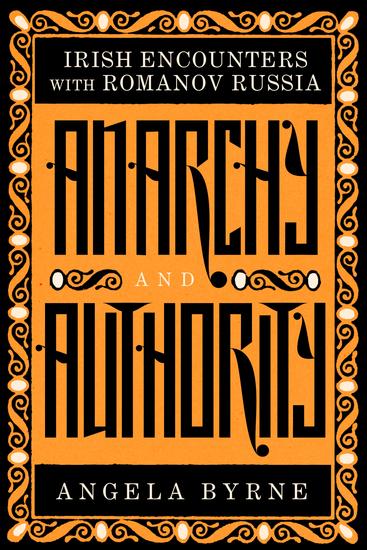
  • Anarchy and Authority - Irish Encounters with Romanov Russia - cover

    Anarchy and Authority - Irish...

    Angela Byrne

    • 0
    • 0
    • 0
    From the ascent of Peter the Great to the Russian Revolution. From the Battle of the Boyne to the Easter Rising. Between these epochal events were two astounding centuries of war, diplomacy, intrigue, innovation and international radical political movements, the reverberations of which are still felt in both Ireland and the former territories of the Russian empire today.
    In Anarchy and Authority, readers follow contemporaneous accounts of Irish men and women who ventured into the Russian empire during the long centuries of Romanov rule. Human connections, political intrigues, cultural cross-pollination mesh with sweeping historical narratives in the story of the island and the empire.
    Meticulously researched and energetically told, these are the stories of Irish residents, travellers and migrants to Russia from that time, ranging from diplomats and governesses, to early tourists, travel writers, soldiers, servants and even a revolutionary music-teacher. From the Irishmen and women who benefitted from the imperial wars waged by the Russian state, to those Irish observers who bore witness to the horrors of serfdom and the oppression of dissenting voices.
    Anarchy and Authority brings to vivid life these Irish perspectives. Their fascinating insights and unique depths of field give increasing relevance to the turbulent geo-politics of modern times.
    Ver libro
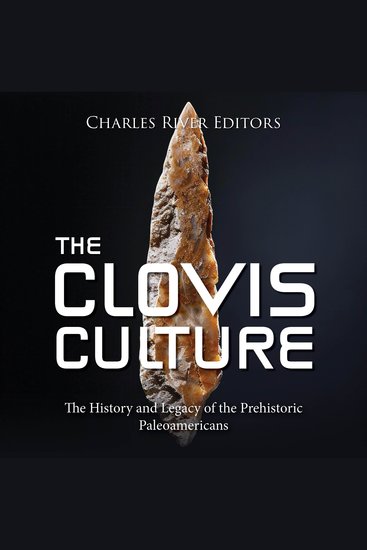
  • Clovis Culture The: The History and Legacy of the Prehistoric Paleoamericans - cover

    Clovis Culture The: The History...

    Editors Charles River

    • 0
    • 0
    • 0
    In popular media and culture, the Paleolithic era is often depicted as a time when humans were completely savage, spoke with little more than grunts, hit women over their heads with clubs and kidnapped them, and of course, everyone lived in caves. The reality is that the Paleolithic era was a time of great change when humans coalesced into groups and developed different technologies that helped them survive and ultimately thrive in harsh environments. Among the most important technologies developed by Paleolithic humans were those helping them hunt because, after all, the Paleolithic era was when humans lived as hunters and gatherers, so human survival and advancement were contingent upon developing better tools and weapons.  
    Any examination of the Clovis culture begins with what is known. Archaeologists know the approximate chronological and geographic range of the Clovis culture, and they can identify what made the Clovis people unique. These were the projectile points the Clovis people made, setting them apart from most people that came before and after them, and it was those same tools that made them a successful people for such an extended period in the harsh climate of the Upper Paleolithic era (50,000 to 12,000 years ago). Scholars have also determined that the Clovis people were big game hunters, chasing and killing mammoths and other now-extinct animals across North America. The picture that has emerged of the Clovis people is one of an industrious, resourceful, and prolific people who became masters of the environment and North America for approximately 2,000 years. That being said, there is also much that is not known about the Clovis culture. For example, the Clovis people’s religious ideas, particularly about their views on an afterlife, remain a mystery. The lack of art at Clovis sites has also raised more questions, including if it was the result of a dearth of materials or societal norms and taboos.
    Ver libro
  • Secret Agenda - Watergate Deep Throat and the CIA - cover

    Secret Agenda - Watergate Deep...

    Jim Hougan

    • 0
    • 0
    • 0
    The exposé that reveals “a prostitution ring, heavy CIA involvement, spying on the White House as well as on the Democrats, and plots within plots” (The Washington Post) Ten years after the infamous Watergate scandal that brought down the Nixon presidency, Jim Hougan—then the Washington editor of Harper’s Magazine—set out to write a profile of Lou Russell, a boozy private-eye who plied his trade in the vice-driven underbelly of the nation’s capital. Hougan soon discovered that Russell was “the sixth man, the one who got away” when his boss, veteran CIA officer Jim McCord, led a break-in team into a trap at the Watergate. Using the Freedom of Information Act to win the release of the FBI’s Watergate investigation—some thirty-thousand pages of documents that neither the Washington Post nor the Senate had seen—Hougan refuted the orthodox narrative of the affair. Armed with evidence hidden from the public for more than a decade, Hougan proves that McCord deliberately sabotaged the June 17, 1972, burglary. None of the Democrats’ phones had been bugged, and the spy-team’s ostensible leader, Gordon Liddy, was himself a pawn—at once, guilty and oblivious. The power struggle that unfolded saw E. Howard Hunt and Jim McCord using the White House as a cover for an illicit domestic intelligence operation involving call-girls at the nearby Columbia Plaza Apartments. A New York Times Notable Book, Secret Agenda “present[s] some valuable new evidence and explored many murky corners of our recent past . . . The questions [Hougan] has posed here—and some he hasn’t—certainly deserve an answer” (The New York Times Book Review). Kirkus Reviews declared the book “a fascinating series of puzzles—with all the detective work laid out.”
    Ver libro