¡Acompáñanos a viajar por el mundo de los libros!
Añadir este libro a la estantería
Grey
Escribe un nuevo comentario Default profile 50px
Grey
Suscríbete para leer el libro completo o lee las primeras páginas gratis.
All characters reduced
The Ambassadors - cover

The Ambassadors

Henry James

Editorial: Passerino

  • 0
  • 0
  • 0

Sinopsis

The Ambassadors is a 1903 novel by Henry James, originally published as a serial in the North American Review (NAR). The novel is a dark comedy which follows the trip of protagonist Lewis Lambert Strether to Europe to bring the son of his widowed fiancée back to the family business. The novel is written in the third-person narrative from Strether's point of view.

Henry James  (15 April 1843 – 28 February 1916) was an American-British author. He is regarded as a key transitional figure between literary realism and literary modernism, and is considered by many to be among the greatest novelists in the English language. He was the son of Henry James Sr. and the brother of philosopher and psychologist William James and diarist Alice James.
Disponible desde: 23/04/2024.

Otros libros que te pueden interesar

  • The Story Of Gulliver's Travels - cover

    The Story Of Gulliver's Travels

    Jonathan Swift

    • 0
    • 0
    • 0
    Gulliver's Travels (1726, amended 1735), officially Travels into Several Remote Nations of the World, is a novel by Jonathan Swift that is both a satire on human nature and a parody of the "travelers' tales" literary sub-genre. It is widely considered Swift's magnum opus and is his most celebrated work, as well as one of the indisputable classics of English literature.  
     
    Jonathan Swift was an Anglo-Irish satirist, author, essayist, political pamphleteer, poet, and Anglican cleric who became Dean of St Patrick's Cathedral, Dublin, hence his common sobriquet, "Dean Swift".
    Ver libro
  • Gulliver’s Travels (Legend Classics) - cover

    Gulliver’s Travels (Legend...

    Jonathan Swift

    • 0
    • 0
    • 0
    “Every man desires to live long, but no man wishes to be old.” 
    As a survivor of a shipwreck, Lemuel Gulliver encounters some entirely absurd things – at first, he is in the land of Lilliputians, the tiny men; but later he ventures to the land of the giants. The tale continues to oscillate between the extremes as he meets immensely wise and scientifically aware people before being faced with excessive self-preoccupation and ignorance. Whatever that societal order, Gulliver consistently is a witness to the abuse of power. The satire often overemphasises the contraries in order to accentuate our individual and societal flaws and proneness to being corrupt and biased. In such a distinct way it rebukes human narrow-mindedness and accentuates our subjectivity. 
    The novel’s multivalence has made it a celebrated children’s bedtime read – in particular, the first book – as well as a treasury of satirical metaphors and allusions that expose human and societal flaws in general and those of the English nobility in particular. The novel is an answer to Robinson Crusoe – it mocks Defoe’s protagonist’s too-good-to-be-true human aptness and reason. While some might find Swift’s modus operandi misanthropic, others will see him as a pragmatist who exemplifies how the excesses and polarities are detrimental and yet inescapable. Silly and bizarre, thought-provoking and alarming, this work is meant to be read and re-read as equally a jolly story and a philosophical or political collage of insights. 
    The Legend Classics series:Around the World in Eighty DaysThe Adventures of Huckleberry FinnThe Importance of Being EarnestAlice's Adventures in WonderlandThe MetamorphosisThe Railway ChildrenThe Hound of the BaskervillesFrankensteinWuthering HeightsThree Men in a BoatThe Time MachineLittle WomenAnne of Green GablesThe Jungle BookThe Yellow Wallpaper and Other StoriesDraculaA Study in ScarletLeaves of GrassThe Secret GardenThe War of the WorldsA Christmas CarolStrange Case of Dr Jekyll and Mr HydeHeart of DarknessThe Scarlet LetterThis Side of ParadiseOliver TwistThe Picture of Dorian GrayTreasure IslandThe Turn of the ScrewThe Adventures of Tom SawyerEmmaThe TrialA Selection of Short Stories by Edgar Allan PoeGrimm Fairy TalesThe AwakeningMrs DallowayGulliver’s TravelsThe Castle of OtrantoSilas MarnerHard Times
    Ver libro
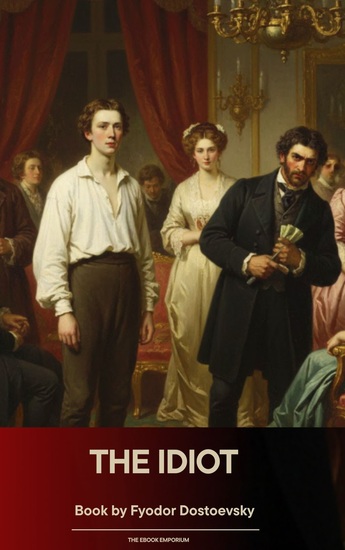
  • The Idiot - cover

    The Idiot

    Fyodor Dostoevsky

    • 0
    • 0
    • 0
    "Beauty will save the world."
    
    Prince Lev Nikolayevich Myshkin, a man of such pure honesty and childlike simplicity that he is mockingly dubbed "The Idiot," returns to the shark-infested waters of St. Petersburg society after years in a Swiss sanatorium. Seeking only to find the good in others, he is quickly ensnared in a volatile love triangle between the beautiful, traumatized "fallen woman" Nastasya Filippovna and the dark, obsessive merchant Rogozhin. As the Prince's saintly influence clashes with the vanity and greed of the Russian elite, Dostoevsky poses a devastating question: Can a truly good man survive in a world that is anything but?
    
    The Christ-Like Protagonist: Dostoevsky's goal was to depict a "perfectly beautiful" soul. Myshkin is a radical departure from the traditional literary hero; he is compassionate to a fault, lacks any ego, and suffers from epilepsy—a condition Dostoevsky shared and described with visceral, transcendent detail. The Prince is a mirror in which every other character sees their own failings and hidden virtues.
    
    A Tragedy of Modernity: The Idiot is a searing critique of a society obsessed with status, money, and intellectual posturing. Through the eccentric Epanchin family and the nihilistic youth of St. Petersburg, Dostoevsky captures a world on the brink of collapse, where genuine emotion is mistaken for madness and kindness is viewed as a fatal weakness. The novel's shocking conclusion remains one of the most powerful and debated endings in all of world literature.
    
    Experience the radiance and the darkness. Purchase "The Idiot" today and witness Dostoevsky's most heartbreaking achievement.
    Ver libro
  • The Bridge of San Luis Rey - A Novel - cover

    The Bridge of San Luis Rey - A...

    Anónimo

    • 0
    • 0
    • 0
    ""As close to perfect a moral fable as we are ever likely to get in American literature."" —Russell Banks 
    ""There are books that haunt you down the years, books that seem to touch and stir something deep inside you. . . . Wilder's The Bridge of San Luis Rey is of this kind."" —The Independent (London) 
    The authorized, original edition of Thornton Wilder's Pulitzer Prize-winning classic with a foreword by acclaimed author Russell Banks and an afterword by Wilder's nephew, Tappan Wilder, with illuminating documentary material about the novel and its rich literary history 
    ""On Friday noon, July the twentieth, 1714, the finest bridge in all Peru broke and precipitated five travelers into the gulf below."" This immortal sentence opens The Bridge of San Luis Rey, one of the towering achievements in American literature, winner of the Pulitzer Prize, and a novel still read throughout the world. 
    Brother Juniper, a Franciscan monk, witnesses the tragic event. Deeply moved, he embarks on a quest to prove that it was divine intervention, not chance, that led to the deaths of the five people crossing the bridge that day. Ultimately, his search leads to a timeless investigation into the nature of fate and love, and the meaning of the human condition. 
    Copyright (c) 1927 by Albert & Charles Boni, Inc. Copyright renewed (c) 1955 by Thornton Wilder. Copyright 2002 by the Wilder Family L.L.C. Foreword copyright (c) 2003 by Russell Banks. Afterword copyright (c) 2003, 2014 by Tappan Wilder.
    Ver libro
  • The Thousand-and-Second Tale of Scheherazade - cover

    The Thousand-and-Second Tale of...

    Sampi Books, Edgar Allan Poe

    • 0
    • 0
    • 0
    In Edgar Allan Poe's "The Thousand-and-Second Tale of Scheherazade", Scheherazade tells a story to the king that includes scientific and technological wonders, deviating from traditional themes. Her description of inventions and discoveries, although fantastic, is met with incredulity, leading to an unexpected outcome.
    Ver libro
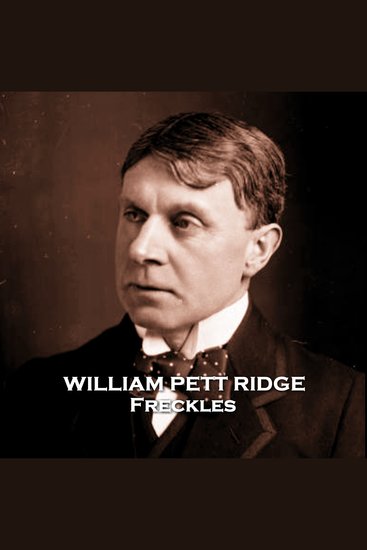
  • Freckles - From their pens to your ears genius in every story - cover

    Freckles - From their pens to...

    William Pett Ridge

    • 0
    • 0
    • 0
    William Pett Ridge was born at Chartham, near Canterbury, Kent, on 22nd April 1859. 
    His family’s resources were certainly limited. His father was a railway porter, and the young Pett Ridge, after schooling in Marden, Kent became a clerk in a railway clearing-house. The hours were long and arduous, but self-improvement was Pett Ridge’s goal.  After working from nine until seven o’clock he would attend evening classes at Birkbeck Literary and Scientific Institute and then to follow his passion; the ambition to write.  He was heavily influenced by Dickens and several critics thought he had the capability to be his successor. 
    From 1891 many of his humourous sketches were published in the St James's Gazette, the Idler, Windsor Magazine and other literary periodicals of the day. 
    Pett Ridge published his first novel in 1895, A Clever Wife. By the advent of his fifth novel, Mord Em'ly, a mere three years later in 1898, his success was obvious.  His writing was written from the perspective of those born with no privilege and relied on his great talent to find humour and sympathy in his portrayal of working class life. 
    Today Pett Ridge and other East End novelists including Arthur Nevinson, Arthur Morrison and Edwin Pugh are being grouped together as the Cockney Novelists.   
    In 1924, Pugh set out his recollections of Pett Ridge from the 1890s: “I see him most clearly, as he was in those days, through a blue haze of tobacco smoke. We used sometimes to travel together from Waterloo to Worcester Park on our way to spend a Saturday afternoon and evening with H. G. Wells. Pett Ridge does not know it, but it was through watching him fill his pipe, as he sat opposite me in a stuffy little railway compartment, that I completed my own education as a smoker... Pett Ridge had a small, dark, rather spiky moustache in those days, and thick, dark, sleek hair which is perhaps not quite so thick or dark, though hardly less sleek nowadays than it was then”. 
    With his success, on the back of his prolific output and commercial success, Pett Ridge gave generously of both time and money to charity. In 1907 he founded the Babies Home at Hoxton.  This was one of several organisations that he supported that had the welfare of children as their mission.  
    His circle considered Pett Ridge to be one of life's natural bachelors. In 1909 they were rather surprised therefore when he married Olga Hentschel.  
    As the 1920’s arrived Pett Ridge added to his popularity with the movies. Four of his books were adapted into films.  
    Pett Ridge now found the peak of his fame had passed. Although he still managed to produce a book a year he was falling out of fashion and favour with the reading public and his popularity declined rapidly.  His canon runs to over sixty novels and short-story collections as well as many pieces for magazines and periodicals. 
    William Pett Ridge died, on 29th September 1930, at his home, Ampthill, Willow Grove, Chislehurst, at the age of 71. 
    He was cremated at West Norwood on 2nd October 1930.
    Ver libro