¡Acompáñanos a viajar por el mundo de los libros!
Añadir este libro a la estantería
Grey
Escribe un nuevo comentario Default profile 50px
Grey
Suscríbete para leer el libro completo o lee las primeras páginas gratis.
All characters reduced
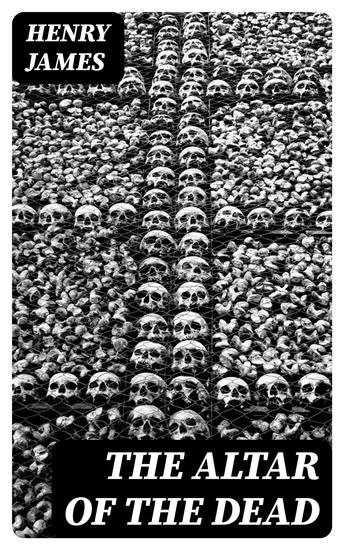
The Altar of the Dead - cover

The Altar of the Dead

Henry James

Editorial: DigiCat

  • 0
  • 0
  • 0

Sinopsis

In "The Altar of the Dead," Henry James intricately weaves a poignant narrative exploring themes of love, loss, and remembrance within the context of a Protestant church in New York City. The novella's literary style is characterized by James's signature psychological depth and subtle characterizations, presenting the internal struggles of the protagonist as he grapples with mourning and faith. Set against the backdrop of the late 19th century, it reflects the period's preoccupation with existential questions, melding realism with a meditative tone that invites readers to reflect on the rituals of memory and the sacredness of loss. Henry James, an eminent figure in American literature and a key precursor to modernist thought, often drew upon his extensive travels and deep engagement with European culture, particularly the complexities of individual psyche. This exploration of spiritual themes can be seen as a response to his own grappling with identity, culture, and the transformative power of love and grief throughout his literary career, which is further marked by a dual American-British perspective. I highly recommend "The Altar of the Dead" to readers interested in nuanced character studies and the interplay of personal and universal grief. This novella not only exemplifies James's mastery of language and psychological insight but also resonates deeply with contemporary questions about the meaning of remembrance and the rituals we create in the wake of loss.
Disponible desde: 15/09/2022.
Longitud de impresión: 35 páginas.
Otros libros que te pueden interesar

  • Toomai of the Elephants - The First Jungle Book - cover

    Toomai of the Elephants - The...

    Rudyard Kipling

    • 0
    • 0
    • 0
    "Toomai of the Elephants" is a short story by Rudyard Kipling about a young elephant-handler. It was first published in the December 1893 issue of St. Nicholas magazine and reprinted in the collection of Kipling short stories, The Jungle Book (1894).
    Toomai's father rides Kala Nag the elephant to catch wild elephants in the hills. Toomai comes to help and risks his life throwing a role up to one of the drivers. His father forbids him to enter the elephant enclosure again. One night he follows the elephant hunters, and is picked up by Kala Nag; he rides into the elephants' meeting place in the jungle, where they dance. On his return he is welcomed by both hunters and elephants.
    Ver libro
  • Father Brown: The Eye of Apollo (Unabridged) - cover

    Father Brown: The Eye of Apollo...

    G. K. Chesterton

    • 0
    • 0
    • 0
    The tenth story in The Innocence of Father Brown is entitled "The Eye of Apollo." At the beginning of this short story, Flambeau has just opened his detective agency in a new building located near Westminster Abbey. The other tenants in the building are a religious charlatan named Kalon, who claims to be "the New Priest of Apollo," and two sisters, who are typists. Flambeau and Father Brown instinctively distrust Kalon, who has installed a huge eye of Apollo outside his office.
    Ver libro
  • The Thirty-Nine Steps - cover

    The Thirty-Nine Steps

    John Buchan

    • 0
    • 0
    • 0
    As war looms in Europe, Richard Hannay returns from Rhodesia to his home in London. His neighbor, an American freelance spy named Franklin Scudder, claims to know of an assassination plot to destabilize Europe. When Hannay finds Scudder dead in his flat, he is drawn into a fast-paced labyrinthine adventure that takes him from the hills of Scotland to an unassuming location by the sea.
    Ver libro
  • The Raven - cover

    The Raven

    Edgar Allen Poe

    • 0
    • 0
    • 0
    Enter the haunting world of Edgar Allan Poe's most famous poem, "The Raven," brought to life by the evocative narration of Anthony Pica. This timeless piece of gothic literature tells the story of a grief-stricken man visited by a mysterious raven in the dead of night. As the raven utters its ominous refrain, "Nevermore," the man descends deeper into despair, haunted by memories of his lost love, Lenore. 
    Poe’s masterful use of language and rhythm creates an atmosphere of eerie melancholy, drawing listeners into the depths of the narrator’s tortured soul. Anthony Pica’s powerful narration captures the dark and foreboding tone of the poem, making it an unforgettable auditory experience. 
    Perfect for fans of gothic literature, poetry lovers, and those who appreciate the macabre, "The Raven" is a must-have addition to any audiobook collection. Immerse yourself in this classic tale of loss, longing, and the supernatural, and discover why it remains one of the most celebrated works in American literature.
    Ver libro
  • Pudd'nhead Wilson - cover

    Pudd'nhead Wilson

    Mark Twain

    • 0
    • 0
    • 0
    At the beginning of Pudd'nhead Wilson a young female slave, fearing for her infant son's life, exchanges her light-skinned child with her master's, leading to a novel whose plot rages as a savage indictment of racial prejudice and slavery. Written in 1894, Pudd'nhead Wilson is full of characteristic Twain humor and stands as a gem among the author's later works.
    
    Mark Twain, whose real name was Samuel Clemens, was the celebrated author of several novels, including two major classics of American literature: The Adventures of Tom Sawyer and Adventures of Huckleberry Finn. He was also a riverboat pilot, journalist, lecturer, entrepreneur, and inventor.
    Ver libro
  • Beowulf - Hall Translation - cover

    Beowulf - Hall Translation

    John Lesslie Hall

    • 0
    • 0
    • 0
    Composed toward the end of the first millennium, Beowulf is the elegiac narrative of the adventures of Beowulf, a Scandinavian hero who saves the Danes from the seemingly invincible monster Grendel and, later, from Grendel's mother. He then returns to his own country and dies in old age in a vivid fight against a dragon. The poem is about encountering the monstrous, defeating it, and then having to live on in the exhausted aftermath. In the contours of this story, at once remote and uncannily familiar at the beginning of the twenty-first century, Nobel laureate Seamus Heaney finds a resonance that summons power to the poetry from deep beneath its surface. Drawn to what he has called the "four-squareness of the utterance" in Beowulf and its immense emotional credibility, Heaney gives these epic qualities new and convincing reality for the contemporary reader.
    Ver libro