Join us on a literary world trip!
Add this book to bookshelf
Grey
Write a new comment Default profile 50px
Grey
Subscribe to read the full book or read the first pages for free!
All characters reduced
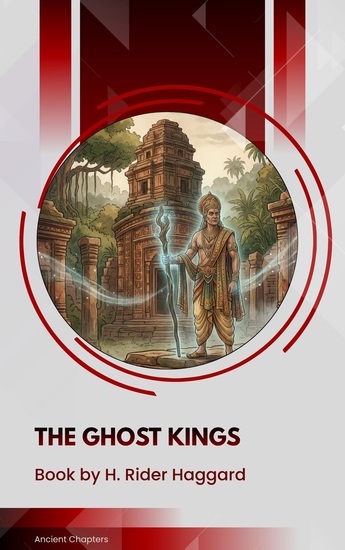
The Ghost Kings - cover

The Ghost Kings

Henry Haggard

Publisher: Ancient Chapters

  • 0
  • 0
  • 0

Summary

A thrilling tale that blends history, myth, and supernatural intrigue.

Set in ancient Africa, the story follows a courageous hero drawn into a world of hidden kingdoms, powerful rulers, and mysterious forces. As he journeys deeper into unknown lands, he encounters legendary figures and uncovers secrets tied to lost civilizations.

The narrative weaves adventure with elements of mysticism, creating a rich atmosphere filled with danger, prophecy, and discovery. Each step brings new challenges that test courage, loyalty, and fate.

With vivid settings and imaginative storytelling, the novel explores themes of power, heritage, and the clash between the known and the unknown. Its epic scope makes it a standout work in classic adventure fiction.

Written by H. Rider Haggard, this novel continues to captivate readers who enjoy grand adventures and timeless legends.

Enter a world of ancient mystery and heroic journeys—download your copy today.
Available since: 05/11/2026.
Print length: 385 pages.

Other books that might interest you

  • Marie - A Story of Russian Love - cover

    Marie - A Story of Russian Love

    Alexander Pushkin

    • 0
    • 0
    • 0
    A young officer is posted to a fort on the Orenburg steppe in 1773, falls in love with the commandant's daughter, and is captured by Pugachev — the Cossack pretender who claimed to be the murdered Tsar and burned half of southeastern Russia. Pushkin is where Russian literature begins; he researched the rebellion in the archives and on the ground, and gave the rebel a courtesy nobody else dared. Published here as Marie, its early English title.
    Show book
  • Idylls Of The King - cover

    Idylls Of The King

    Alfred Lord Tennyson

    • 0
    • 0
    • 0
    Idylls of the King, published between 1859 and 1885, is a cycle of twelve narrative poems by the English poet Alfred, Lord Tennyson which retells the legend of King Arthur, his knights, his love for Guinevere and her tragic betrayal of him, and the rise and fall of Arthur's kingdom. 
     
    The whole work recounts Arthur's attempt and failure to lift up mankind and create a perfect kingdom, from his coming to power to his death at the hands of the traitor Mordred. Individual poems detail the deeds of various knights, including Lancelot, Geraint, Galahad, Balin, and Balan, as also Merlin and the Lady of the Lake. There is  little transition between Idylls, but the central figure of Arthur links all the stories. The poems were dedicated to the late Albert, Prince Consort. 
     
    The Idylls are written in blank verse. Tennyson's descriptions of nature are derived from observations of his own surroundings, collected over the course of many years. The dramatic narratives are not epic either in structure or tone but derive elegiac sadness in the style of the idylls of Theocritus. Idylls of the King is often read as an allegory of the societal conflicts in Britain during the mid-Victorian era.
    Show book
  • The Fourth Plague or Red Hand - cover

    The Fourth Plague or Red Hand

    Edgar Wallace

    • 0
    • 0
    • 0
    The Fourth Plague or Red Hand by Edgar Wallace is offered here in a clean English digital edition prepared for fluent ebook reading. The work stands within classics and gives modern readers direct access to a public-domain classic with navigable structure and a restrained typographic presentation. The opening pages establish the book's atmosphere with this first movement: South of Florence by some sixty miles, and west of Rome by almost thrice the distance, upon three hills, is Siena, the most equable of the cities of Tuscany. On the Terzo di Città in I know not what contrada, is the Palazzo Festini. It stands aloof in its gloomy and dilapidated magnificence, and sin This edition is suited to readers who want a reliable, uncluttered version of the text for study, rediscovery, and sustained reading.
    Show book
  • Le Morte Darthur - cover

    Le Morte Darthur

    Thomas Malory

    • 0
    • 0
    • 0
    We rely on your support to help us keep producing beautiful, free, and unrestricted editions of literature for the digital age. Will you support our efforts with a donation ? Thomas Malory did not invent the stories of Arthur, King of Britain, but it is fair to say that he reinvented them. Although the legends were already hundreds of years old by the fifteenth century, the contemporary stories of Arthur in Malory's day were primarily French. The French had added many of the elements familiar to modern readers, among them Lancelot, and the search for the Holy Grail. Malory combined, edited, and added some of his own material to the stories available to him, and in the process created a uniquely British work. (It was his printer Caxton who gave it a French name.) Le Morte d'Arthur is the source material for almost all modern retellings of King Arthur and his knights, from Hollywood movies and musicals to Nobel-prize winning writers. Malory's identity is still in some dispute, as there are several men of various spellings of the name to choose from. Sir Thomas Malory from Newbold Revel in Warwickshire is the most popular choice, but his life of crime—he was a rapist and serial thief at the minimum—seems to be at odds with the acts of chivalry and moral code present in this book. It is known from the author's own notes that he wrote the book while in prison; perhaps he was trying to make amends for his crimes. Regardless, the result was to give new life to King Arthur and his Knights of the Round Table.
    Show book
  • Three Sundays in a Week - cover

    Three Sundays in a Week

    Edgar Allan Poe

    • 0
    • 0
    • 0
    Poe prided himself on the variety of his subjects. This is his only tale that can possibly be read as a simple happy love story. Probably because of its superficial comedy — reminiscent of “Lionizing” — it has been more popular with ordinary readers than with professed critics.
    “You hard-hearted, dunder-headed, obstinate, rusty, crusty, musty, fusty, old savage!” said I in fancy, one afternoon, to my grand uncle Rumgudgeon — shaking my fist at him in imagination.
    Show book
  • Sant' Ilario - cover

    Sant' Ilario

    F. Marion Crawford

    • 0
    • 0
    • 0
    Rome in the 1860s: the Saracinesca family, a marriage under strain, a forged claim to a title, and the Papal city in its last years before Italy takes it. Crawford lived above Sorrento and wrote more than forty books at a pace his publishers could not keep up with; this is the second of the Saracinesca novels, and the Roman aristocracy in it is drawn by a man who dined with them.
    Show book