¡Acompáñanos a viajar por el mundo de los libros!
Añadir este libro a la estantería
Grey
Escribe un nuevo comentario Default profile 50px
Grey
Suscríbete para leer el libro completo o lee las primeras páginas gratis.
All characters reduced
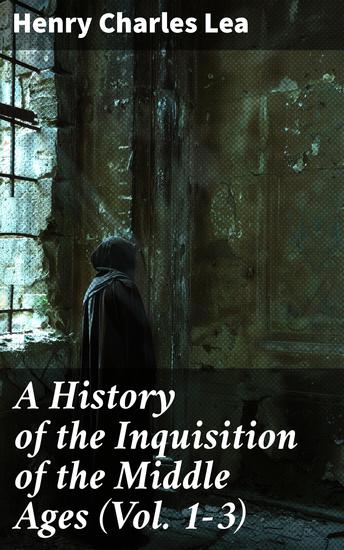
A History of the Inquisition of the Middle Ages (Vol 1-3) - Enriched edition Complete Edition - cover

A History of the Inquisition of the Middle Ages (Vol 1-3) - Enriched edition Complete Edition

Henry Charles Lea

Editorial: Good Press

  • 0
  • 0
  • 0

Sinopsis

In "A History of the Inquisition of the Middle Ages," Henry Charles Lea meticulously chronicles the complex and often tumultuous relationship between the Church and society during the medieval period. Spanning three volumes, this extensive work employs a scholarly narrative style intertwined with a rich tapestry of primary sources, offering a thorough examination of the Inquisition's rise, processes, and socio-political implications. Lea's contextual analysis delves into the broader European landscape, revealing how the Inquisition's brutalities were not only religious but also deeply intertwined with emerging ideas of state power and social control. Henry Charles Lea, an eminent American historian and a pioneering figure in the study of the Inquisition, was driven by his desire to uncover historical truths that had long been obscured by sensationalism and myth. His background in law and keen interest in medieval history equipped him with the tools necessary to approach his subject with both rigor and empathy. Through his extensive research and clear prose, Lea sought to illuminate the complexities of human behavior in the face of tyranny, drawing on a wealth of archival material and contemporaneous accounts. This monumental work is a must-read for anyone interested in the intersections of religion, law, and morality during one of history's most contentious periods. Lea's unparalleled scholarship not only informs but also invites critical reflection on the impact of authority on human lives, making it essential reading for historians and enthusiasts alike.

In this enriched edition, we have carefully created added value for your reading experience:
- A succinct Introduction situates the work's timeless appeal and themes.
- The Synopsis outlines the central plot, highlighting key developments without spoiling critical twists.
- A detailed Historical Context immerses you in the era's events and influences that shaped the writing.
- A thorough Analysis dissects symbols, motifs, and character arcs to unearth underlying meanings.
- Reflection questions prompt you to engage personally with the work's messages, connecting them to modern life.
- Hand‐picked Memorable Quotes shine a spotlight on moments of literary brilliance.
- Interactive footnotes clarify unusual references, historical allusions, and archaic phrases for an effortless, more informed read.
Disponible desde: 12/12/2023.
Longitud de impresión: 1829 páginas.
Otros libros que te pueden interesar

  • Captive Gods - Religion and the Rise of Social Science - cover

    Captive Gods - Religion and the...

    Kwame Anthony Appiah

    • 0
    • 0
    • 0
    Philosopher Kwame Anthony Appiah explores how early social scientists developed our modern understandings of society through their theories of religion The foundations of modern social science were built on the study of religion, the acclaimed thinker Kwame Anthony Appiah argues. Delving into the intellectual currents of the nineteenth and early twentieth centuries, he investigates how formative thinkers—notably Edward Burnett Tylor, Émile Durkheim, Georg Simmel, and Max Weber—grappled with the concepts of society and religion as interdependent categories. Appiah shows how their efforts to define religion, or evade the task, mark the power and limitations of social thought in ways that persist among theorists today. Religion was not an object of study but a framework through which early social scientists established sociology as a discipline. Appiah also examines recent work in both interpretive sociology and evolutionary and cognitive psychology about the mechanisms through which communities form beliefs and values—while underscoring the enduring significance of these earlier debates for contemporary social thought. Throughout, he intertwines storytelling, historical analysis, and philosophical reflection to show how our ideas about society and culture have been, and continue to be, forged in dialogue with religious questions.
    Ver libro
  • The Greatest Civilizations of Ancient Mesopotamia - cover

    The Greatest Civilizations of...

    Editors Charles River

    • 0
    • 0
    • 0
    Long before Alexandria was a city and even before Memphis and Babylon had attained greatness, the ancient Mesopotamian city of Ur stood foremost among ancient Near Eastern cities. Today, the greatness and cultural influence of Ur has been largely forgotten by most people, partially because its monuments have not stood the test of time the way other ancient culture’s monuments have. For instance, the monuments of Egypt were made of stone while those of Ur and most other Mesopotamian cities were made of mud brick and as will be discussed in this report, mud-brick may be an easier material to work with than stone but it also decays much quicker. The same is true to a certain extent for the written documents that were produced at Ur. No site better represents the importance of the Sumerians than the city of Uruk. Between the fourth and the third millennium BCE, Uruk was one of several city-states in the land of Sumer. 
    As Hittite power grew during the Old Kingdom, the royal city of Hattusa became more important and even wealthier. From his citadel overlooking Hattusa, Hattusili I launched the first major Hittite attacks into the Near East, first conquering the cities between Hattusa and the Mediterranean.  
    Although the Biblical accounts of the Assyrians are among the most interesting and are often corroborated with other historical sources, the Assyrians were much more than just the enemies of the Israelites and brutal thugs. Among all the cities that thrived in the ancient Near East, few can match the opulence and ostentatiousness of Nineveh, the capital of the Assyrian Empire for much of the seventh century BCE. During that time it became known for its mighty citadels, grand palaces, beautiful gardens, and even its zoos. In fact, the beauty of Nineveh, especially its gardens, impressed later writers so much that they assigned its gardens as one of the original Seven Wonders of the World.
    Ver libro
  • Capable - How to Teach Your Kids the Strengths Skills and Strategies to Build Resilience - cover

    Capable - How to Teach Your Kids...

    David Thomas, Sissy Goff

    • 0
    • 0
    • 0
    Today's kids face unprecedented levels of anxiety, depression, and emotional distress. Despite our best efforts, our children continue to struggle with internal and external pressures that impact their mental health. If we're doing all we can to make sure our kids are happy, why aren't they?Beloved therapists, speakers, and authors Sissy Goff and David Thomas have discovered the key is found in one word: capable. Capable kids are confident kids who don't shrink from challenges. They're resilient kids who get back up when life knocks them down. They're thriving kids because they have a deep belief in their ability to do hard things, overcome roadblocks, and keep moving forward.In Capable, Sissy and David draw on their more than fifty years of combined counseling experience to offer a clinically sound, emotionally attuned, faith-informed approach to help kids build the resilience they need in today's world. Through evidence-based insight and practical guidance, Sissy and David equip you to nurture capability—the internalized belief that a child can face adversity, navigate challenges, manage stress, and build confidence in who they are and who God has made them to be.
    Ver libro
  • Hospitality - Creating a Space for Others to Feel at Home - cover

    Hospitality - Creating a Space...

    Esther Jameson

    • 0
    • 0
    • 0
    The concept of hospitality goes beyond simply entertaining guests. It is the art of making people feel valued, comfortable, and at ease in a given space. True hospitality is not about perfection or impressing others but about creating an environment where people feel welcomed and cared for. It is an intentional practice that involves thoughtfulness, warmth, and a genuine desire to serve. 
    Why hospitality matters can be seen in everyday interactions. Whether welcoming a friend into your home, greeting a stranger with kindness, or ensuring a guest feels at ease, hospitality has the power to transform relationships. It fosters connection, builds trust, and creates lasting memories. In a world where many feel disconnected, a hospitable spirit can make all the difference. It allows people to feel seen and valued, offering them a sense of belonging in an unfamiliar or even familiar space. 
    There is a difference between hosting and hospitality. Hosting often focuses on preparation, aesthetics, and the logistics of entertaining, such as planning meals or setting up a guest room. While these elements are valuable, true hospitality goes deeper. It is about the atmosphere and emotions a person experiences in a space. A well-decorated home means little if guests feel uncomfortable, unwelcome, or like an inconvenience. On the other hand, a modest setting can feel like a sanctuary when hospitality is extended with sincerity and care.
    Ver libro
  • Marginalized Couples in Therapy - Interventions for Healing from Systemic Trauma - cover

    Marginalized Couples in Therapy...

    Akilah Riley-Richardson, Dr....

    • 0
    • 0
    • 0
    BIPOC and LGBTQI relationships have unique needs because minority stress, racialized trauma, and transphobia, homophobia, and biphobia can compromise one's ability to feel safe enough to connect to the world and others. Yet, all too often, marginalized couples are let down by conventional therapeutic models which were designed for white, cisgendered, heterosexual clients. 
     
    This book puts forth an innovative therapeutic approach specifically designed for working with the impact of systemic oppression in couples therapy. Divided into three parts, therapists will explore systemic trauma, discover ways to build transformative therapeutic postures via the BIOME and PRIDE models, and make use of actionable methods to support clients. By practicing critical consciousness, prioritizing the lived experiences of clients, and moving delicately through the imbalance of power inherent in the therapeutic relationship, clinicians will gain a better understanding of their clients' intimate relationship experiences, and how best to serve them. 
     
    Practitioners are invited to become active agents of change, making this not only a practical guide but also a call to action for fostering a more just and equitable world in which intimacy flourishes for all.
    Ver libro
  • Leadership for Sustainability - Saving the planet one school at a time - cover

    Leadership for Sustainability -...

    David Dixon

    • 0
    • 0
    • 0
    Mobilised by the rousing words and protests of Greta Thunberg, young people all over the globe are calling for more action to combat climate change and better protect their futures. Yet they cannot do this alone. They are reliant on people in positions of power to set the necessary changes in motion - and these people include their own school leaders operating within their own local communities.This book is a rallying cry for all schools to unleash their potential to deliver a brighter future for both their pupils and society at large.David Dixon draws on both his doctoral research and his 20 years' experience as a head teacher to set out how school leaders can embed eco-friendly practices in the day-to-day running of their schools that will also contribute to overall school improvement, including that recognised by inspectors.David weaves his guidance around the 'five Cs of sustainability' - captaincy, curriculum, campus, community and connections - to position sustainability as a natural vehicle for developing a type of fully integrated learning ecology and culture for the benefit of all.The book provides a detailed analysis of where we are now in terms of environmental impact, and lays out a road map to help schools move towards more effective eco-friendly provision. It shares practical examples of sustainability in schools and how these contribute to school improvement in the wider, more conventional sense too. Furthermore, each chapter concludes with a series of suggested strategies to encourage further thought and discussions among school stakeholders.Suitable for school leaders, teachers and teacher trainers - in both primary and secondary settings - and for any professionals who work in schools on environmental education or improvement projects.
    Ver libro