Junte-se a nós em uma viagem ao mundo dos livros!
Adicionar este livro à prateleira
Grey
Deixe um novo comentário Default profile 50px
Grey
Assine para ler o livro completo ou leia as primeiras páginas de graça!
All characters reduced
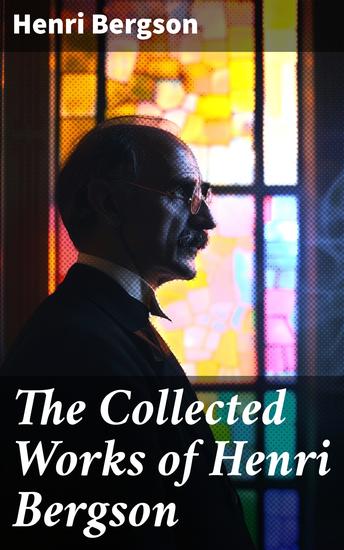
The Collected Works of Henri Bergson - Exploring Time Memory and Creativity: An Insightful Collection of Philosophical Essays - cover
LER

The Collected Works of Henri Bergson - Exploring Time Memory and Creativity: An Insightful Collection of Philosophical Essays

Henri Bergson

Tradutor Edwin E. Slosson, Arthur Mitchell, Nancy Margaret Paul, F. L. Pogson, W. Scott Palmer, Cloudesley Brereton

Editora: Good Press

  • 0
  • 0
  • 0

Sinopse

In "The Collected Works of Henri Bergson," readers are presented with a comprehensive anthology of the seminal insights from one of the 20th century's most influential philosophers. This volume invites us into Bergson'Äôs exploration of time, consciousness, and the distinction between the scientific and intuitive modes of understanding reality. His literary style is characterized by a lyrical prose that marries rigor with accessibility, facilitating deeper philosophical engagement. Within the context of early modern philosophy, Bergson's work stands as a counterpoint to mechanistic interpretations of life, offering instead a vitalist perspective that emphasizes the fluidity of experience and the importance of creative evolution. Henri Bergson, a French philosopher who was awarded the Nobel Prize in Literature in 1927, intertwined his philosophical inquiries with insights drawn from literature, biology, and psychology. His early exposure to the rapid advancements in science and the arts in late 19th-century France shaped his focus on the dynamic nature of reality and the human experience. Bergson'Äôs critique of existing philosophical paradigms not only reflected his intellectual environment but also challenged contemporaneous thought, advocating for a deeper understanding of life's essence. This anthology is an essential read for anyone interested in philosophy, particularly those seeking to explore the nature of time and consciousness. Bergson's uniquely integrative approach offers profound insights that resonate beyond their historical context, making the collected works both a vital academic resource and a thought-provoking experience for general readers. Engaging with this text will enrich your understanding of the philosophical landscape of the modern era.
Disponível desde: 29/12/2023.
Comprimento de impressão: 700 páginas.
Outros livros que poderiam interessá-lo

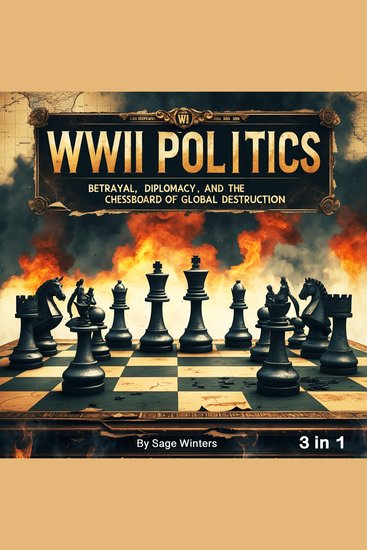
  • WWII Politics - Betrayal Diplomacy and the Chessboard of Global Destruction (3 in 1) - cover

    WWII Politics - Betrayal...

    Sage Winters

    • 0
    • 0
    • 0
    This book contains three topics: 
    - The Yalta Conference: The Yalta Conference, held in February 1945, was a pivotal moment in the history of the 20th century, marking the intersection of military triumph and political strategy. As World War II neared its end, the leaders of the three major Allied powers—President Franklin D. Roosevelt of the United States, Prime Minister Winston Churchill of the United Kingdom, and Premier Joseph Stalin of the Soviet Union—gathered in the Crimean resort town of Yalta to discuss the future of Europe and the post-war world. This summit was not only a negotiation of territory but a critical turning point that set the stage for the global dynamics that would shape the Cold War and the decades that followed. 
    - Nuremberg Trials: The Nuremberg Trials were a series of military tribunals held after World War II to prosecute prominent leaders of Nazi Germany for crimes committed during the war. These trials were a defining moment in the history of international law and marked the first time that individuals were held accountable on an international stage for atrocities committed by a regime. The trials took place in the city of Nuremberg, Germany, from 1945 to 1949, and were conducted by the Allied powers—the United States, the Soviet Union, the United Kingdom, and France—who sought to bring justice to the victims of the Holocaust, forced labor, and widespread destruction caused by the Nazis. 
    - Codebreakers: The art of codebreaking has long been an essential aspect of warfare, serving as a hidden weapon that can change the course of history. During World War II, intelligence efforts were not only about gathering information; they were about deciphering the secrets encoded by the enemy to gain a strategic advantage. As technology evolved, so did the complexity of military ciphers, making the task of breaking enemy codes more challenging and more critical than ever.
    Ver livro
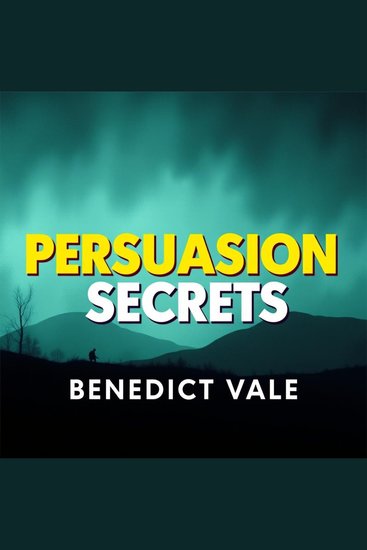
  • Persuasion Secrets: 50 Proven Strategies to Influence Anyone - Discover Persuasion Techniques! Dive into 50 Audio Strategies for Mastering Influence Effortlessly - cover

    Persuasion Secrets: 50 Proven...

    Benedict Vale

    • 0
    • 0
    • 0
    Persuasion Secrets: 50 Proven Strategies to Influence Anyone 
    ⭐⭐ Simplified Audio Guide ⭐⭐ 
    Are you ready to unlock powerful techniques and effectively sway others' opinions? 
    Looking for a comprehensive resource that equips you with everything needed to master the art of influence? 
    Look no further! 
    This audiobook is your ultimate guide to enhancing your persuasive skills, applying them in real-world scenarios, and engaging in thoughtful exercises. With this resource, you're poised for success. 
    Updated with the latest strategies for mastering influence. 
    Key features of this enriched guide: 
    - Profound insights on mastering the art of persuasion 
    - Detailed explanations of effective influence techniques 
    - Powerful strategies for preparation and implementation 
    Our audiobook sets itself apart with thorough coverage, essential for mastering influence. Concepts are explored with depth and precision. 
    Please note that this audiobook is an independent resource meant for your personal growth and is not affiliated with any official entity. 
    Crafted with a clear structure and straightforward language, "Persuasion Secrets: 50 Proven Strategies to Influence Anyone" offers smooth transitions between topics. Say goodbye to confusing jargon and embrace clear, precise, and impactful content. 
    So, why wait? Click the BUY NOW button, secure your audiobook, and begin your journey to mastering the art of persuasion!
    Ver livro
  • The Golden Verses of Pythagoras - cover

    The Golden Verses of Pythagoras

    Florence Firth

    • 0
    • 0
    • 0
    In this small volume an attempt has been made to gather together the best and most reliable of the sets of Ethical Verses attributed to the Pythagoreans.Both Hall's translation from the Greek (1657), and Rowe's translation from the French of André Dacier (1707), have been used in reproducing the Golden Verses of Pythagoras, but Dacier's version has been almost exclusively followed, being clearer and more intelligible.The Golden Sentences of Democrates, the Similitudes of Demophilus, and Pythagorean Symbols are from Bridgman's translation, and are to be found in his little book, Translations from the Greek, published in 1804. The Pythagorean Sentences of Demophilus, translated by Taylor, are contained in that volume also.The remaining sets of verses, translated by Taylor, are appended by him to his Iamblichus' Life of Pythagoras, published in 1818.
    Ver livro
  • Civics Test The - 100 Questions & Answers for the Naturalization Test & US Citizenship - Study Guide with all 100 Official New Questions & Answers (Approved For 2024 2025 2026) - cover

    Civics Test The - 100 Questions...

    RTB Education

    • 0
    • 0
    • 0
    Did you know that you only get two chances to pass your naturalization test? 
    If you fail both attempts, you’ll have to start the whole process all over again – and you may not attain the U.S. Citizenship and life you’ve been dreaming of. 
    That’s why it’s so important that you pass the civics test, first time round. 
    In this audiobook, we’ve narrated the most recent 100 questions & answers to the civics test. You can be sure that these are up to date, so you can go into the oral test feeling confident about scoring more than 6 out of 10. 
    Examples of some of the 100 questions you’ll be asked include: 
    ·     How many amendments does the Constitution have? 
    ·     What are two rights in the Declaration of Independence? 
    ·     What is the economic system in the United States? 
    ·     How many U.S. Senators are there? 
    ·     Who vetoes bills? 
    ·     Name one of the two longest rivers in the United States. 
    ·     Name one U.S. territory. 
    ·     Why does the flag have 50 stars?  
    If you didn’t instantly know the right answer to each of these questions – it’s crucial that you improve your knowledge by purchasing our audiobook today and then listening to it as many times as you like. 
    The narration in our audiobook is of the highest quality, with a calm, clear, American voice. We’ve also left a 10 second gap after each question, to give you time to think about your answer – for the most efficient learning experience. 
    So, buy this audiobook now - and get one step closer to your U.S. Citizenship!
    Ver livro
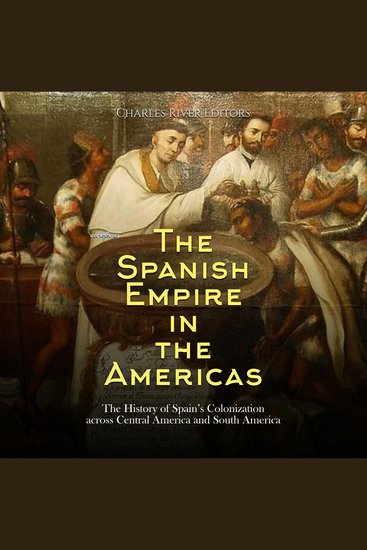
  • Spanish Empire in the Americas The: The History of Spain’s Colonization across Central America and South America - cover

    Spanish Empire in the Americas...

    Editors Charles River

    • 0
    • 0
    • 0
    By the time Christopher Columbus started setting east from the New World, he had explored San Salvador in the Bahamas (which he thought was Japan), Cuba (which he thought was China), and Hispaniola, the source of gold. As the common story goes, Columbus, en route back to Spain from his first journey, called in at Lisbon as a courtesy to brief the Portuguese King John II of his discovery of the New World. King John subsequently protested that according to the 1479 Treaty of Alcáçovas, which divided the Atlantic Ocean between Spanish and Portuguese spheres of influence, the newly discovered lands rightly belonged to Portugal. To make clear the point, a Portuguese fleet was authorized and dispatched west from the Tagus to lay claim to the “Indies,” which prompted a flurry of diplomatic activity in the court of Ferdinand and Isabella. At the time, Spain lacked the naval power to prevent Portugal from acting on this threat, and the result was the hugely influential 1494 Treaty of Tordesillas. 
    The Treaty of Tordesillas was one of the most important documents of its kind of the age, for it established the essential parameters of the two competing empires, the first of the major European imperial entities. The Treaty of Tordesillas drew an imaginary line from pole to pole, running 100 leagues west of the westernmost islands of the Azores. According to the terms of a supporting papal bull, all the lands to the west of that belonged to Spain, and all of those to the east belonged to Portugal. What this meant in practical terms was that Portugal was given Africa and the Indian Ocean while Spain was granted all the lands to the west, including the Americas and the Caribbean, all collectively known as the “Indies,” or the New World. 
    Perhaps inevitably, a regional rivalry had developed as the Portuguese began to establish a colony in Brazil and push its boundaries southwards. 
    Ver livro
  • A Short History of Russia - How the World's Largest Country Invented Itself from the Pagans to Putin - cover

    A Short History of Russia - How...

    Anônimo

    • 0
    • 0
    • 0
    A Library Journal 2020 Title to Watch"Terrific - and an amazing achievement to cover so much ground in such a short and wonderfully readable book." -Peter Frankopan, bestselling author of The Silk RoadsRussia’s epic story told in an accessible, lively and short form, using the country's fascinating history to help us understand its actions today and what the future might hold A country with no natural borders, no single ethnic group, no true central identity, Russia has mythologized its past to unite its people, to justify its military decisions, and to signal strength to outsiders. Mark Galeotti takes us behind the myths to the heart of the Russian story, covering key moments such as:the formation of a nation through its early legends, including Ivan the Terrible and Catherine the Greatthe rise and fall of the Romanovs, the Russian Revolution, the Cold War, Chernobyl and the Soviet Unionthe arrival of an obscure politician named Vladimir Putin and his ambitions for RussiaA Short History of Russia explores the history of this fascinating, extraordinary, desperate and exasperating country through two intertwined issues: the way successive influences from beyond its borders have shaped Russia, and the way Russians came to terms with this influence, writing and rewriting their past to understand their present and try to shape their future. In turn, this self-invented history has come to affect not just their constant nation-building project but also their relations with the world.
    Ver livro