¡Acompáñanos a viajar por el mundo de los libros!
Añadir este libro a la estantería
Grey
Escribe un nuevo comentario Default profile 50px
Grey
Suscríbete para leer el libro completo o lee las primeras páginas gratis.
All characters reduced
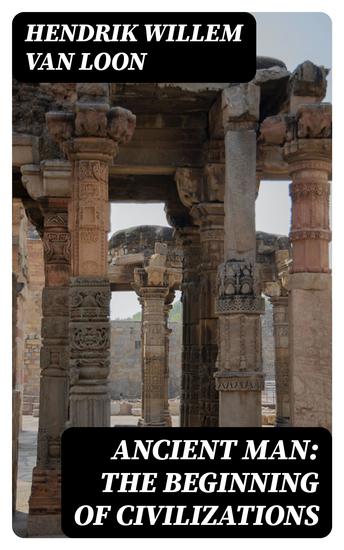
Ancient Man: The Beginning of Civilizations - cover

Ancient Man: The Beginning of Civilizations

Hendrik Willem van Loon

Editorial: DigiCat

  • 0
  • 0
  • 0

Sinopsis

In "Ancient Man: The Beginning of Civilizations," Hendrik Willem Van Loon presents a comprehensive exploration of the dawn of human societies through a captivating narrative imbued with rich illustrations and engaging anecdotes. The book is notable for its conversational style, making complex historical concepts accessible to a broad audience. Van Loon meticulously chronicles the evolution of civilization from prehistoric times to the rise of significant ancient civilizations, probing into the social, political, and cultural developments that shaped humanity. The fluid prose and thoughtful organization of content reflect the author's intent to educate while also entertaining, situating the work within the broader context of early 20th-century historical analysis that favored inclusivity and narrative over dry facts. Hendrik Willem Van Loon, a Dutch-American author and historian, was profoundly influenced by his background in art and literature, which seeped into his storytelling approach. His experiences traveling through Europe and witnessing the remnants of ancient civilizations fueled his passion for history. The interplay between artistic expression and historical inquiry is evident throughout his works, with "Ancient Man" standing out as a manifestation of his belief in the importance of understanding our past to navigate the present. This book is an essential read for anyone interested in the genesis of human civilization, merging history with artful narrative. Van Loon's engaging treatment of complex themes invites readers of all backgrounds to delve deeper into the roots of modern society. Whether you are a history aficionado or a casual reader, "Ancient Man" provides a thought-provoking journey that enhances our understanding of the timeless human experience.
Disponible desde: 15/08/2022.
Longitud de impresión: 85 páginas.
Otros libros que te pueden interesar

  • Raja Yoga - Mastery of Mind and Meditation - cover

    Raja Yoga - Mastery of Mind and...

    Clarice Bendleton

    • 0
    • 0
    • 0
    Raja Yoga, often referred to as the "Royal Path," is a systematic and disciplined approach to mastering the mind and attaining spiritual realization. It is one of the four primary paths of yoga, alongside Bhakti Yoga (the path of devotion), Karma Yoga (the path of action), and Jnana Yoga (the path of knowledge). Unlike other yogic paths that focus primarily on physical postures, devotion, or intellectual inquiry, Raja Yoga is centered on meditation and self-discipline, guiding the practitioner toward self-mastery and inner peace. 
    The foundation of Raja Yoga lies in the philosophy outlined in the Yoga Sutras of Patanjali, an ancient text that provides a comprehensive guide to understanding the workings of the mind and the process of achieving higher states of consciousness. Patanjali describes Raja Yoga as an eightfold path, also known as the Ashtanga (Eight Limbs) of Yoga, which serves as a structured roadmap for spiritual evolution. These eight limbs include ethical disciplines, physical postures, breath control, withdrawal of the senses, concentration, meditation, and ultimately, self-realization. 
    At its core, Raja Yoga teaches that the mind is both the greatest obstacle and the most powerful tool on the path to enlightenment. The human mind is often restless, filled with distractions, desires, and attachments that prevent one from experiencing true inner peace. Raja Yoga provides the techniques to tame this restless mind, bringing it under conscious control and aligning it with a higher state of awareness. Through meditation, a practitioner learns to transcend the fluctuations of thought, entering a state of stillness and clarity where deeper truths about existence and the self can be realized.
    Ver libro
  • Cherishing Me - Letters to a Motherless Child - cover

    Cherishing Me - Letters to a...

    Moira Dadd, Marci Shimoff

    • 0
    • 0
    • 0
    Through her uniquely personal approach, Moira Dadd guides the listener on a deeply intimate journey. Narrated by the author, Cherishing Me serves as a testament to the power of the human soul to overcome adversity, heal all wounds, and experience the joy of being alive. In this captivating and emotionally powered memoir, Moira guides her reader on an intimate journey that invites them to identify their own pain and connect with the joyful healing that comes from within their soul. By detailing her own childhood experiences of abandonment and abuse, Moira addresses letters to her inner child that heal and transform her from the wounds of her youth. 
    Written and read from first-hand experience of childhood abandonment and abuse, it is impossible not to be touched by the pain that is etched into the audio and equally inspired by the transformational triumph that ensues. Moira's clear, simple, and easy-to-hear approach highlights the essential truths of self-compassion and self-love. 
    Through the comforting spoken words of the author, you will find your own joy within yourself and conquer the adversity from your own past. 
    The listener is invited to identify with their own pain and connect with the joyful, empowering potential of healing. This audiobook should be on every counsellor and psychotherapist’s virtual bookshelf, it will touch your soul like no other!
    Ver libro
  • Medieval Conspiracy Theories: The History of the Most Popular Conspiracy Theories about the Middle Ages - cover

    Medieval Conspiracy Theories:...

    Editors Charles River

    • 0
    • 0
    • 0
    Few eras are easier to let the imagination run wild than the Middle Ages, which have often been coined the Dark Ages based on a perceived lack of progress and information. Indeed, we can say that it is not completely unfounded because we know less about that historical period compared to those that come after it. In addition, it is a period marked by a great number of deaths caused by plague epidemics, crusades, and inquisitorial persecutions. Often, researchers are not even sure how and why certain events happened, and these mysteries still occupy the attention of historians. 
    	This era was very harsh, difficult, and often gloomy. In that greyness, burdened by various fears, people were looking for something that would light up their lives and bring them a feeling of beauty and joy. People experienced all things and events around them more intensely than people do today. They often exaggerated the events that happened, giving them a mystical and divine character. For this reason, medieval sources are taken with a grain of salt and are first carefully examined before believing.  
    	At the same time, some historical mysteries about the era may never be solved, if only because the relevant excavated material has been lost or the archaeological site has been destroyed. In other cases, it is because new evidence is unlikely to emerge, or the surviving evidence is too vague to lead to a consensus. Of course, the lack of answers only makes these enigmas more intriguing.  
    	Similarly, few stories have the power to mesmerize as much as unsolved mysteries, so codes and missing puzzle pieces fill people with excitement and intrigue. What did a source want to say with that coded message? What mysteries did they hide? 
    Ver libro
  • On the Duty of Civil Disobedience - cover

    On the Duty of Civil Disobedience

    Henry David Thoreau

    • 0
    • 0
    • 0
    What does it mean to stand alone against the tide of conformity? Henry David Thoreau's On the Duty of Civil Disobedience is a rallying cry for the individual conscience in a world that often demands silent compliance. Written in 1849, this powerful essay transcends its time, offering an enduring blueprint for resisting injustice through peaceful defiance.
    Thoreau's words are both a philosophical meditation and a practical guide. With piercing clarity and quiet rebellion, he challenges the reader to examine their relationship with authority, urging them to act according to principle rather than convenience. But this is no fiery manifesto—it is a calm, deliberate reflection on the moral duty of each person to refuse complicity in systems of oppression.
    This essay is not just for dreamers or idealists; it speaks to anyone who has ever questioned whether they have the courage to say "no." Thoreau's call resonates with movements for freedom and equality across the ages, from Gandhi to Martin Luther King Jr. It dares us to ask: Are we citizens of the state, or citizens of justice?
    Ver libro
  • The Jewish Diaspora - How Global Migration Shaped Jewish Culture - cover

    The Jewish Diaspora - How Global...

    Joseph Arston

    • 0
    • 0
    • 0
    The origins of the Jewish Diaspora trace back to the ancient period, particularly during the Babylonian Exile in the 6th century BCE. This event marked the beginning of a prolonged period of Jewish displacement, which would stretch over thousands of years and shape Jewish history, culture, and identity. The early history of the Jewish Diaspora is rooted in the geopolitical conflicts of the ancient world, where empires and kingdoms frequently clashed, leading to the forced relocation of populations. 
    In 586 BCE, the Babylonian Empire, under King Nebuchadnezzar II, destroyed the First Temple in Jerusalem and exiled a large portion of the Jewish population to Babylon, modern-day Iraq. This marked the first significant moment of Jewish displacement and established the foundation of the Jewish Diaspora. While some Jews returned to Jerusalem after the Babylonian Empire fell to the Persians in 539 BCE, a large number chose to remain in Babylon, where they were able to build communities and maintain their religious practices. This shift from a centralized community in Jerusalem to a more dispersed existence set the stage for future Jewish migrations. 
    The period following the destruction of the First Temple saw the rise of Jewish communities in the Persian Empire. The Jewish population in Babylon continued to grow, while new communities were established in Persia, Egypt, and other parts of the empire. In these areas, Jews were able to maintain their cultural and religious identities, particularly through their synagogues and study of the Torah. The influence of Jewish scholars and religious leaders during this period helped to solidify Jewish traditions and practices that would endure throughout the centuries.
    Ver libro
  • Tiakina te Pā Harakeke - Ancestral Knowledge and Tamariki Wellbeing - cover

    Tiakina te Pā Harakeke -...

    Leonie Pihama, Jenny Lee-Morgan

    • 0
    • 0
    • 0
    Tiakina Te Pā Harakeke: Ancestral Knowledge and Tamariki Wellbeing discusses the values and successful practices of Māori childrearing that have been maintained and encouraged within many whānau, hapū and iwi for generations. This book is a collaboration of knowledge and insight from a wide range of Māori researchers from all over Aotearoa and across multiple disciplines. The authors explore childrearing approaches and models grounded in kaupapa Māori and Māori knowledge that encourage wellbeing outcomes for children and incorporate ancestral knowledge into practices for the contemporary world.
    Ver libro