¡Acompáñanos a viajar por el mundo de los libros!
Añadir este libro a la estantería
Grey
Escribe un nuevo comentario Default profile 50px
Grey
Suscríbete para leer el libro completo o lee las primeras páginas gratis.
All characters reduced
Crisis Management in Social Media Era - cover

Crisis Management in Social Media Era

Hemanth Pawar

Editorial: Educohack Press

  • 0
  • 0
  • 0

Sinopsis

"Crisis Management in Social Media Era" provides an extensive understanding of how to handle crises within the dynamic landscape of social media. Compiled from the insights of various esteemed authors, this book offers practical strategies and solutions to resolve crises effectively and enhance task-oriented outcomes on social media platforms.
We delve into the importance of clear communication, proactive measures, and technological growth to manage social media crises. By exploring various scenarios and providing actionable advice, we equip readers with the tools needed to foresee and address potential crises. This book emphasizes the role of responsible and strategic management in maintaining a positive and sustainable presence on social media.\
Disponible desde: 20/02/2025.
Longitud de impresión: 299 páginas.


Otros libros que te pueden interesar

  • Passwords - cover

    Passwords

    Sally Cook

    • 0
    • 0
    • 0
    This story tells the frustrating but sometimes humorous journey of the author's interactions with the virtual world where she combats chat bots, racks her withering brain for passwords, almost has a hissyfit at the supermarket checkout, accidentally buys online goods she doesn't want and gets all scrambled  regarding pins, passwords and cyber theft. She used to have a childhood toffee stall to raise money for Freedom From Hunger. Now emails remind her to help save the world, the planet, combat animal cruelty and the climate crisis. Some days it takes nerves to turn on her social devices.
    Ver libro
  • A History of Some of London’s Most Famous Landmarks - cover

    A History of Some of London’s...

    Editors Charles River

    • 0
    • 0
    • 0
    It almost goes without saying that Westminster Abbey is one of the foremost sites in Europe when it comes to being steeped in history. Dating back to the reign of William the Conqueror and the Norman conquest, Westminster Abbey has traditionally been the site of royal coronations, royal weddings, and royal burials, and anyone who enters can instantly feel that they are walking in the footsteps of some of the most influential figures in history, from Henry III to Queen Elizabeth I.  
    It’s impossible to fully appreciate the Tower of London without understanding its context. Like all fortresses, it was built to control and protect its surroundings, and the history of the Tower is bound up in the mutual histories of London and the Monarchy. The unfolding saga of war, imprisonment, glory, and treason in England can all be told through the lens of the Tower, and the lives that intersected with it. 
    When people think of the British Royal family, and more specifically where they live, the first image that often pops into mind is that of stately Buckingham Palace, with its changing of the guard and the occasional royal coach leaving or entering. Others may think of the royal country estate of Windsor Castle, a favorite of both Britain’s longest-reigning and second longest-reigning monarchs. And there was a time when both royal residences played second fiddle to a much better known home, the elegant Kensington Palace.  
    Big Ben is one of the most recognizable symbols of Britain, and indeed one of the most famous structures in the world. A quintessential part of London, every movie set in London features an establishing shot of Big Ben, and many guidebooks of London have the clock tower as its cover photo. London and Big Ben are forever linked in the consciousness of the Western world.
    Ver libro
  • The Ultimate Complex PTSD Treatment Guide - From Trauma Fear Anxiety Panic Attacks Depression and Stress to Safety Internal Well-Being and Inner Fulfillment - cover

    The Ultimate Complex PTSD...

    Andrei Nedelcu

    • 0
    • 0
    • 0
    Turn your brain from your worst enemy to your most powerful ally by embracing the power of EMDR, CBT, and your brain’s incredible neuroplasticity. 
    People often believe that PTSD is something only veterans go through. 
    How wrong they are. 
    Around 5 in every 100 adults in the US has PTSD in a given year and the causes can be manifold—including car accidents, abuse, bullying, and being diagnosed with a serious illness. 
    PTSD can arise any time you are faced with a situation that has caused you to fear for your life. 
    Consider this book to be a handy tool that will highlight these strategies and put you on the road to a state of calm, well-being, and inner peace. |I, Here you will discover: 
     ●     How to recognize when you’ve been through trauma and overcome it with 4 scientifically proven strategies 
    ●     How PTSD affects brain neurochemistry, and how your subconscious mind can keep you trapped through CPTSD 
    ●     How to reorder your neural networks and pathways through EMDR and CBT – and why your brain’s neuroplasticity is a great source of hope 
    ●     4 powerful exercises to control your stress levels and heal from trauma, alleviating the impact of CPTSD 
    ●     Exposure therapy – why facing your biggest fear is the path to freedom 
    ●     5 techniques for dealing with difficult emotions instead of suppressing them 
    ●     The importance of safe spaces and how to create them – plus 5 ways to establish mental safety 
    And so much more. 
    If you are ready to take your fear by the horns and live a fulfilling and purpose-filled life, then scroll upwards and click “Add to Cart” right now!
    Ver libro
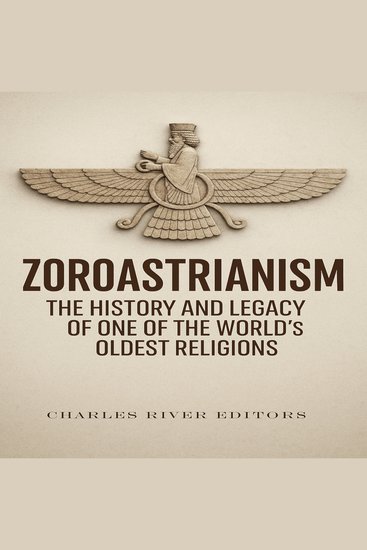
  • Zoroastrianism: The History and Legacy of One of the World’s Oldest Religions - cover

    Zoroastrianism: The History and...

    Charles River Editors

    • 0
    • 0
    • 0
    The Sasanian Empire was important for a number of reasons. Besides being the last of three great Persian dynasties, they carried on many Persian cultural traditions relating to religion and kingship. The Sasanians fostered and promoted the native religion of Zoroastrianism to the point of persecuting other religions from time to time. It was during the Sasanian period that the numerous Zoroastrian hymns, prayers, and rituals were collected under one book, known as the Avesta.  
    	Thanks to the Sasanians’ efforts with regard to religion, modern scholars know much more about Zoroastrianism than they would have if the religion continued to disseminate orally. Their efforts also protected Zoroastrian knowledge in later years after the dynasty was long gone and Islam became ascendant in Persia. Zoroastrianism is technically still a living religion today, but the religion is mysterious and not widely known among those who don’t study it, and historians themselves are divided over when the religion’s prophet lived and when the religion was officially adopted in Persia. Zoroastrianism’s historical development has also failed to intrigue significant numbers of people, perhaps due to its geographical location and cultural background. Zoroastrianism developed among the Persian people, who have traditionally not been part of the standard Western, early Islamic, or Far Eastern cultural groupings, and when Persia later became part of the greater Islamic world, it was to the detriment of Zoroastrianism. Finally, Zoroastrianism is a “closed” religion, which has also kept it shrouded in mystery to a certain degree. Although contemporary Zoroastrians are quite open about their faith and willing to help non-Zoroastrian scholars, converts are rarely accepted by the faithful, adding a sense of insularity to the faith.
    Ver libro
  • Protecting Your Children from Internet Pornography - Understanding the Science Risks and Ways to Protect Your Kids - cover

    Protecting Your Children from...

    John Foubert

    • 0
    • 0
    • 0
    Protecting Your Children from Internet Pornography exposes the many ways that pornography is menacing people, relationships, society, and—especially—our children. Dr. John Foubert’s ability to write about complex concepts in practical terms will help you understand issues like how pornography affects the brain, how pornography is a recipe for sexual violence, and why you should take measures to protect your children and those you love. This scholarly perspective is well balanced by practical suggestions at the end of each chapter that gives parents advice on how to apply the information in their own home. It is time for a national conversation about what pornography is really all about. Foubert’s book opens the door on that discussion and invites the reader to join the battle against porn with greater knowledge of its actual effects. You will be disturbed, shocked, motivated, and empowered to make a difference after reading this book.
    Ver libro
  • Sumerians - Their History Religion and Inventions - cover

    Sumerians - Their History...

    Kelly Mass

    • 0
    • 0
    • 0
    The Sumerians were the people from Sumer, the first recognized society in the historic area of southern Mesopotamia (now southern Iraq), developed throughout the 6th and 5th centuries BC throughout the Chalcolithic and early Bronze Ages. In addition to age-old Egypt, the Caral-Supe culture, the Indus Valley civilization, the Minoan civilization, and age-old China, it is also one of the world's early civilizations. Sumerian farmers who lived along the Tigris and Euphrates valleys grew a great deal of grain and other items, which allowed them to establish metropolitan towns. Before 3000 BC, there was proto-writing. The earliest files date from between 3500 and 3000 BC and are from the cities of Uruk and Jemdet Nasr. 
    Most historical analysts believe that Sumer was first completely occupied between c. 5500 and 4000 BC by a West Asian population who spoke the Sumerian language, a non-Semitic and non-Indo-European agglutinative language isolate (as evidenced by the names of cities, rivers, standard professions, and so on). It wasn't an inflected language, in contrast to its Semitic cousins. 
    Go ahead and get stared, and get to know more about the Sumerians, what they did, who they were, and why so many people know so little about them.
    Ver libro