Unisciti a noi in un viaggio nel mondo dei libri!
Aggiungi questo libro allo scaffale
Grey
Scrivi un nuovo commento Default profile 50px
Grey
Iscriviti per leggere l'intero libro o leggi le prime pagine gratuitamente!
All characters reduced
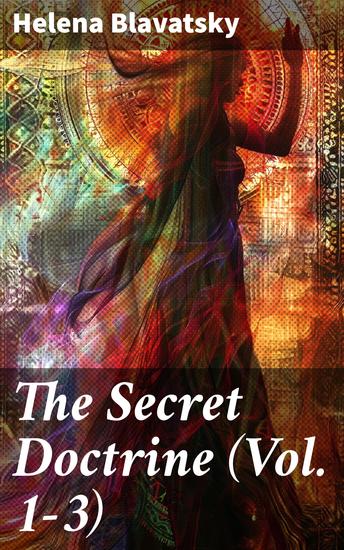
The Secret Doctrine (Vol 1-3) - Enriched edition The Synthesis of Science Religion & Philosophy - cover

The Secret Doctrine (Vol 1-3) - Enriched edition The Synthesis of Science Religion & Philosophy

Helena Blavatsky

Casa editrice: Good Press

  • 0
  • 0
  • 0

Sinossi

Helena Blavatsky's monumental work, "The Secret Doctrine" (Volumes 1-3), serves as an intricate tapestry weaving together elements of theology, philosophy, and science, integrating esoteric traditions with a profound exploration of the cosmos and human evolution. Written in a dense, yet poetic literary style, the text is structured around the dual doctrines of the universal and the individual, rooted deeply in theosophical thought. Blavatsky draws upon a wide array of religious and philosophical sources, including Eastern and Western esotericism, to expound upon the idea of a hidden knowledge that transcends the physical realm, presenting her insights as both a critique of materialism and an invitation to spiritual awakening. Helena Blavatsky, a seminal figure in the Theosophical Society, was profoundly influenced by her travels to India and her studies of ancient wisdom traditions. Her quest for universal truths led her to challenge prevailing scientific and religious dogmas of the 19th century, positioning her as a pioneer of modern spirituality and a bridge between Eastern spirituality and Western thought. "The Secret Doctrine" is a must-read for anyone intrigued by metaphysics, spirituality, and the quest for knowledge that transcends conventional wisdom. Blavatsky's comprehensive examination of the world's mystical traditions invites readers to explore the depths of their own consciousness and the interconnectedness of all existence.

In this enriched edition, we have carefully created added value for your reading experience:
- A succinct Introduction situates the work's timeless appeal and themes.
- The Synopsis outlines the central plot, highlighting key developments without spoiling critical twists.
- A detailed Historical Context immerses you in the era's events and influences that shaped the writing.
- An Author Biography reveals milestones in the author's life, illuminating the personal insights behind the text.
- A thorough Analysis dissects symbols, motifs, and character arcs to unearth underlying meanings.
- Reflection questions prompt you to engage personally with the work's messages, connecting them to modern life.
- Hand‐picked Memorable Quotes shine a spotlight on moments of literary brilliance.
- Interactive footnotes clarify unusual references, historical allusions, and archaic phrases for an effortless, more informed read.
Disponibile da: 03/12/2023.
Lunghezza di stampa: 2735 pagine.

Altri libri che potrebbero interessarti

  • Longbow The: The History of the Weapon that Revolutionized Warfare in the Middle Ages - cover

    Longbow The: The History of the...

    Editors Charles River

    • 0
    • 0
    • 0
    While the bow was used throughout ancient times and the Middle Ages, on mainland Europe it was mostly replaced by the crossbow in the early 13th century, but that would change with the introduction of the longbow, a more powerful weapon than the traditional hunting bows. The original longbowmen were Welshmen recruited by King Edward I of England after he conquered Wales, and the weapon got its name from the fact that it was almost as tall as the man using it. This gave it a longer draw and therefore more force, as longbows were generally made of yew, a strong and pliable wood. The longbow was cheap and easy to make, but they required extensive training to be used well, so in England, commoners were encouraged and at times required to practice archery. A statute of Richard II dating from 1388 reads, “Servants and Laborers shall have Bows and Arrows, and use the same the Sundays and Holydays, and leave all playing at tennis or foot-ball, and other games called coits, dice, casting of the stone, kaikles [skittles], and other such importune games.” 
    	The longbow’s greatest day was at Agincourt in 1415, but the fact that this did not end the age of heavy plate cavalry indicated the longbow did have some limitations. For example, modern tests show that longbow arrows had trouble piercing plate armor, likely the main reason they were used as a massed weapon. With arrows raining down, it increased the chances of hitting a joint in the armor or an imperfection. Also, horse armor couldn’t protect the entire animal and the knights would soon find themselves dismounted. At some battles like Agincourt, the knights foundered in soft earth, and as their horses fell and the men became confused and hampered by the arrows clanking off their armor, they got mired in the mud and the English infantry could move in and finish them off. 
    Mostra libro
  • For Such a Time as This - On Being Jewish Today - cover

    For Such a Time as This - On...

    Elliot Cosgrove

    • 0
    • 0
    • 0
    A poignant exploration of what it means to be Jewish today, from a leading voice in modern Judaism, Rabbi Elliot Cosgrove of Park Avenue Synagogue 
    For Jews today, the attack on Israel on October 7th has drawn a clear and irreversible demarcation in time. On that day, the Jewish community woke up to an unrecognizable new reality, witnessing the stark rise in antisemitism, the world’s oldest hatred, in its wake.  
    But even in this dark hour, the Jewish community is experiencing something profound and beautiful: a deep, abiding connection to community, culture, and faith. Drawing on the rich trove of Jewish history and tradition, Rabbi Elliot Cosgrove, one of today’s most influential thought leaders and spiritual guides, helps readers make sense of this fraught time. With warmth and wisdom, Rabbi Cosgrove explores the challenging questions embedded in the soul of contemporary Jewry. Where did all this antisemitism come from, and was it always there? How have Israel and Zionism shaped American Judaism, and what ties us and divides us today? How do we practice Judaism and understand our place in a world that has, without fail, in every century, turned against us? 
    Knitting together storytelling with ancient teachings, Rabbi Cosgrove helps navigate and understand the landscape of this new reality, turning over questions that have no clear or easy answer in the way only a very good rabbi can. 
    For thousands of years, the Jewish people have wrestled with what it means to be Jewish. In this often divisive era, Rabbi Cosgrove reminds of how we can come together despite—and even because of—our differences. For Such a Time as This is a guide for a new generation that is reconciling the past with the present and facing the unknown future with courage, spirit, and unwavering hope.
    Mostra libro
  • Mapping The End of History with Terence McKenna - cover

    Mapping The End of History with...

    Terence McKenna

    • 0
    • 0
    • 0
    Terrance McKenna's captivating lecture, he delves into his theory of the universe as an engine geared towards generating and preserving novelty, with an escalation in novelty corresponding to an increase in complexity. Drawing from the Chinese divination text, the I-Ching, which he views as a tool rather than the focal point, McKenna elaborates on the concept of the time wave. Time, he proposes, manifests as a colossal wave, gathering density and intensity until its culmination, fueled by novelty in various forms such as information, incidents, and events. 
     
    Throughout history, this wave of novelty has propelled progress and evolution, with each novelty birthing further innovations in a fractal-like manner. McKenna observes an exponential acceleration in novelty in recent times, with the pace of change surpassing anything witnessed in previous eras. The rapid advancements in technology and discovery over the past century exemplify this phenomenon, leaving humanity pondering the trajectory of the future. 
     
    McKenna's thought-provoking ideas challenge conventional notions of time and evolution, prompting speculation on the ultimate culmination of the time wave's journey. Regardless of one's agreement or disagreement with his theories, McKenna's discourse captivates with its depth, originality, and provocative insights into the nature of existence and progress.
    Mostra libro
  • Erasmus of Rotterdam: A short biography - 5 Minutes: Short on time – long on info! - cover

    Erasmus of Rotterdam: A short...

    5 Minutes, 5 Minute Biographies,...

    • 0
    • 0
    • 0
    Erasmus of Rotterdam, Dutch philosopher and universal scholar: Life and work in a short biography! Everything you need to know, brief and concise. Infotainment, education and entertainment at its best!
    Mostra libro
  • Chemically Imbalanced - Everyday Suffering Medication and Our Troubled Quest for Self-Mastery - cover

    Chemically Imbalanced - Everyday...

    Joseph E. Davis

    • 0
    • 0
    • 0
    Everyday suffering—those conditions or feelings brought on by trying circumstances that arise in everyone’s lives—is something that humans have grappled with for millennia. But the last decades have seen a drastic change in the way we approach it. In the past, a person going through a time of difficulty might keep a journal or see a therapist, but now the psychological has been replaced by the biological: instead of treating the heart, soul, and mind, we take a pill to treat the brain. 
     
    Chemically Imbalanced is a field report on how ordinary people dealing with common problems explain their suffering, how they’re increasingly turning to the thin and mechanistic language of the “body/brain,” and what these encounters might tell us. Drawing on interviews with people dealing with struggles such as underperformance in school or work, grief after the end of a relationship, or disappointment with how their life is unfolding, Joseph E. Davis reveals the profound revolution in consciousness that is underway. We now see suffering as an imbalance in the brain that needs to be fixed, usually through chemical means. This has rippled into our social and cultural conversations, and it has affected how we, as a society, imagine ourselves and envision what constitutes a good life. Davis warns that what we envision as a neurological revolution, in which suffering is a mechanistic problem, has troubling and entrapping consequences. And he makes the case that by turning away from an interpretive, meaning-making view of ourselves, we thwart our chances to enrich our souls and learn important truths about ourselves and the social conditions under which we live.
    Mostra libro
  • Write With Me! - The ultimate guide to WRITE & SELF-PUBLISH that book on your heart! - cover

    Write With Me! - The ultimate...

    Eric Elder

    • 0
    • 0
    • 0
    Do you have a book on your heart? Don’t know where to start? Don’t know how to finish? I’ll show you how! I’ve written and self-published over 35 books (this is #36!) and helped dozens of others do the same. I’d love to help you!  
    Eric Elder 
    TABLE OF CONTENTS 
    1. Write with me!  
    2. The beauty of self-publishing  
    3. Think “books,” not “book”  
    4. Which book to write FIRST?  
    5. What’s your main theme?  
    6. Which stories support your theme?  
    7. No scene that doesn’t turn  
    8. Now write!  
    9. Flesh out your stories  
    10. Tips for self-editing  
    11. Send it to a few trusted readers  
    12. Receiving feedback  
    13. Getting endorsements  
    14. Formatting your book  
    15. Interior design  
    16. Cover design  
    17. Uploading your book  
    18. Creating your eBook & hardcover  
    19. Turning your writing into speaking  
    20. Seven touches  
    21. To market, to market 
    22. Start writing your NEXT book!  
    23. I'd love to help you with your book! 
    Visit: ericelder.com
    Mostra libro