¡Acompáñanos a viajar por el mundo de los libros!
Añadir este libro a la estantería
Grey
Escribe un nuevo comentario Default profile 50px
Grey
Suscríbete para leer el libro completo o lee las primeras páginas gratis.
All characters reduced
Knowledge Transmission - cover

Knowledge Transmission

Harrison Stewart

Traductor A AI

Editorial: Publifye

  • 0
  • 0
  • 0

Sinopsis

Knowledge Transmission explores the diverse methods societies have used to preserve and share knowledge across generations. From ancient oral traditions to the advent of written texts and early printed books, the book examines how these approaches shaped intellectual history, education, and cultural values.

 
One intriguing fact is the use of sophisticated mnemonic techniques in pre-literate societies, enabling the reliable transmission of complex information through stories, songs, and rituals. Another is the transformative impact of writing on knowledge preservation, leading to the creation of libraries and archives that fostered scholarly exchange.

 
The book uniquely emphasizes how knowledge transmission methods have not only determined what survives but also fundamentally shaped how societies think and innovate. It progresses through three major sections, starting with an analysis of oral traditions and moving to the rise of scrolls and written texts, before concluding with the evolution of printed books.

 
By drawing from archaeological findings, ancient texts, and historical accounts, Knowledge Transmission offers a comprehensive overview suitable for both scholars and general readers interested in the history of knowledge.
Disponible desde: 29/03/2025.
Longitud de impresión: 69 páginas.
Otros libros que te pueden interesar

  • Pythagoras of Samos: The Life of Archaic Greece’s Most Influential Polyglot - cover

    Pythagoras of Samos: The Life of...

    Charles River Editors

    • 0
    • 0
    • 0
    Ionia was one of the most important Greek settlements in Anatolia, and it was the home of Thales (626–548 BCE), an enterprising Greek philosopher, mathematician, and astronomer who is best known for predicting the 585 BCE solar eclipse, which brought an immediate halt to the fighting between the Lydians and Medes in modern-day Turkey. Anaximander of Miletus (610–546 BCE), an Ionian philosopher and student of Thales, pioneered a rational, non-mythological approach to astronomy by proposing a mechanical model of the cosmos. He introduced the Apeiron (the Limitless) as the fundamental, eternal source of all matter, from which all worlds are created and to which they return.  
    Pythagoras studied cosmology, geometry, and astronomy under Thales and his successor Anaximander, and by building on the legacies of their brilliant minds, Pythagoras refined and expanded upon their foundational concepts. However, he also went in a different direction, focusing on mysticism and numbers more than material principles. Known for his profound influence on Plato, Pythagoras defined himself as a lover of wisdom and a seeker of knowledge. As a key figure in the evolution of Western intellectual thought, his ideas have endured for millennia, impacting fields ranging from mathematics to philosophy. Alongside other influential Greek thinkers, Pythagoras helped shift focus toward self-examination, deeply influencing how we understand purpose and the universe.  
    Pythagoras’s most lasting legacy was in the field of mathematics, but mathematics was not merely a tool for measurement to him - it was the underlying language of the universe. One of his most famous statements, “Panta arithmos” (“All is Number”), is indicative of his belief that numbers were the essence, structure, and governing principle of the universe. He thought ratios and proportions of integers could explain all reality, including musical harmony, physical objects, and abstract concepts like justice.
    Ver libro
  • Ancient River Explorers of North America - cover

    Ancient River Explorers of North...

    George Mitrovic

    • 0
    • 0
    • 0
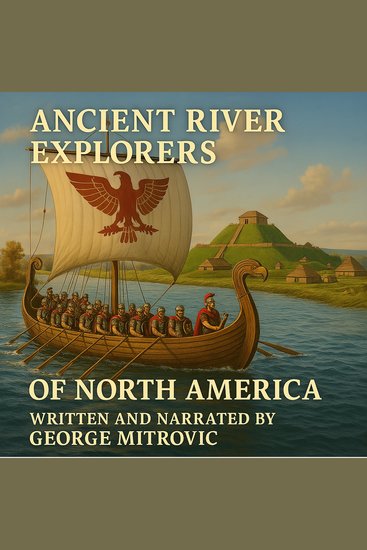
    The common consensus is that maybe a few lone or stray Vikings visited North America before Columbus sailed over the ocean blue, and we know the rest of it. This does not explain the amazing amounts of Roman, Jewish, early Christian, North African, Celtic, Phoenician and other cultures that left artifacts all over North America. Come with me on amazing river voyages across this vast continent as we actually find out how far early cultures travelled across the lakes, rivers and plains of North America.
    Ver libro
  • As the Stage Turned - A Front Row Theatre Memoir - cover

    As the Stage Turned - A Front...

    Jeannie Emser Schultz

    • 0
    • 0
    • 0
    Sammy Davis, Jr. opened it. Luther Vandross closed it. During the 19 years in between, a who’s who of the world’s top entertainers and speakers performed on the novel revolving stage of the Front Row Theatre, from Liberace to Alice Cooper, Jay Leno to Jerry Seinfeld, Marlene Dietrich to Dolly Parton, Presidents Ford and Carter and culinary grand dame Julia Child. Many were unknown opening acts, like Whitney Houston. Another, the legendary Roy Orbison, would unknowingly perform the final concert of his life there. 
    Cleveland Landmarks Press’ newest release, As the Stage Turned: A Front Row Theatre Memoir, captures the dynamic energy that sprung from one of the most unique entertainment venues in the country – a theater-in-the-round located in the sleepy suburb of Highland Heights, just outside of Cleveland. 
    Jeannie Emser Schultz, the venue’s longtime former director of marketing and publicity, has written a memoir capturing the star power and draw of the Front Row. It’s an homage to seemingly everything related to show business and the cultural significance of that famed theater that drew the biggest and brightest stars of its day. 
    For instance, where else would you learn that several days into Sammy Davis’s opening run at the Front Row in 1974, he received a phone call threatening his life? Or that the only way Frank Sinatra would agree to perform there was if he and his entire entourage could rent out the Shaker Heights home of Larry Dolin, the founder and president of the Front Row? Or that comedian Bob Newhart always kept a nude picture on his dressing room table of Anthony Newley looking backwards through his legs (Newhart told Emser Schultz it was one of the funniest pictures he ever saw)? 
    Emser Schultz’s narrative takes readers on a detailed and behind-the-scenes firsthand journey of the almost 20-year history of what was considered one of America’s most significant entertainment venues. Revisit your own fond memories of a lost Cleveland classic.
    Ver libro
  • 12 Habits for a Sound Mind and Joyful Life - Your Road Map to Overcome Daily Stresses and Messes - cover

    12 Habits for a Sound Mind and...

    Diane E Arnold

    • 0
    • 0
    • 0
    Leave the Baggage Behind--and Uncover the Authentic You 
     
    More than 70 percent of adults feel they have a mental health problem. Without a clear path to healing, they've followed the devastating lies and whims of our ever-shifting culture--causing them even more pain. 
     
    Offering real hope and a new road map for inner peace, licensed counselor and author Diane Arnold leads you on a redemptive journey of twelve life-changing truths that help you live an emotionally, mentally, and spiritually healthy life. Through uplifting teaching and practical exercises, she provides real-world solutions and a spiritual compass to help you 
     
    · discover--and accept--the REAL you 
    · pursue your purpose 
    · silence shame 
    · experience unconditional love and acceptance 
    · find joy, think soundly, and live with courage 
     
    The road to wholeness and lasting healing isn't found in culture's constantly changing map. It's found in the quiet, narrow path of true peace and transformation.  
     
    "A hope-soaked journey of self-discovery . . . shares the freedom God offers and calls each of us to."--DR. TIM CLINTON 
     
    "A powerful guide to help you uncover the truth of who you are and find healing and freedom from the lies."--DR. BRIAN SIMMONS, Passion & Fire Ministries
    Ver libro
  • Learn Romanian With Music - cover

    Learn Romanian With Music

    Innovative Language Learning, ...

    • 0
    • 0
    • 0
    Can learning Romanian be as simple as listening to music? 


    And as easy as remembering song lyrics?


    Just think. You remember song lyrics because lyrics are catchy, repeated throughout the song, and go with the music, right? Now, if you stuck in Romanian, you’d easily learn Romanian words and phrases the same way! 


    So, yes, learning Romanian is as easy as listening to music… with the Learn Romanian With Music Audiobook.


    Just press play, and you’ll hear Romanian words and phrases repeated to the beat of upbeat and cheerful music. And… follow along!


    You’ll learn 180+ most common Romanian words and phrases… while relaxing at home, or while driving to work.


    Learn Romanian With Music is the easiest way to start learning Romanian.. without getting overwhelmed by complicated explanations. Perfect for new learners with little to no language learning experience.


    What will you learn?
     
    180+ Words & Phrases Including...
     
    • Basic Greetings
     
    • Numbers
     
    • Common Questions and Answers
     
    • Parts of the Body & Talking About Your Wellbeing
     
    • Common Hobbies
     
    • And much more


    Learn Romanian With Music includes...
     
    • 15 Songs/Lessons Inside (Each is about 7 minutes long)
     
    • Fast-Paced Review Section at the End of Each Lesson
     
    • 1 Hour 50 Minutes in Total
     
    • Accompanying PDF eBook with the Words, Phrases and Translations


    Download the PDF and read along
    Ver libro
  • Roman Civil Wars of the 3rd and 4th Centuries The: The History of the Conflicts that Led to a Split of the Roman Empire - cover

    Roman Civil Wars of the 3rd and...

    Editors Charles River

    • 0
    • 0
    • 0
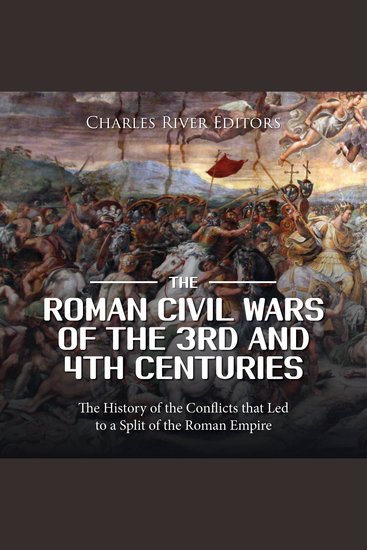
    The 50 years following the assassination of Severus Alexander on March 19, 235 CE has been generally regarded by academics as one of the lowest points in the history of the Roman Empire. This stands in stark contrast to the previous 150 years, which included the reigns of the Five Good Emperors and has been universally praised as one of the high points of the empire. Severus Alexander was the last of the Severan emperors, and the subsequent years of crisis (235-285 CE) were characterized by a series of short reigns, usually ending in the violent death of the reigning emperor. 
    At the same time, this period of time also saw the empire beset by threatening forces on all sides. The Romans faced a newly resurgent Persia in the east, as well as significant forces from German tribes on the Rhine and Goths along the Danube. The various conflicts would result in the unprecedented death of a sitting emperor in battle, which took place in 251 with Emperor Decius, and Emperor Valerian was captured in 260 CE.  
    Diocletian's reign would see reforms put into place to achieve the desired end of the Imperial Crisis, and several of the emperors before him may well have had the ability to manage the reform process, but the army’s power and willingness to use and abuse power ensured that few of them truly had a chance to really make their marks. It was the worst period in the history of the Roman Empire to that point, even as it forced the Romans to deal with belligerent foreign powers and problems created by the emergence of increasingly powerful and populous provinces. 
    The pressures created by population growth, both within the empire and outside of it, have been thoroughly researched, but more recently, issues created by climate change have also commanded attention.
    Ver libro